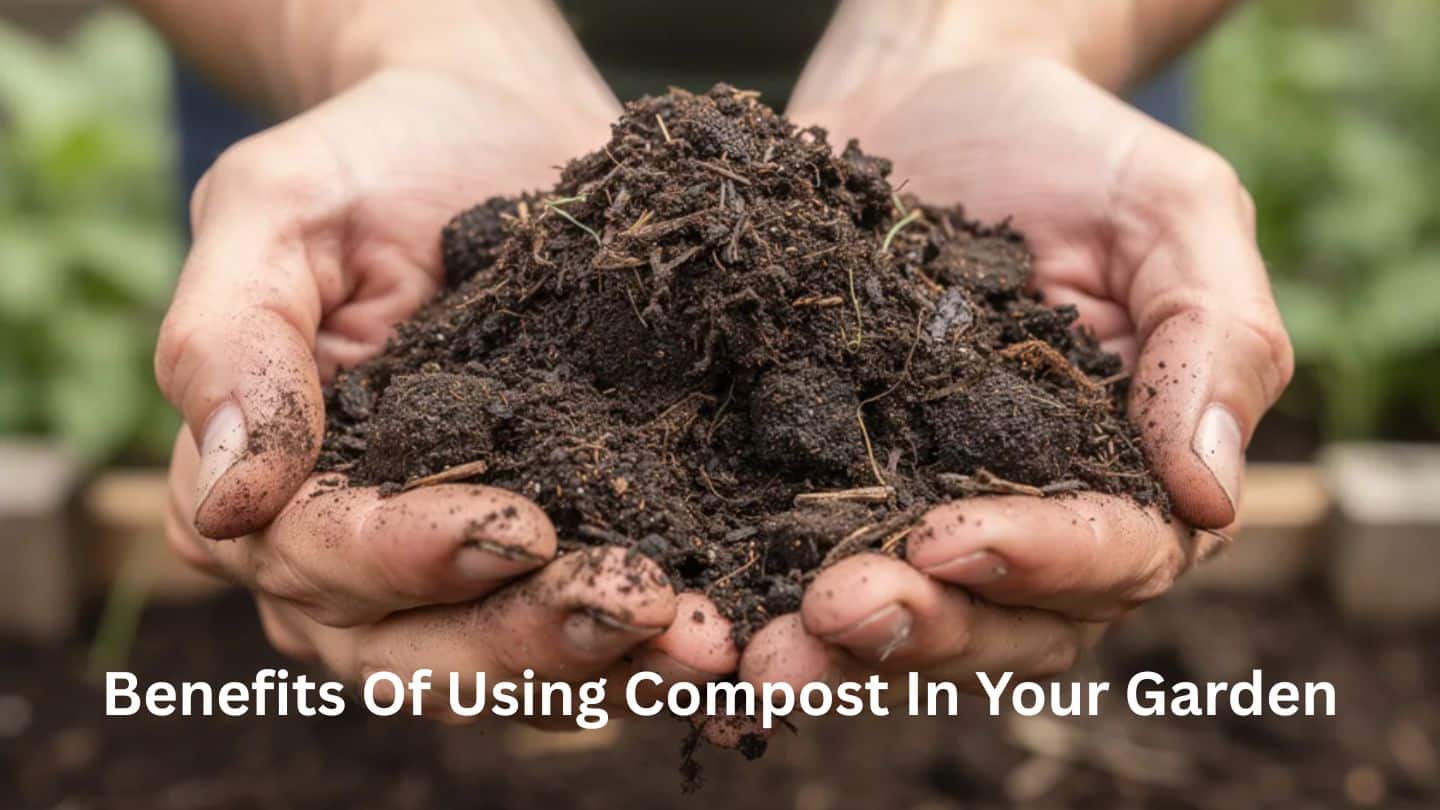

Healthy gardens begin with healthy soil, and compost is one of the simplest ways to improve it naturally. Made from decomposed organic materials like food scraps, leaves, and grass clippings, compost enriches soil with nutrients while improving structure and moisture retention. Unlike synthetic fertilizers that offer a quick boost, compost works gradually, strengthening roots and supporting beneficial soil life. It also helps reduce waste and lower your environmental impact. Whether you grow vegetables, flowers, or container plants, compost can transform your results. In this blog, we will explore the key benefits of using compost in your garden.
Key Takeaways
- Compost converts food scraps, grass clippings, and other organic waste into a valuable soil amendment that improves soil health and supports plant growth within one growing season.
- Adding compost increases water retention, reduces soil erosion, and helps gardens handle both drought and heavy rain more effectively.
- Home composting in 2026 directly reduces landfill methane emissions, cuts fertilizer costs, and improves plant health naturally.
- Compost works multiple ways: dig it into new beds, spread it as topdressing, use it as mulch, or brew it into compost tea for container plants.
- Even small urban gardens and balcony containers benefit from quality compost, no backyard compost pile required.
What Is Compost and Why Gardeners Rely on It
Compost is decomposed organic material, think vegetable peels, coffee grounds, autumn leaves, and grass clippings, transformed by beneficial microbes into a stable, dark, crumbly soil conditioner. This natural process takes raw organic matter and breaks it down over weeks or months into something your garden soil can actually use.
The magic happens through microbial activity. Bacteria, fungi, and other soil organisms consume the organic material, generating heat that can reach 131–170°F during active composting. This thermophilic stage kills weed seeds, pathogens, and insect eggs, leaving behind a safe, mature product ready for your beds.
Think of compost as mimicking what happens on a forest floor. Leaves fall, decompose slowly, and feed the soil life below. Unlike synthetic fertilizers that deliver a quick jolt of nutrients (and can burn roots if over-applied), compost releases its goodness gradually. Your plants get steady nutrition over months, not a sudden spike followed by nothing.
Compost isn’t raw manure or chemical fertilizer. Finished compost has a pleasant, earthy smell, like a walk through the woods after rain. It crumbles easily in your hands and shows no recognizable food scraps or strong ammonia odor. This stability means it won’t tie up nitrogen, attract pests, or produce foul odors when you spread it around your tomatoes.
Where does quality compost come from? Home gardeners have several options:
- Backyard compost bin or pile – Your own kitchen scraps and yard waste processed over several months
- Municipal compost programs – Many cities now collect organic waste and offer finished compost to residents
- Garden center bagged compost – Convenient for small projects or when you need a known quantity
- Local landscape suppliers – Bulk compost delivered by the cubic yard for larger beds
Soil Health Benefits of Using Compost in Your Garden
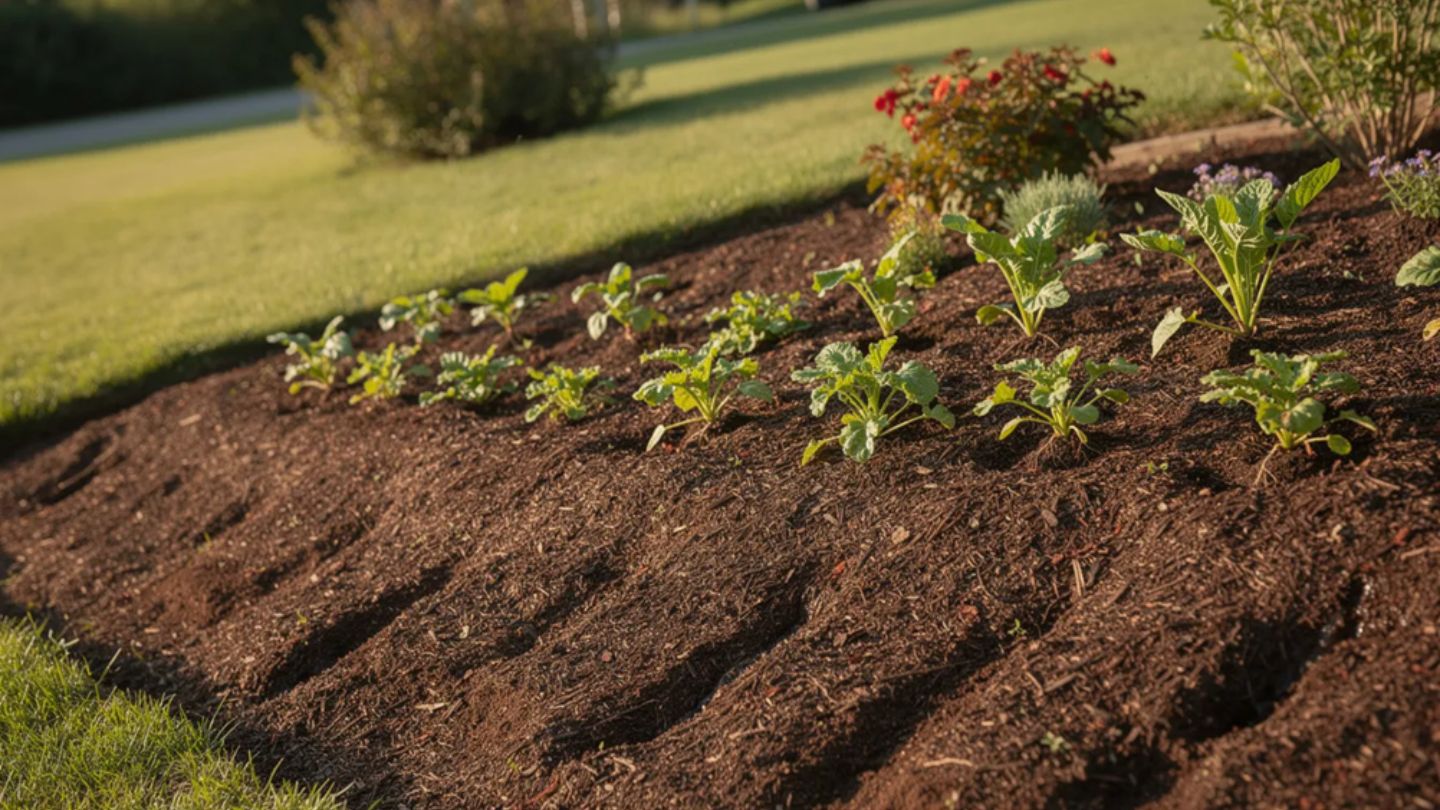
The biggest payoff from regular compost use is long-term improvements in soil. You’ll notice changes within one to three seasons of consistent applications, soil that’s easier to dig, roots that spread more freely, and plants that simply look healthier.
Building Soil Organic Matter
Adding compost directly increases soil organic matter, the foundation of everything good that happens underground. Higher organic matter means:
- Better tilth – Heavy clay becomes looser and more workable
- Improved cohesion – Sandy soil holds together and retains moisture instead of draining instantly
- Reduced compaction – Soil bounces back after footsteps and heavy rain
Compost supplies a balanced mix of macronutrients, nitrogen, phosphorus, and potassium, along with essential plant nutrients like calcium, magnesium, iron, and zinc. Studies show composted materials can increase plant-available potassium to levels sufficient to replace fertilizer entirely in low-potassium soils, leading to higher vegetable yields.
Stabilizing Soil pH
Most vegetables and ornamentals prefer slightly acidic to neutral soil (roughly pH 6.0–7.0). Compost naturally helps stabilize soil ph toward this ideal range, acting as a buffer against swings in either direction. You won’t need to add lime or sulfur as often when your beds receive annual compost additions.
A practical approach: spread 1–2 inches of compost on your beds each spring. Over two or three seasons, you’ll build a spongy soil structure that resists compaction, drains well after storms, and holds moisture during dry spells.
Real example: A home vegetable plot amended with 2 inches of compost each spring for two consecutive years often shows dramatically improved root development, larger harvests, and far fewer struggles with waterlogging or drought stress.
How Compost Supports Soil Life
Your garden soil teems with life you can’t see: bacteria, fungi, earthworms, nematodes, and countless other soil organisms. Compost serves as both food and habitat for this underground community.
Beneficial soil organisms break down organic matter into forms plants can absorb. Mycorrhizal fungi form partnerships with roots, extending their reach and making nutrients more available. Beneficial microbes compete with pathogens, helping plants resist diseases like Pythium, Fusarium, and Verticillium.
Regular compost use increases visible earthworm activity by late summer. These natural tillers aerate your soil, mix organic matter deeper, and leave behind nutrient-rich castings.
Tips to support soil life:
- Avoid over-tilling, which disrupts fungal networks
- Skip harsh chemical pesticides that harm beneficial organisms
- Add compost regularly rather than in one massive application
- Keep soil covered with mulch or plants to protect the biology below
Healthy soil biology is the key reason gardens require fewer pesticides and less frequent fertilizing over time. You’re building a self-sustaining system, not just feeding individual plants.
Compost, Erosion, and Soil Structure
Compost improves aggregation, the way soil particles clump together into stable crumbs. These aggregates resist breaking apart from wind, heavy rain, and foot traffic. The result: less soil erosion and better erosion control without expensive landscape fabric or retaining walls.
When you mulch bare soil with 1–2 inches of compost around plants, you prevent erosion by protecting the surface from raindrop impact, reducing crusting, and slowing runoff during spring and fall downpours. Water soaks in rather than sheeting off.
Where to focus compost for erosion control:
- Sloped beds where soil tends to wash downhill
- New beds with exposed, loose soil
- Compacted footpaths that shed water
- Areas around downspouts or at the base of slopes
For gardeners dealing with visible runoff issues, a combination of compost plus a light mulch layer transforms problem spots within a single season. You’ll see water infiltrating where it once puddled and ran off.
Water Conservation and Moisture Management
Compost-rich soil acts like a sponge. It absorbs rainfall and irrigation, holds moisture in the root zone, and releases it gradually as plants need it. For gardeners dealing with summer droughts or watering restrictions, this is one of the most practical benefits of composting.
How Compost Improves Water Retention
Each increase in soil organic matter significantly boosts water-holding capacity. Studies show improvements of 20–50% in coarse, sandy soils, the kinds that typically drain too fast and leave plants thirsty. Heavy clay soils also benefit, as improved structure allows water to penetrate rather than puddle on the surface.
Compost improves infiltration in two ways:
- Surface application – A 1–2 inch layer slows evaporation and keeps roots cooler during heat waves
- Incorporated amendments – Compost mixed into the root zone creates pathways for water to reach deep roots
Rain and hose water soak into compost-amended beds instead of running off hard, bare ground. You’ll water less often while plants stay healthier through dry spells.
Prioritize compost for thirsty crops:
- Tomatoes and peppers
- Cucumbers and squash
- Roses and hydrangeas
- Newly transplanted trees and shrubs
Combine compost with other water-saving practices for maximum effect: drip irrigation, morning watering, and maintaining mulch cover through the growing season. Gardeners in dry regions often cut watering frequency by 25–40% after building organic matter levels over two to three seasons.
Climate and Environmental Benefits at the Garden Scale
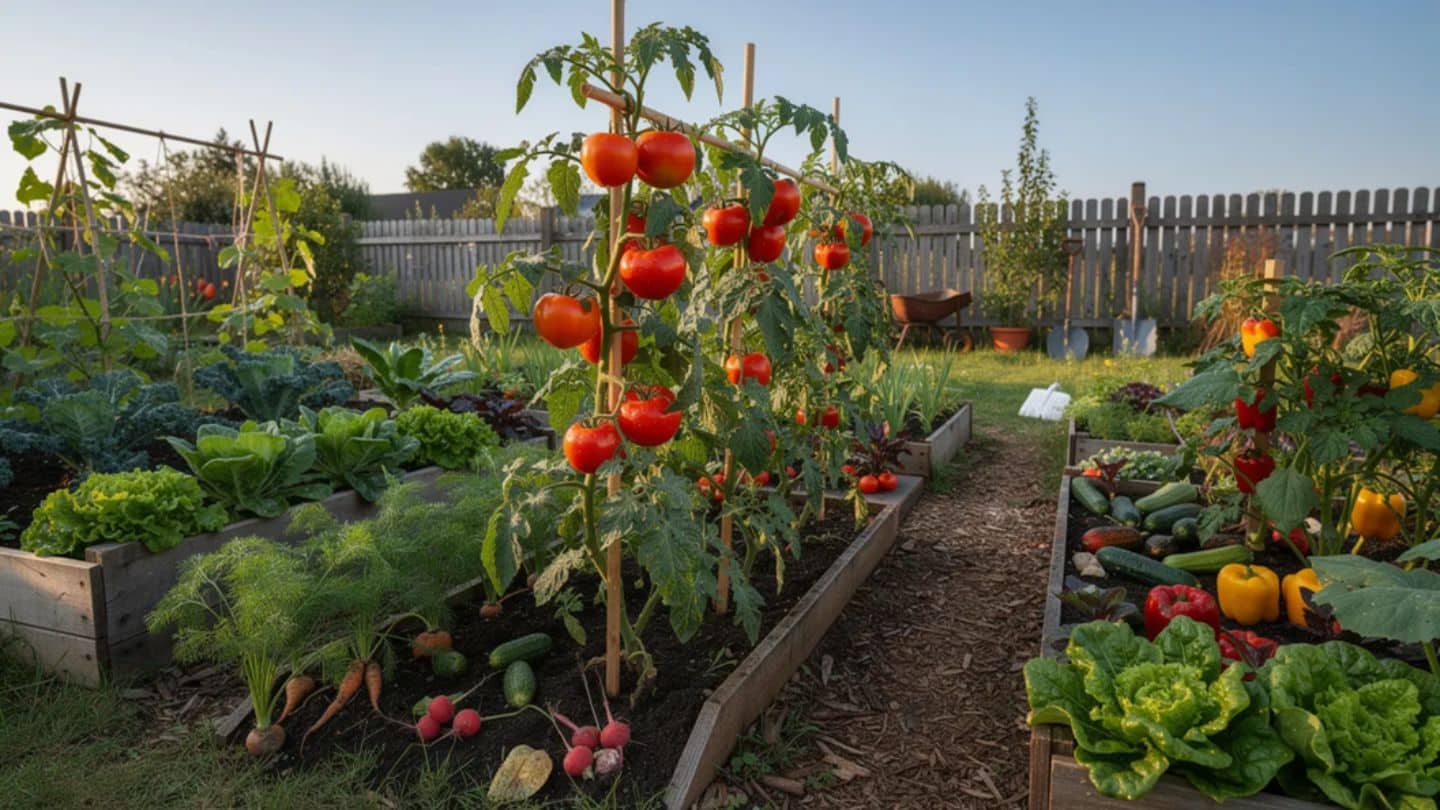
Your backyard garden contributes to climate solutions in ways that might surprise you. Using compost addresses climate change in two ways: reducing emissions and storing carbon in the soil. Many gardeners also wonder how compost compares to traditional mulch materials, especially when deciding which option is best for moisture retention and weed control. Understanding the difference between compost and mulch helps gardeners choose the right material, since compost enriches the soil from within while mulch protects the surface and conserves moisture.
Reducing Greenhouse Gas Emissions
Diverting food scraps, vegetable scraps, and yard waste from landfills reduces methane emissions, a potent greenhouse gas with roughly 80 times the warming impact of carbon dioxide over 20 years. The Environmental Protection Agency estimates that food and yard waste make up a significant share of municipal solid waste, and most of it decomposes anaerobically in landfills, producing methane.
When you compost that same organic waste at home or through a municipal program, decomposition happens aerobically. The result is carbon dioxide (far less damaging than methane) and stable organic matter, which you can use in your garden.
Sequestering Carbon in Soil
Adding compost builds long-lived soil organic matter, effectively sequestering carbon that plants pulled from the atmosphere. Healthy, compost-rich soil stores carbon for years or decades, keeping it out of the atmosphere where it would contribute to warming.
This carbon storage also buffers gardens against climate extremes:
- Heavy rain – Better structure prevents erosion and flooding
- Longer dry spells – Improved water retention keeps plants alive
- Heat waves – Mulch layer insulates roots and reduces stress
Choosing compost over synthetic fertilizers reduces demand for energy-intensive industrial fertilizer production. Manufacturing synthetic nitrogen fertilizer requires significant fossil fuel inputs, resources you bypass entirely by feeding your soil with compost instead.
Think of your garden as part of a local climate solution, especially when combined with trees, shrubs, and perennial plantings that capture carbon year after year.
Reducing Waste and Closing the Loop
Typical households can compost a substantial portion of their waste, including vegetable peels, fruit and vegetable scraps, coffee grounds, eggshells, and autumn leaves, all of which break down readily. Recent EPA estimates indicate that food scraps and yard trimmings make up roughly 30% of what we throw away, much of which could become garden gold instead.
Composting “closes the loop” in a satisfying way:
- Kitchen scraps go into the compost bin
- Microbes transform waste into soil food
- Enriched soil grows healthier plants
- Those plants produce more organic matter
- The cycle continues
Participate in local compost programs if home composting isn’t practical for your outdoor space. Many cities now offer curbside collection, and some community gardens maintain shared composting systems. Either way, wasted food stays in the community, building local soil rather than generating landfill methane.
Gardeners can reduce trash output while producing a valuable input for their soil at minimal cost. Your kitchen becomes a resource generator, not just a waste source.
Practical Ways to Use Compost in the Garden
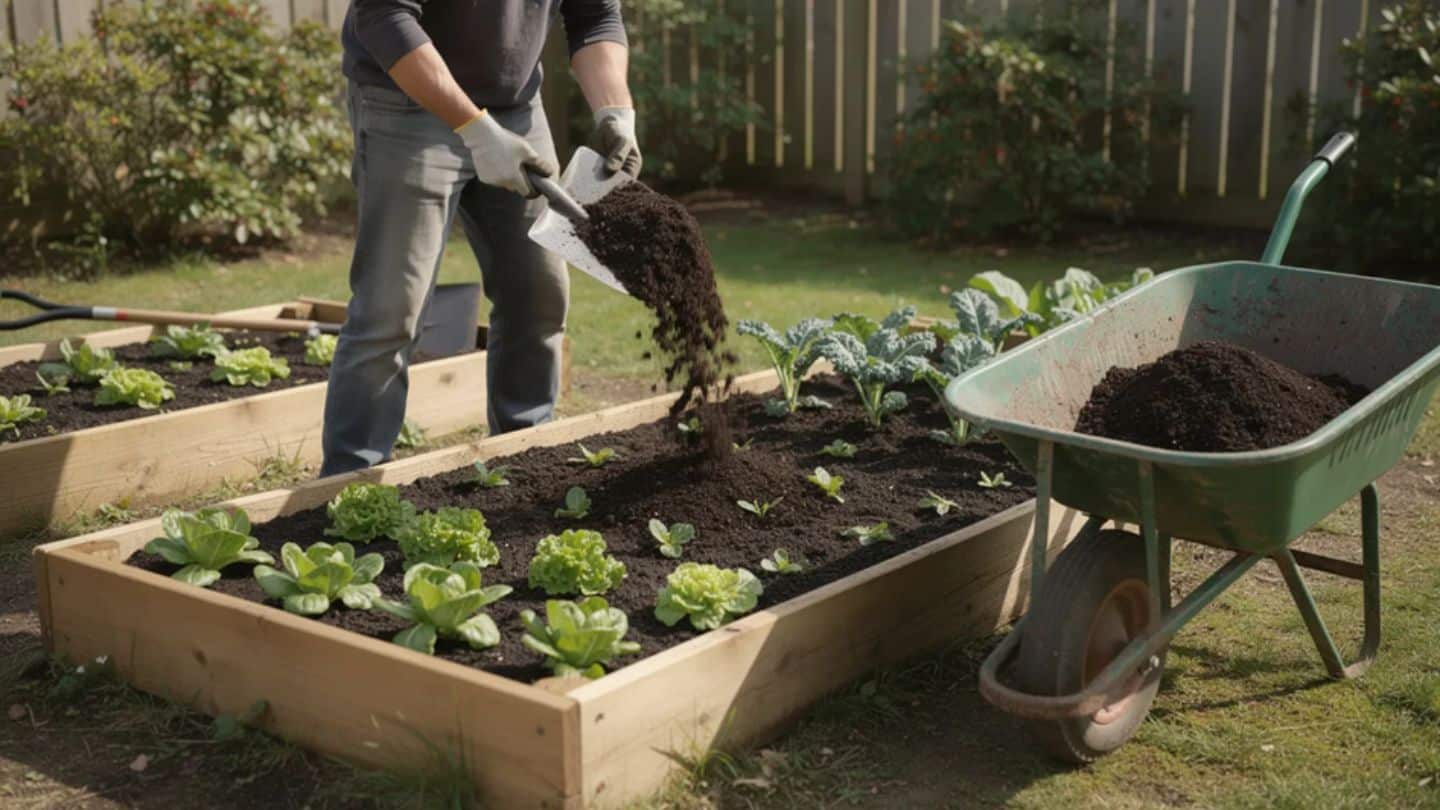
Compost works in four main ways: as a soil amendment dug into beds, as topdressing spread on the surface, as mulch protecting exposed soil, and as an ingredient in container mixes or compost tea. The right approach depends on whether you’re starting fresh, maintaining existing plants, or growing in containers.
Most home gardeners benefit from adding 1–3 inches of compost per year using some combination of these methods. Always use finished compost that’s dark, crumbly, and earthy-smelling, with no visible food scraps or strong ammonia odor.
Digging Compost Into New Beds (Soil Amendment)
When preparing a new garden bed, spread 2–4 inches of compost over the surface and mix it into the top 6–8 inches of garden soil. This heavier initial application establishes organic matter levels that sustain plants for years. Understanding the difference between compost vs topsoil helps ensure the right material is used for soil enrichment, grading, or planting preparation.
This approach works best when:
- Converting lawn to vegetable beds
- Building new raised beds
- Planting flower borders in poor soil
- Establishing fruit trees or berry bushes
After digging in compost, remove large stones, break up clods, and water thoroughly. The goal is to integrate organic material throughout the root zone where plants will access it.
Economic and Personal Benefits for Home Gardeners
Using compost saves money while producing better results. After a season or two of consistent applications, most gardeners buy fewer bags of synthetic fertilizer, fewer pest control products, and fewer replacement plants.
Where you’ll see savings:
| Expense | Without Compost | With Compost |
|---|---|---|
| Synthetic fertilizer | Multiple applications yearly | Occasional supplementation |
| Soil conditioners | Regular purchases | Rarely needed |
| Pest/disease treatments | Frequent applications | Minimal use |
| Plant replacements | Common in stressed gardens | Fewer failures |
| Water bills | Higher in summer | Reduced through retention |
Home composting transforms what would be trash collection costs, bags, pickup fees, and landfill tipping charges into a free resource. Your fruit and vegetable scraps, coffee grounds, and yard waste become inputs rather than outputs.
Healthier soil means fewer pest and disease problems, reducing spending on chemical pesticides and treatments. Plants growing in compost-enriched beds develop stronger root systems and better disease resistance, translating to fewer losses and less replanting.
Track improvements over time: better yields of tomatoes or greens, fewer dry patches in lawns, or lower water bills through a growing season. A vegetable bed that struggled before compost additions often produces noticeably larger harvests within two years of annual applications.
Considerations and Best Practices When Using Compost
Compost quality and application methods affect results. Not all compost is equal, and using it wisely maximizes benefits while avoiding potential problems.
Understanding Compost Variability
Compost made from different feedstocks varies in nutrient content, salt levels, and maturity:
| Feedstock | Characteristics | Best Uses |
|---|---|---|
| Yard waste only | Lower nutrients, well-balanced | General beds, mulching |
| Food waste included | Higher nutrients | Vegetables, heavy feeders |
| Manure-based | Higher nitrogen, watch the salts | Established beds, diluted |
| Biosolid-based | Higher nutrients, check quality | Non-edible plantings |
Always use mature, well-finished compost to avoid nitrogen drawdown, foul odors, or plant burn. Immature compost continues decomposing in your beds, temporarily tying up nitrogen that plants need.
Storage tips:
- Keep bagged compost in a dry, covered place
- Don’t apply soggy, foul-smelling material
- Use opened bags within a season for best results
Test soil every few years in intensively cropped vegetable beds to monitor nutrient levels and pH. This helps you adjust applications based on actual conditions rather than guessing.
Potential Issues and How to Avoid Them
Nitrogen tie-up: Very fresh, woody compost can temporarily reduce available nitrogen as microbes break down carbon-rich materials. Mix it with well-finished compost or supplement lightly with a nitrogen-rich organic fertilizer if plants show pale leaves.
Weed seeds: Poorly processed compost may contain viable weed seeds that sprout in your beds. Use high-quality sources or hot-composted material for weed-sensitive areas like vegetable gardens.
Contaminants to watch:
- Plastic bits from poorly sorted feedstocks
- Herbicide residues (especially aminopyralids from treated hay)
- Heavy metals in some biosolid composts
Buy from reputable suppliers or carefully manage home inputs. Avoid composting pet waste, diseased plants, or treated lumber sawdust when growing food crops. The US Composting Council provides resources for identifying quality compost producers.
Plant response signals:
- Pale leaves may indicate nitrogen tie-up
- Stunted growth suggests immature or overly strong compost
- Leaf burn can result from high salt content
Observe plants after new compost applications and adjust future rates based on what you see.
Integrating Compost With Other Soil-Building Practices
Compost works best as part of a broader soil health strategy. Combining it with other practices multiplies the benefits:
- Cover crops – Plant winter rye or clover in fall, then incorporate the growth before adding spring compost
- Mulching – Layer compost under wood chips or straw for season-long coverage
- Minimal tillage – Disturb soil only when necessary to preserve fungal networks
- Crop rotation – Move plant families around beds to prevent disease buildup
Regular leaf mulching in autumn plus compost in spring creates a steady organic matter cycle that mimics natural forest systems. Your garden develops resilient soil biology rather than depending on repeated fertilizer inputs.
Don’t rely solely on compost for every nutrient need. Soil tests may reveal specific deficiencies, such as calcium, boron, or sulfur, that targeted organic amendments address more effectively. The goal is living, resilient soil, and compost is central to that approach, but not the only tool.
Final Thoughts
Compost plays a vital role in building healthier soil, improving plant growth, and creating a more resilient landscape. From enhancing soil structure and increasing water retention to reducing erosion and supporting beneficial microbes, compost delivers long-term benefits for gardens, lawns, and planting beds. It also helps reduce fertilizer use while promoting environmentally responsible landscaping practices. Whether applied as a soil amendment, topdressing, or base layer beneath mulch, compost strengthens the foundation of any thriving outdoor space.
At Mulch Pros, your trusted source for landscape supply in Milton, we provide premium materials to help you achieve lasting results. Our products include high-quality mulch, soil, gravel and sand, pine straw, and firewood. With the right landscape materials and proper application, you can build stronger soil, healthier plants, and an outdoor space that looks its best year-round.
Frequently Asked Questions
How much compost should I add to my garden each year?
Most garden beds benefit from 1–2 inches of compost applied once a year and lightly worked into the topsoil. Poor or new soils may need 2–4 inches the first year. Adjust based on soil condition, crop intensity, and soil test results.
Is compost enough, or do I still need fertilizer?
Compost often provides sufficient nutrients for ornamental beds and light vegetable gardens. Heavy feeders like tomatoes or corn may still require supplemental organic fertilizer. Use soil tests and plant appearance to guide decisions.
Can I use compost on indoor plants and container gardens?
Yes, but limit compost to 20–40% of the potting mix. Combine it with materials like perlite or coir for proper drainage. Always use mature, well-sieved compost indoors.
How do I know if my compost is safe to use around edible crops?
Safe compost is dark, crumbly, earthy-smelling, and no longer heats up. Avoid material that smells rotten, looks slimy, or contains pet waste or treated wood residues.