
The right gravel transforms a backyard fire pit area from a muddy, unstable patch into a safe, comfortable gathering space your family and friends will use year-round. For North Georgia homeowners dealing with dense red clay soil, frequent rainfall, and humid summers, gravel selection directly impacts drainage performance, seating stability, fire safety, and how much maintenance your outdoor space demands over time. This blog breaks down the best gravel choices for backyard fire pit areas, explains which materials belong where, and helps you avoid costly mistakes.
Key Takeaways
- Crushed limestone creates the most stable, compacted base layer for fire pit seating areas and surrounding surfaces.
- Pea gravel delivers comfort and visual appeal as a top-dressing layer, especially for areas where you’ll be walking barefoot.
- Gravel fire pit areas should be at least 4 inches deep for proper stability and drainage.
- Different gravel types serve different purposes-base layers need angular stone, while decorative top layers can use rounded materials.
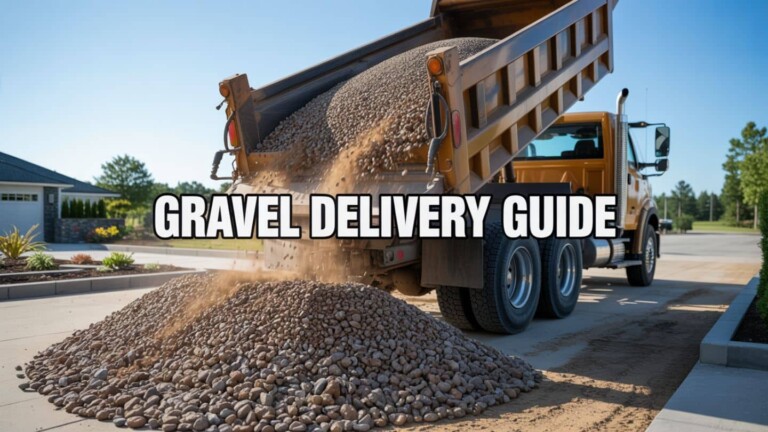
- Professional delivery ensures you receive the correct quantities, saving time and reducing material waste on your project.
Top Gravel Types for Fire Pit Areas
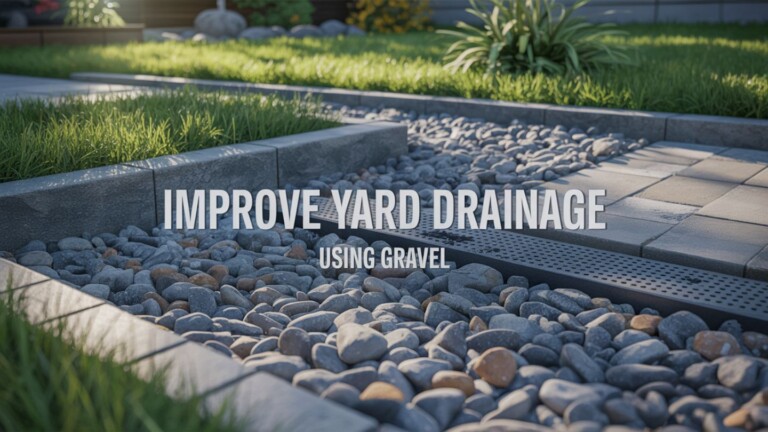
Choosing the right gravel for a fire pit area goes beyond appearance. The materials you select must be non-flammable, provide good drainage, and create a solid base that won’t shift under chairs, a table, or heavy items like stone benches. Gravel provides excellent drainage, preventing puddles around fire pits after Georgia’s frequent downpours. It also offers a stable surface, reducing slip risks in fire pit areas compared to bare ground or loose topsoil.
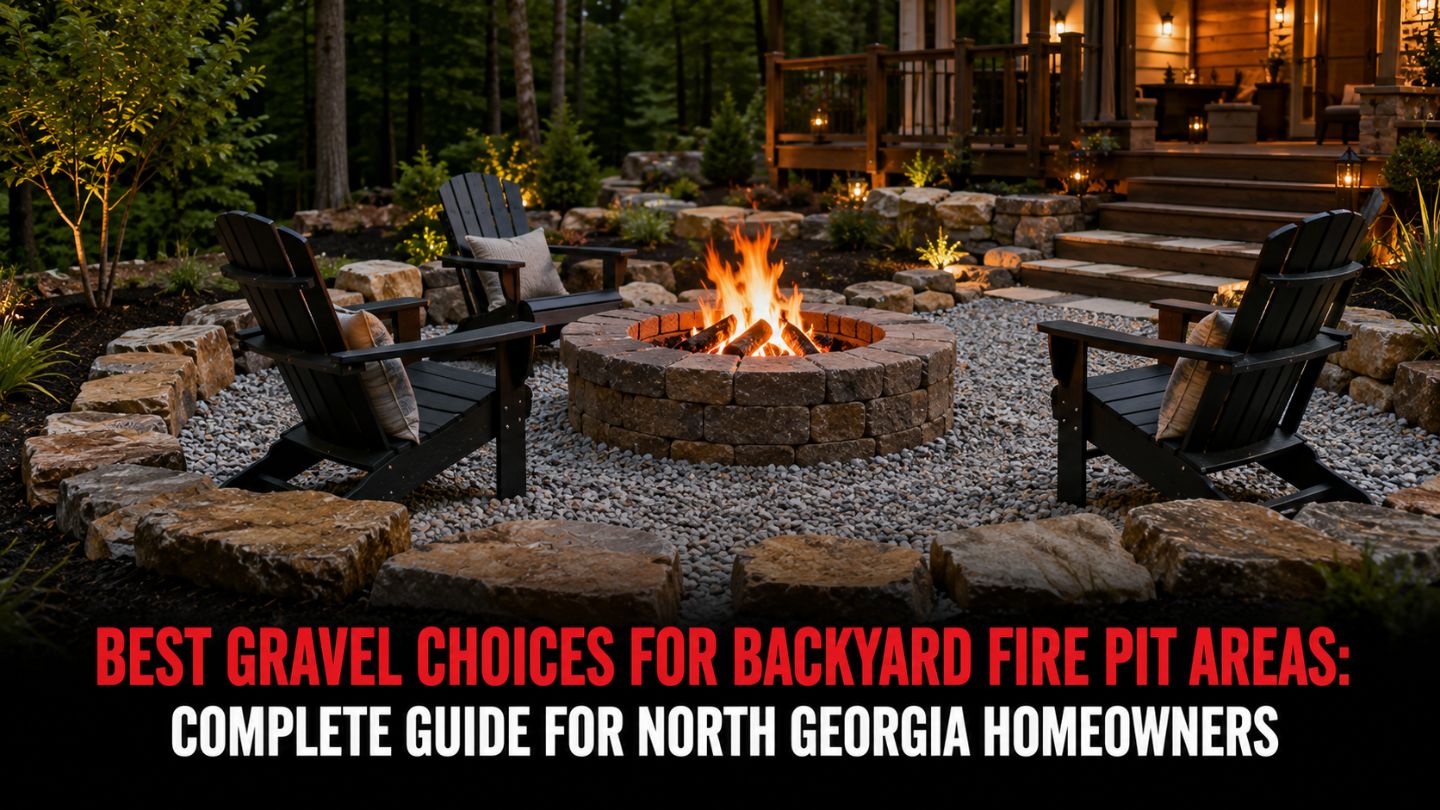
Different sections of your fire pit space require different types of gravel for the best performance. The ground directly beneath and around the actual fire pit needs maximum stability and heat resistance. The broader seating area benefits from comfort underfoot. And decorative borders can use a larger accent stone for visual impact. Understanding these zones helps you pick the right material for each purpose.
Long-term maintenance also depends heavily on your gravel choice. Angular materials that lock together need less regrading. Loose, rounded stones migrate and require periodic raking. The climate in North Georgia-with its wet springs, hot summers, and occasional freeze-thaw cycles-tests every material differently.
Crushed Limestone
Crushed limestone is the workhorse of fire pit construction. Its angular fragments interlock under compaction, forming a nearly solid base that resists shifting under furniture, foot traffic, and the weight of a stone or brick fire ring.
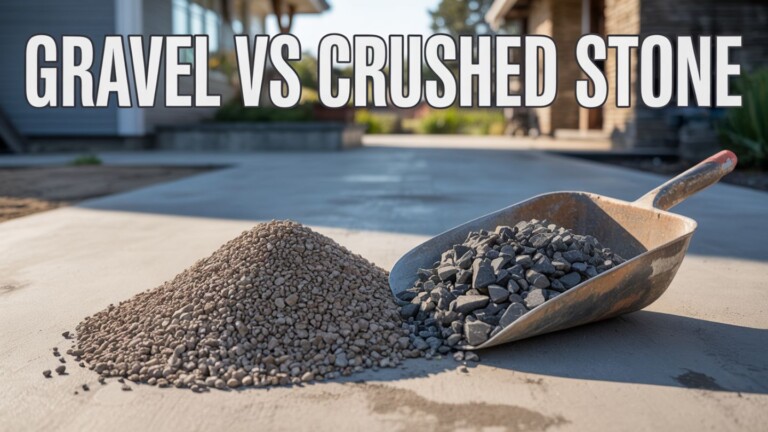
The recommended size is ¾-inch crushed limestone, often sold as “¾-minus” or “crusher run,” which includes fine particles that fill voids during compaction. This creates an exceptionally stable surface that won’t sink or rut-even on North Georgia’s challenging clay soils. Crushed stone locks together to create a stable base for fire pit areas, making it the preferred foundation material among landscape professionals.
Drainage performance is strong when the base is properly graded with a slight slope away from the fire pit. In the Atlanta metro area, crushed limestone typically costs $30 to $55 per cubic yard delivered, making it one of the most cost-effective options for large seating pads.
One important point: crushed limestone should not be used inside fire pits. While it excels as a base and surrounding surface material, the heat inside the burn area can cause cracking over time. Reserve it for the perimeter and foundation layers.
Pea Gravel
Pea gravel is a comfortable and visually appealing option that works best as a decorative top layer over a compacted base. These small, rounded stones-typically ¼-inch to ⅜-inch in diameter-come in warm, natural tones of tan, brown, and gray that blend beautifully with Georgia’s landscape.
The smooth, rounded edges make pea gravel comfortable for walking barefoot around fire pits, which is a significant advantage for family-friendly backyard spaces. Children and adults alike prefer the feel of pea gravel over sharp-edged crushed stone.
As a surface material, pea gravel drains exceptionally well because the rounded stones don’t pack tightly. Water passes through the gaps quickly, which helps prevent standing water after storms. However, this same characteristic means pea gravel doesn’t provide the rigid stability of crushed stone on its own-it shifts underfoot and migrates without proper edging.
Pea gravel requires regular raking to maintain an even surface and keep the area looking clean. Plan on periodic maintenance to redistribute material that gets kicked toward the edges or pushed into low spots. Material costs in North Georgia run between $25 and $55 per cubic yard, depending on color selection.
However, pea gravel can be an explosion hazard if used inside fire pits. The rounded stones can trap moisture, and when heated rapidly, internal steam pressure may cause them to crack or burst. Always keep pea gravel outside the immediate flame zone.
Decomposed Granite
Decomposed granite is a great option for homeowners who prefer a smooth, patio-like surface without the cost of pavers or concrete. This naturally weathered granite breaks into fine particles that compact into a firm, walkable surface with excellent drainage properties.
Decomposed granite can provide a firm, patio-like surface around fire pits, offering a refined look that pairs well with natural stone retaining walls and native plantings. It comes in attractive warm tones-reddish, golden, and gray shades-that complement North Georgia’s red clay surroundings beautifully.
Two variants are available. Natural decomposed granite compacts well but requires occasional topping off and maintenance. Stabilized decomposed granite includes a polymer binder that creates a harder, more erosion-resistant surface. Atlanta-area homeowners who’ve used stabilized DG around fire pits report strong performance lasting 8 to 12 years with minimal upkeep.
Material costs range from $35 to $50 per cubic yard for natural DG and $45 to $65 per cubic yard for stabilized versions. The higher upfront cost of stabilized DG is often offset by reduced long-term maintenance.
Factors to Consider When Choosing Fire Pit Gravel
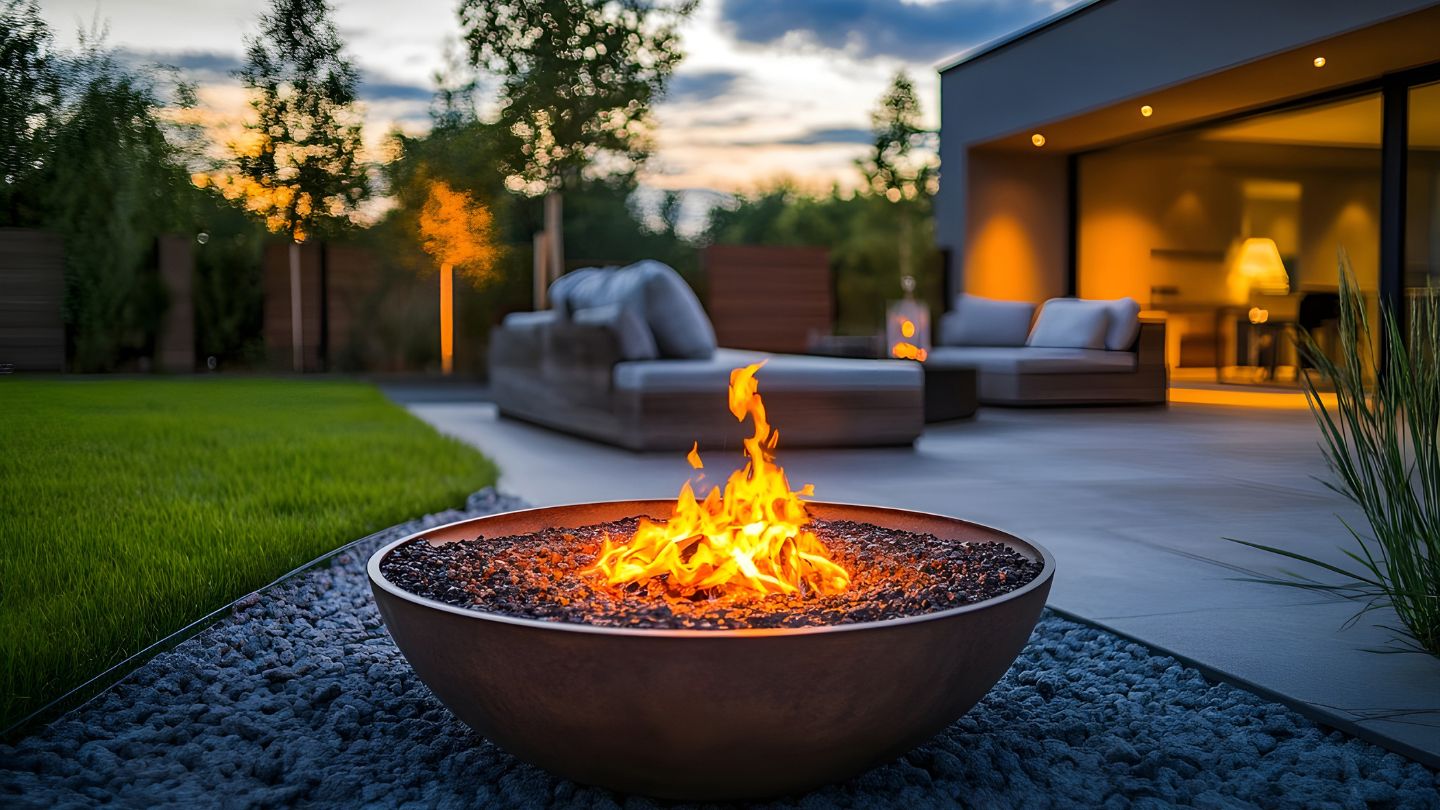
North Georgia’s red clay soil presents a unique drainage challenge. Clay holds water near the surface and turns into a slippery mess when wet. Without proper base preparation, gravel will gradually sink into the clay, leaving you with an uneven, muddy fire pit area. The solution is thorough excavation, a compacted crushed stone base, and installation of a heavy-duty geotextile landscape fabric to prevent clay from migrating upward into your gravel for drainage layers.
A fire pit area should be at least 10 feet away from any structures or overhanging trees. This safety clearance applies to your house, fence, shed, deck, and any overhead branches. Check with your local municipality for specific setback requirements in your area, though permits are typically not required for gravel fire pit areas.
When planning your fire pit seating area dimensions, consider that a comfortable space for 4 to 6 chairs needs a pad of at least 12 to 16 feet in diameter. This provides adequate room for seating while maintaining a safe distance from the actual fire pit in the middle.
Budget-wise, gravel is a cost-effective option for fire pit areas compared to concrete or paver installations. A layered approach typically includes compacted crushed stone topped with decorative gravel, giving sand and gravel installations both stability and aesthetics without the expense of hardscape construction. Factor in costs for edging materials, landscape fabric, and delivery when planning your project budget.
For aesthetic integration, consider how your gravel color and texture will complement existing elements in your yard-stone walls, mulch beds, brick pavers, and surrounding plants. Warm-toned decomposed granite or earth-colored pea gravel tends to harmonize naturally with North Georgia landscapes.
Common Mistakes to Avoid
- Using river rock or porous stones inside the fire pit: Avoid using regular landscape stones in the fire pit due to the risk of cracking from heat. River rocks are smooth and provide excellent drainage for border areas, but they trap moisture internally. When exposed to intense fire heat, that trapped water turns to steam and can cause the rock to crack or explode-a genuine explosion hazard. Use fire-rated materials like lava rock or fire brick inside the burn area instead. Lava rock is highly fire-resistant and lightweight, and lava rocks provide optimal airflow for wood-burning fires.
- Choosing insufficient gravel depth: If your total gravel depth falls below 4 inches, expect the surface to shift, chairs to sink, and standing water to accumulate. Aim for 4 inches of gravel depth for stability-this means 2 to 3 inches of compacted crushed stone base plus 1 to 2 inches of decorative top material.
- Skipping base preparation: Failing to remove grass and clay subsoil, skipping compaction, or neglecting to install landscaping fabric to prevent weed growth leads to settling, mud intrusion, and a mess within the first season. Remove grass and weeds from the fire pit area completely before beginning any gravel installation.
- Ordering incorrect quantities: Without proper calculations, you’ll either run short mid-project or pay for more gravel than you need. A 16×16 gravel patio requires about 4.5 tons of crushed stone at a depth of 4 inches. Use a gravel calculator to determine the exact amount for your dimensions.
- Neglecting edging containment: Edging materials help contain gravel and create a clean look around your fire pit area. Without a defined edge-steel edging, stone borders, or landscape timbers along the perimeter- loose pea gravel and decorative stone will migrate into your lawn, create uneven depth, and require constant correction.
Installation Planning and Material Ordering
Proper planning makes the difference between a fire pit area that lasts years and one that falls apart after the first heavy rain.
- Calculating gravel needed: Multiply your area’s length by width by depth (all in feet), then divide by 27 to get cubic yards. For example, a 16×16-foot pad at 4 inches deep: (16 × 16 × 0.33) ÷ 27 = approximately 3.13 cubic yards, or about 4.5 tons of material. Always order 10% extra to account for compaction, uneven ground, and slope differences when planning your gravel delivery service.
- Installation sequence: Start by selecting the perfect spot-level ground away from structures and trees. Mark the fire pit area with a stake and string to outline your desired shape, whether that’s a perfect circle or a square pad. Remove grass and topsoil down to stable subgrade (typically 6 to 8 inches). Install landscape fabric across the excavated area, overlapping seams by at least 6 inches. Using a weed barrier fabric prevents weeds from growing through gravel for years to come. Spread and compact your crushed stone base in 2-inch lifts until it’s perfectly level. Set your fire ring or pit structure. Finally, add your decorative gravel top layer and install edging to secure the perimeter.
- Ongoing maintenance: Once your fire pit area is complete, regularly sweep or rake leaves and debris from the gravel to keep the surface clean. Use a leaf blower to remove debris from gravel areas quickly. Add more gravel to fill gaps as needed; settling is normal in the first year. Spray gravel with weed killer once in spring to stay ahead of any weed growth that finds its way through seams in the fabric.
Create a Safe and Attractive Outdoor Gathering Space
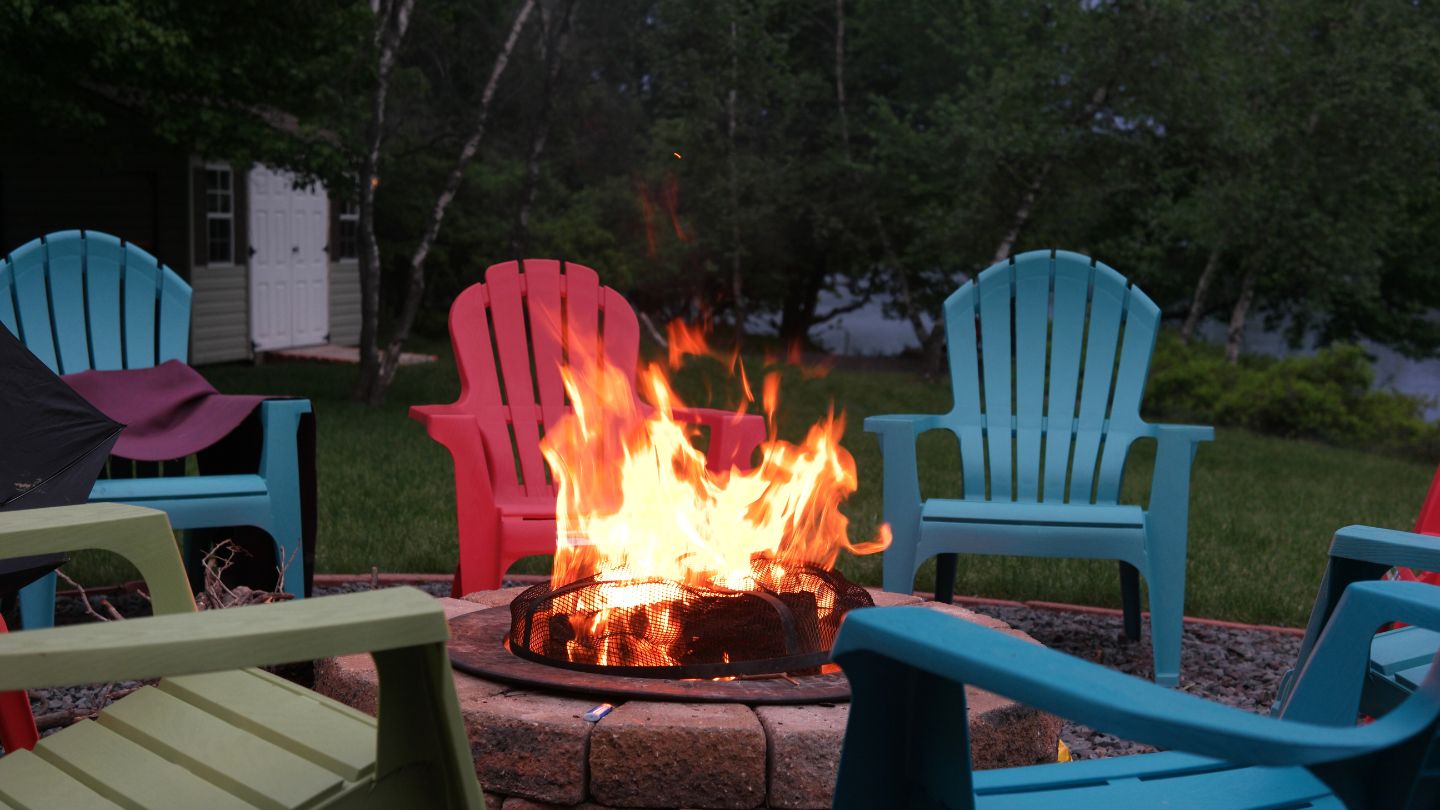
Choosing the right gravel for your backyard fire pit improves safety, drainage, durability, and overall appearance. Selecting materials that withstand heat while complementing your landscape helps create a comfortable gathering space that requires less maintenance and performs well throughout every season.
Mulch Pros Landscape Supply is committed to providing dependable products, convenient delivery, and outstanding customer service, including premium gravel in Johns Creek. Whether you need mulch, firewood, soil, pine straw, or pea pebbles, we have quality landscape materials to support projects of every size. Contact us today and let us help you choose the right materials for your next outdoor project.
Frequently Asked Questions
What type of gravel works best under a fire pit ring?
Crushed stone in ¾-inch size provides the most stable, compacted base directly under a fire pit ring. Its angular shape locks together and resists shifting under the weight of stone or metal fire rings. For the interior floor of the fire pit where wood burns, use fire-rated materials such as lava rock or fire brick-not landscape gravel, pea gravel, or river rock, which can crack or explode from heat exposure.
Can I use decorative stone instead of gravel around my fire pit?
Yes, but with important limitations. Decorative stone works well for borders and accent areas outside the heat zone. However, avoid using regular landscape stones in the fire pit itself due to the risk of cracking from heat. Porous or moisture-retaining stones like river rock should never be placed where they’ll be exposed to direct flame or intense radiant heat.
How deep should gravel be around a backyard fire pit?
Gravel fire pit areas should be at least 4 inches deep. A proven approach uses 2 to 3 inches of compacted crushed stone as the base layer, topped with 1 to 2 inches of decorative gravel such as pea gravel or decomposed granite. This total depth provides adequate stability for chairs, proper drainage in wet conditions, and sufficient non-combustible material to protect the ground from embers and heat.
What’s the difference between crushed limestone and pea gravel for fire pits?
Crushed limestone features angular, rough-edged fragments that interlock when compacted, creating an extremely stable surface ideal for base layers and areas supporting furniture. Pea gravel consists of small, smooth, rounded stones that feel comfortable underfoot but shift easily and require edging to stay in place. The best approach for most fire pit areas combines both: crushed limestone as the structural base and pea gravel as the decorative, walkable top layer. Sharps gravel provides exceptional stability for fire pit areas as well and can serve as an alternative base material.