

Mulch plays a critical role in maintaining healthy, attractive landscapes on commercial properties. Over time, exposure to weather, foot traffic, and natural decomposition reduces its effectiveness and visual appeal. Replacing mulch on the right schedule helps control weeds, retain soil moisture, and protect plantings year-round. For property managers, timing matters as much as material choice. In this blog, we outline how often commercial properties should refresh mulch to keep landscapes performing and looking their best.
Key Takeaways
- Most commercial properties should refresh mulch every 12 months, with high-visibility areas like entrances and monument signs needing touch-ups every 4–6 months.
- Organic mulch in commercial beds typically lasts 6–12 months before needing attention, while inorganic options like stone or rubber mulch can last 5–10 years with periodic maintenance.
- Schedule formal inspections at least twice a year, spring and fall, to check mulch depth, color, weed pressure, and any safety or compliance issues.
- Consistent mulch replacement directly impacts curb appeal, tenant satisfaction, irrigation efficiency, and in some regions, water-use or fire-wise compliance requirements.
- Building mulch replacement into your annual budget and maintenance plan prevents costly catch-up work and keeps your property looking polished year-round.
Why Mulch Replacement Is Critical for Commercial Properties
If you manage an office park, oversee a multifamily community, or handle landscape decisions for an HOA, you already know that first impressions matter. That layer of mulch around your entrances, parking islands, and common areas does more than look nice, it’s a working part of your property’s infrastructure.
Well-maintained mulch beds reduce slip hazards from bare soil on walkways, stabilize slopes around parking lots, and keep entryways looking professional for tenants, customers, and inspectors. Whether you’re responsible for a medical campus, shopping center, hotel grounds, or industrial park, fresh mulch signals that someone is paying attention.
Here’s what mulch actually does for your commercial property:
- Suppresses weeds so beds stay clean without constant labor
- Retains soil moisture to reduce irrigation needs and protect plant roots
- Regulates soil temperature to keep plantings healthy through temperature swings
- Controls soil erosion along sidewalks, curbs, and drainage areas
- Protects irrigation infrastructure from sun exposure and foot traffic
For property portfolios with multiple buildings or campuses, mulch replacement needs to be built into your annual budget and multi-year capital plan, not handled as an afterthought when things start looking rough.
When and How Often Commercial Mulch Should Be Replaced
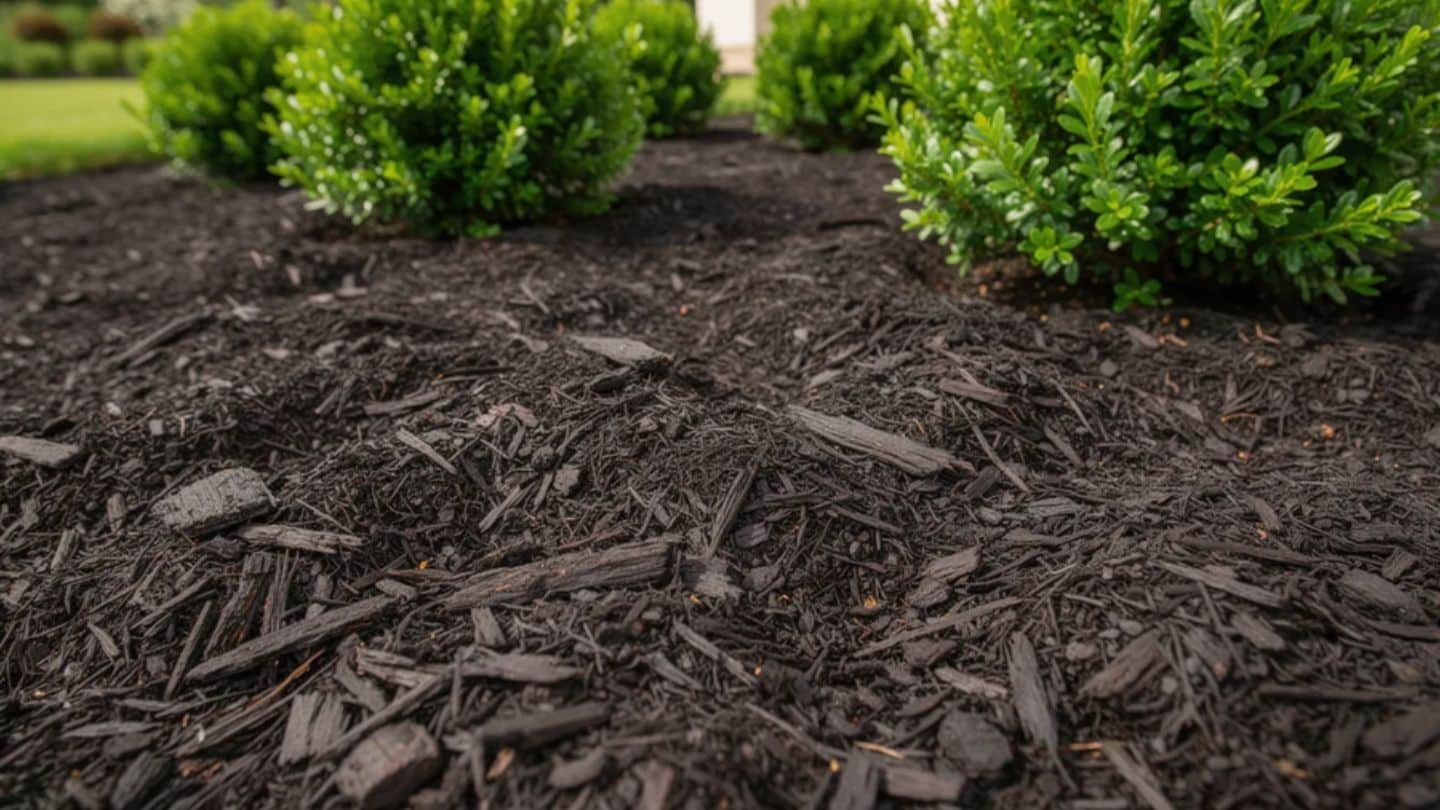
Here’s the direct answer: most commercial landscapes should plan a full mulch refresh once every 12 months, with targeted touch-ups as needed throughout the year.
That said, your specific schedule depends on visibility, traffic, and property type. High-profile areas like main entrances, monument signs, leasing offices, model units, and drive-thru lanes usually need color and depth touch-ups every 4–6 months to maintain that polished look.
Shaded, low-traffic foundation beds can often go 18–24 months between full tear-out and replacement if they receive yearly top-dressing to maintain proper depth.
Climate plays a role, too. In hot, humid regions, organic mulch breaks down faster and may need more frequent refreshing. Properties in cooler, drier climates typically get longer life from the same materials.
For property managers balancing appearance and maintenance, understanding how often you should replace mulch helps align replacement schedules with plant health, budget planning, and long-term curb appeal expectations across commercial landscapes.
Mulch Lifespan by Type in Commercial Settings
Mulch type is the biggest factor determining how often you’ll need to replace mulch on your commercial property. This is especially important for large sites with tight maintenance budgets and service contracts to manage.
Most commercial properties rely on organic wood-based mulches around plantings, shredded hardwood, bark chips, or dyed brown and black mulch. For courtyards, utility areas, and permanent beds, many properties specify inorganic materials like decorative stone, gravel, or rubber mulch.
Here’s what you can expect from common commercial materials:
- Shredded hardwood mulch: 9–18 months before needing replacement
- Dyed commercial mulch: Color refresh every 6–12 months due to UV fading
- Bark nuggets: 2–4 years with annual top-dressing to fill gaps
- Gravel and decorative stone: 10+ years for the material itself
- Rubber mulch: 8–10 years with periodic leveling and top-offs
Even long-lasting inorganic mulches require periodic raking, debris removal, and replenishment in areas where wind or foot traffic pushes material around, especially near parking lots and building corners.
Organic Mulches Used on Commercial Properties
Commercial-grade organic options typically include double- or triple-shredded hardwood, pine straw, shredded bark, and dyed brown or black mulch. These products are popular around entries, signage, and high-visibility flower beds because they provide a clean, consistent appearance.
Most organic mulches need a visible refresh every 6–12 months on busy properties to maintain color and a 2–3 inch depth. Sun-exposed beds and pedestrian routes show wear fastest. That fresh layer of new mulch makes a noticeable difference in how your property presents to visitors.
In regions with water regulations, for example, maintaining a consistent 3-inch mulch layer in planting beds can help meet local water-efficiency and weed-abatement codes.
For hospitals, schools, and senior living communities, softer organic mulches like shredded wood or pine straw are often preferred over sharp stone for both safety and aesthetics. They’re easier on anyone who might take a fall.
One thing to remember: decomposition is actually a benefit. As organic mulch breaks down, it improves soil structure and adds nutrients. But that same process is what drives your replacement frequency. Budget accordingly.
Inorganic Mulches (Stone, Gravel, Rubber, Fabric)
Many corporate campuses, hotels, and medical facilities specify decorative stone or river rock in low-maintenance areas and around HVAC equipment or utility pads. These materials offer a permanent, clean look that works well with modern architecture.
While the rock itself may last a decade or more, commercial crews still need to blow out leaves with a leaf blower, remove litter, and occasionally add new rock every 3–5 years to fix thin or settled spots. Inorganic mulch isn’t maintenance-free; it’s just lower maintenance.
Rubber mulch, often made from recycled tires, has become common in playgrounds, courtyards, and high-traffic amenity areas. It typically lasts 8–10 years but requires annual leveling and periodic top-offs to maintain proper fall-safety depths. Keep in mind that rubber mulch can get hot in direct sun exposure.
Here’s something many property managers overlook: landscape fabric and plastic sheeting installed under rock beds typically break down in 3–5 years. When that weed barrier fabric fails, weeds push through, and you’re looking at a partial renovation to fix the problem.
One caution with inorganic materials: stone and rock can increase heat around building foundations and may not suit all plantings. In Georgia, mulch selection and placement should also consider building clearance, drainage, and pest control, especially near foundations, where moisture buildup can attract insects or contribute to plant stress.
Seasonal Timing: When Should Commercial Mulch Be Replaced?
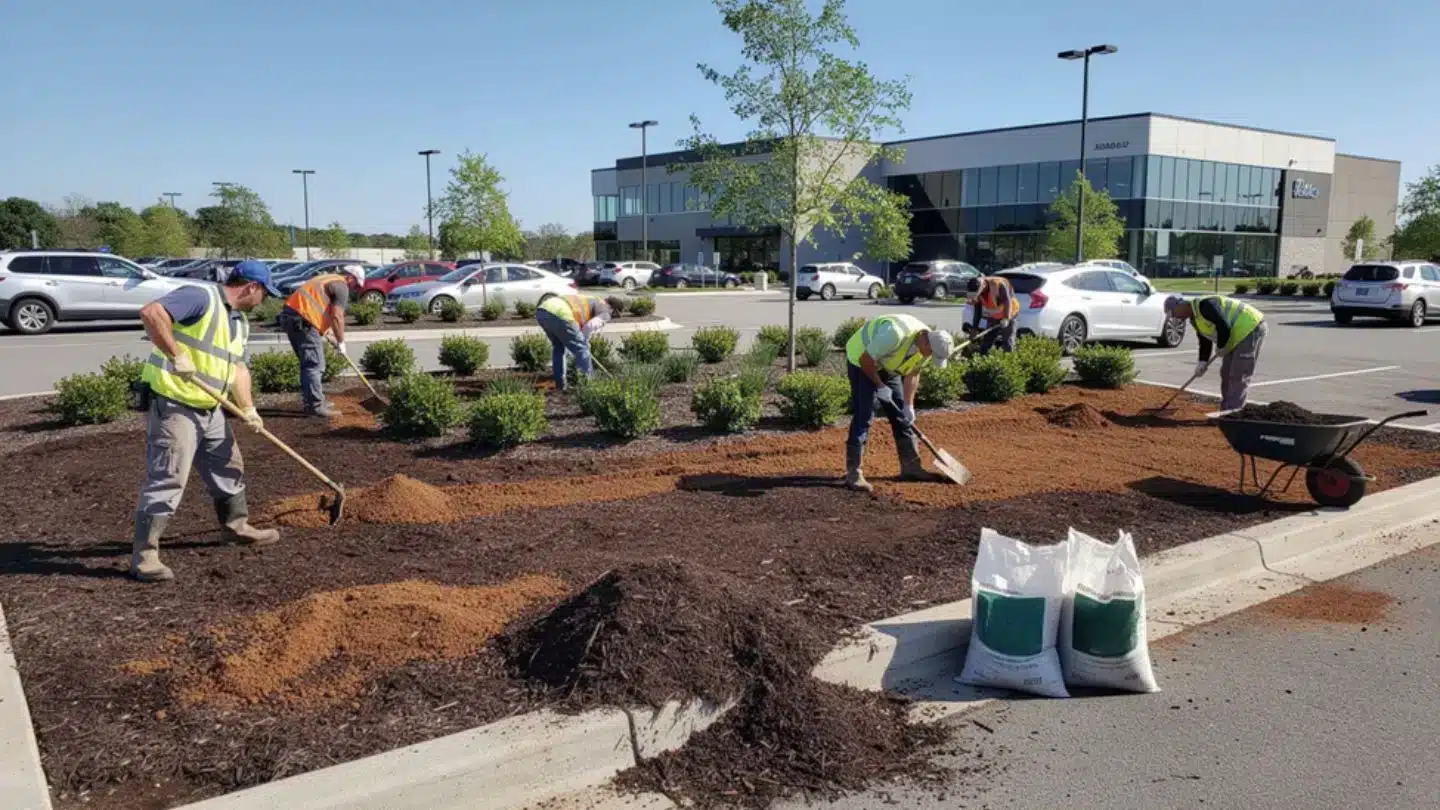
Commercial mulch work should be scheduled strategically around your leasing cycles, peak visitation periods, and local weather patterns, not just whenever the contractor has availability.
In most U.S. regions, the primary mulch installation or full refresh happens in late winter through spring (February–May), before the main growing and leasing seasons kick in. This timing sets up your property for maximum curb appeal when it matters most.
A second, lighter touch-up in late summer or early fall (August–October) is common for retail centers and multifamily communities looking to freshen things up before holiday traffic or fall leasing pushes.
Georgia timing guidance:
| Best Primary Timing | Notes |
|---|---|
| Late winter to mid-spring (Feb–April) | Best time for full mulch replacement in Metro Atlanta. |
| Late summer to early fall (Aug–Oct) | Ideal for touch-ups after heat stress and storm washouts. |
| Mid-summer (June–July) | Replacements are possible, but crews often focus on refreshing only high-visibility areas due to extreme heat. |
In the Metro Atlanta area (including Alpharetta, Johns Creek, Milton, and nearby communities), the best time for a full mulch refresh is typically late winter through mid-spring (February to April). This timing gives beds a clean, professional look before peak growing season and helps protect moisture as temperatures rise. Many commercial sites also schedule a late summer or early fall touch-up (August through October) to restore depth and curb appeal after heat, heavy rain, and foot traffic.
Spring Mulch for First Impressions and Plant Health
Early spring is the ideal window for full mulch replacement as part of an annual landscape kickoff for office parks, shopping centers, and apartment communities. It’s when you set the tone for the entire year.
Installing or refreshing mulch in March through May delivers multiple benefits:
- Conserves soil moisture during summer heat
- Blocks weed seeds before they germinate
- Frames spring annual flowers and new plantings
- Stabilizes soil temperature for newly planted trees and shrubs
Property tours, lease renewals, and tenant events often cluster in spring, making fresh mulch important for leasing and occupancy goals. That polished first impression can influence a prospect’s decision.
Align spring mulching with irrigation-system start-up so your landscape crew can verify coverage and raise spray heads above the new mulch depth. Nothing defeats the purpose of fresh mulch like a broken sprinkler flooding a bed.
Fall Mulching and Mid-Year Touch-Ups
Many commercial properties schedule a lighter “refresh pass” in late summer or early fall to restore color and cover bare spots without fully removing existing mulch. This fall mulching approach is cost-effective while keeping things looking sharp.
In Georgia, fall mulching is less about freeze insulation and more about improving curb appeal, reducing winter weeds, and restoring mulch depth after summer breakdown and storm runoff. It’s the last chance to make a good impression before everything goes dormant.
In warmer climates, fall touch-ups focus more on aesthetics and weed control than freeze protection, especially around plazas and outdoor dining areas that stay active year-round.
Target these areas for 4–6 month touch-ups:
- Sign monuments and main entrances
- Clubhouse and leasing office walkways
- Drive aisle medians and parking islands
- Model unit landscaping
Fall is also the right time to correct washouts from summer storms in erosion-prone areas, slopes by retention ponds, driveways, and loading docks where heavy rain moves material around.
How to Know It’s Time to Replace or Refresh Mulch on a Commercial Site
Use this as a practical checklist during site walks with your landscape contractor. Catching problems early prevents small issues from becoming expensive fixes.
Visual cues that mulch needs attention:
- Faded or bleached color, especially in dyed mulch after 6–12 months of sun exposure
- Thin or bare spots where the soil surface is visible
- Patchy coverage under trees or along high-traffic paths
- Gray, ashy appearance indicating UV degradation
Functional signs of failing mulch:
- Increased pesky weeds breaking through thin layers
- Cracking or hydrophobic old mulch that repels water instead of absorbing it
- Erosion channels in slopes or around downspouts
- Exposed tree roots at bases where mulch has washed away
- Compacted layers forming a crusty barrier over the soil
Compliance and risk indicators:
- Mulch piled against siding, tree trunks, or plant stems in a mulch volcano formation
- Material pushed into fire lanes or ADA-accessible paths
- Depth exceeding 3–4 inches near building foundations, where pests could harbor
- Sour smells, sliminess, or visible fungal growth indicate decomposition problems
Schedule formal inspections at least twice a year, spring and fall, and document conditions with photos. This helps you plan upcoming mulch budgets and work orders with actual data rather than guesswork.
Replacement vs. Top-Dressing: What Makes Sense for Commercial Budgets?
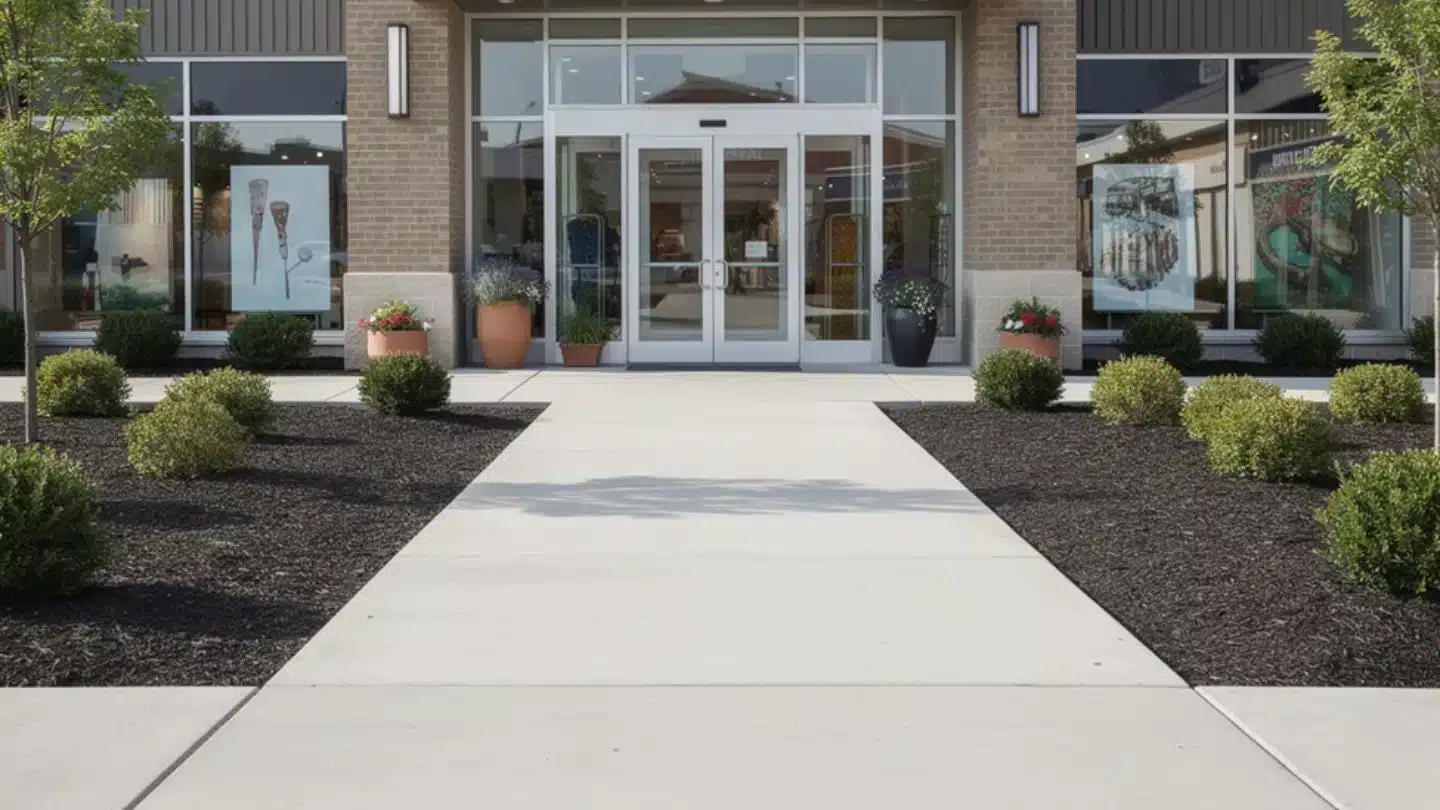
Understanding when to fully replace mulch versus when to simply add more on top can save significant money over time while keeping your property looking great.
Full replacement means removing most or all of the old mulch down to the soil surface before installing new material. Top-dressing means adding 0.5–1.5 inches of fresh mulch on top of an existing layer that’s still in decent shape.
Most commercial properties alternate between a full replacement every 2–3 years and annual or semiannual top-dressing in between. This approach controls costs while maintaining appearance standards.
When full replacement is necessary:
- Existing mulch is badly decomposed and looks like soil
- Layers are heavily compacted and repel water
- Visible mold, fungal growth, or sour odors present
- Total depth has built up beyond 3–4 inches
- Soil compaction underneath is affecting plant health
When top-dressing works fine:
- Existing layer is still 1–2 inches deep
- No foul odors or heavy fungal colonization
- Weed pressure is manageable
- Color refresh is the main goal
A structured replacement-versus-refresh schedule helps stabilize annual landscape budgets. Commercial property owners and asset managers appreciate predictable costs they can plan around.
Depth Guidelines for Commercial Mulch Applications
Getting mulch depth right matters more than most people realize. Too little won’t control weeds or retain soil moisture effectively. Too much creates problems for plant health.
Recommended depths by application:
| Application | Recommended Depth |
|---|---|
| Shrub and garden beds | 2–3 inches |
| Perennials and annual color beds | 1–2 inches |
| Tree rings for weed control | 3 inches maximum |
| Around building foundations | 2 inches, pulled back from the siding |
Watch out for “mulch volcanoes” around trees, those mounded piles that pile mulch against trunks. They’re surprisingly common on commercial properties and should be corrected by pulling mulch away from trunks 2–3 inches to protect roots and prevent bark rot.
Excessive mulch depth (over 4 inches) can create root rot, pest habitat, and poor air exchange. Thick layers might look impressive initially, but they lead to plant decline and higher replacement costs down the road.
Consistent proper depth makes irrigation performance more predictable and reduces standing water issues on sidewalks and near entrances. Keep mulch pulled back from building foundations and vents per local pest-control and fire-safety recommendations, especially in regions with termites or strict fire codes.
Operational Considerations: Scheduling, Safety, and Cost Control
Commercial mulch projects require planning around actual business operations. You can’t shut down a hospital entrance or block retail parking during peak hours just because it’s mulch day.
Scheduling best practices:
- Work during off-hours, weekends, or documented low-traffic times
- Phase large projects so critical areas remain accessible
- Coordinate with other vendors (irrigation, tree trimming, pressure washing) to avoid rework
- Complete high-visibility areas before major tenant events or seasonal deadlines
Cost control strategies that work:
- Order mulch in bulk to reduce per-yard costs
- Standardize color across your portfolio for consistent appearance and simpler procurement
- Lock in multi-year service agreements with reliable suppliers
- Specify which areas get full replacement versus touch-ups in your contracts
Clear scope definitions in contracts prevent confusion and scope creep. Specify which areas receive full replacement versus touch-ups, which entrances must be completed by specific dates, and how often you should replace versus refresh different zones.
High-quality mulch from a reliable supplier makes a difference. Premium materials hold color longer and break down more slowly, reducing your total cost per year even if the upfront price is slightly higher.
Read More: Mulch Maintenance: How to Re-Mulch and Touch Up Your Beds Like a Pro
Planning a Sustainable Mulch Replacement Strategy
Maintaining the right mulch depth on commercial properties is about more than appearance. Timely replacement supports soil health, controls weeds, protects plantings, and preserves curb appeal throughout the year. By following a consistent schedule and adjusting for weather and traffic, properties avoid costly landscape issues and uneven results.
At Mulch Pros, we help property managers simplify seasonal planning and maintain reliable landscape standards, including professional services for mulch in Johns Creek. A comprehensive exterior maintenance plan often includes firewood, pine straw, soil, gravel and sand to support both functional needs and a clean, professional look across the entire property. If you’re ready to streamline mulch replacement, reduce callbacks, and keep your grounds looking sharp year-round, we’re here to support your next project with dependable materials and service.
Frequently Asked Questions
Can we just add new mulch without removing the old material?
In many cases, yes, top-dressing works when existing mulch is still in good condition and only 1–2 inches deep. However, if total depth exceeds 3–4 inches, or the mulch is compacted, moldy, or smells like soil, removal is necessary before adding new material.
How do we estimate mulch quantities for large commercial beds?
Measure each bed’s length and width in feet, multiply by the desired depth in inches, then divide by 324 to calculate cubic yards. For large or irregular layouts, suppliers can help estimate quantities using site plans, ensuring accurate ordering and reducing material waste.
Is it okay to use different mulch colors or types across our property?
It’s possible, but uniformity usually looks better on commercial sites. Different mulches fade and age at different rates, creating inconsistency. If mixing materials, transitions should look intentional. Using one mulch color across visible areas simplifies maintenance and keeps the property looking cohesive.
How do major weather events affect mulch lifespan?
Heavy rain can wash mulch from slopes, wind can scatter lighter materials, and snowplows may displace mulch along drive aisles. After major storms, inspect beds for movement or thinning. Properties in storm-prone areas often need one or two extra mulch touch-ups annually.
What’s the difference between installing mulch ourselves and professional mulch installation?
Small properties may handle mulching internally, but large commercial sites benefit from professional crews. Professionals ensure even depth, faster installation, proper cleanup, and coordination with other services. For extensive landscapes, the efficiency and consistency typically outweigh the added service cost.