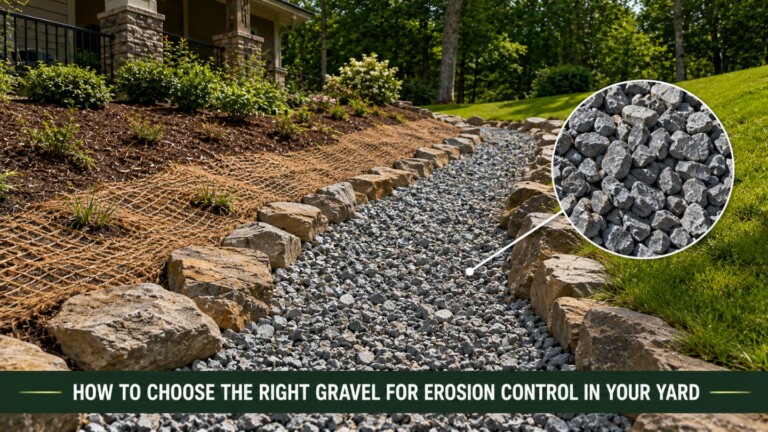
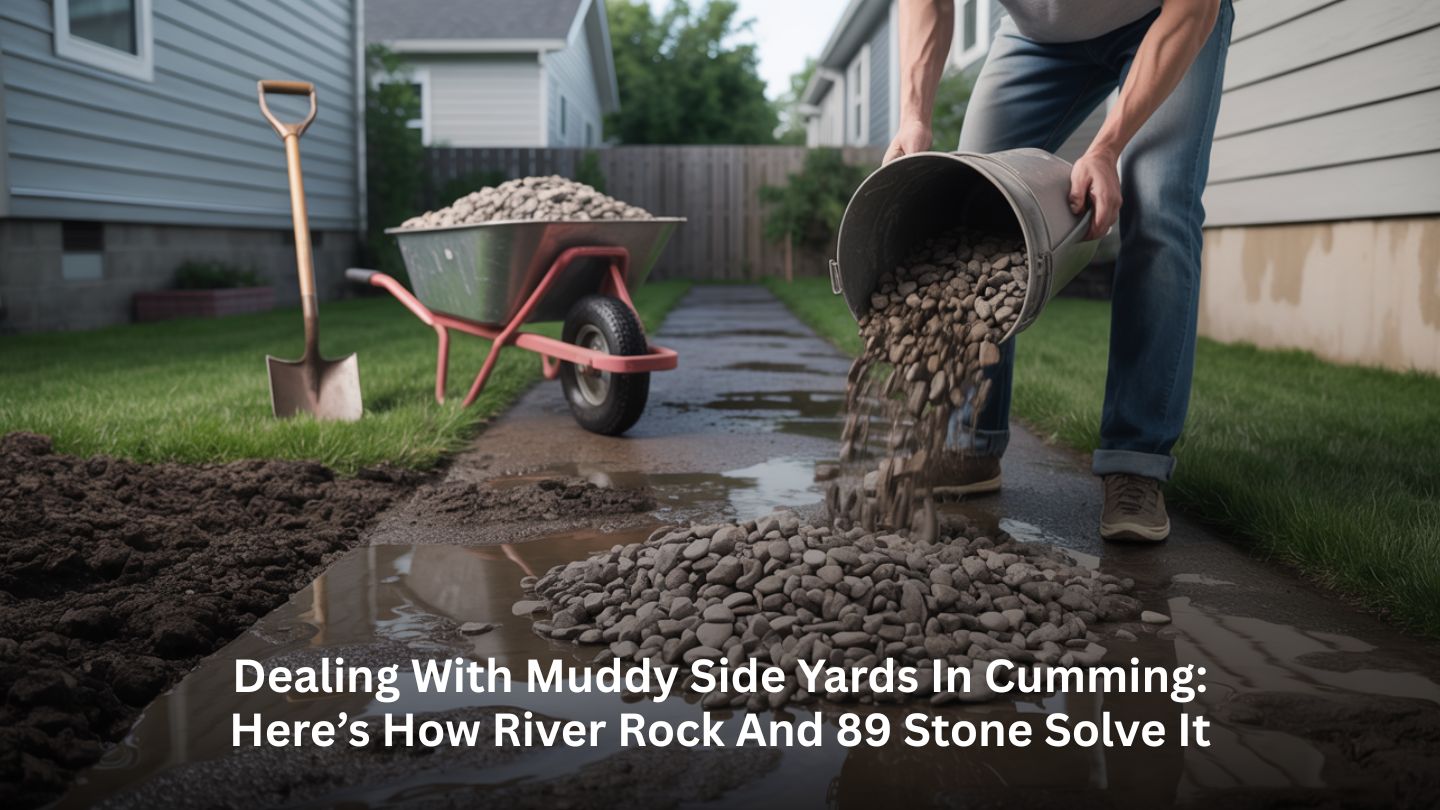

That narrow strip of mud between your house and fence line doesn’t have to be an eyesore anymore. If you’re dealing with muddy side yards in Cumming, you already know the frustration of tracking clay-stained footprints through your home after every rain. The good news? River rock and 89 stone provide permanent, functional solutions that eliminate mud while improving your property’s drainage and appearance.
Cumming’s combination of heavy rains and clay-rich soil creates the perfect conditions for side yard disasters. These narrow areas collect water from roof runoff, struggle to grow grass, and turn into muddy paths that seem impossible to fix. This blog breaks down exactly why these problems happen in North Georgia and how the right stone solution transforms your side yard from a soggy mess into a clean, low-maintenance area you can actually use.
Key Takeaways
- River rock creates immediate drainage and eliminates mud in side yard areas
- 89 stone provides superior compaction and long-term stability for high-traffic zones
- Both materials handle North Georgia’s clay soil and heavy rainfall patterns effectively
- Proper installation prevents future erosion and maintenance issues
- Cost-effective alternative to expensive drainage systems for side yard problems
Why Side Yards in Cumming Become Muddy Disasters
The first thing to understand about muddy side yards in Cumming is that you’re fighting geology. Forsyth County sits on soil classified as CL (lean clay) or CH (fat clay) under the Unified Soil Classification System. These clay particles are microscopic, retain water readily, and have extremely low permeability. When water hits clay soil, it doesn’t absorb; it pools, saturates, and turns your ground into a slippery, muddy mess.
Add Cumming’s annual precipitation of approximately 44 to 56 inches spread across 185+ days, and you’ve got a recipe for disaster. July and August alone can dump nearly 5 inches of rain each, with 18-20 days per month seeing measurable precipitation. That’s wet soil that never gets a chance to dry out, especially in shaded side yard areas that don’t benefit from sun exposure.
Side yards also collect water from multiple sources. Your roof’s downspouts often discharge directly into these narrow spaces. The grading between your house and your neighbor’s property frequently slopes toward the side yard. That small area becomes a collection point for every drop of runoff from your lawn, driveway, and roof surfaces. Material choice matters in wet conditions, which is why many property owners also compare gravel vs. crushed stone when planning durable outdoor surface solutions.
Common Side Yard Drainage Problems
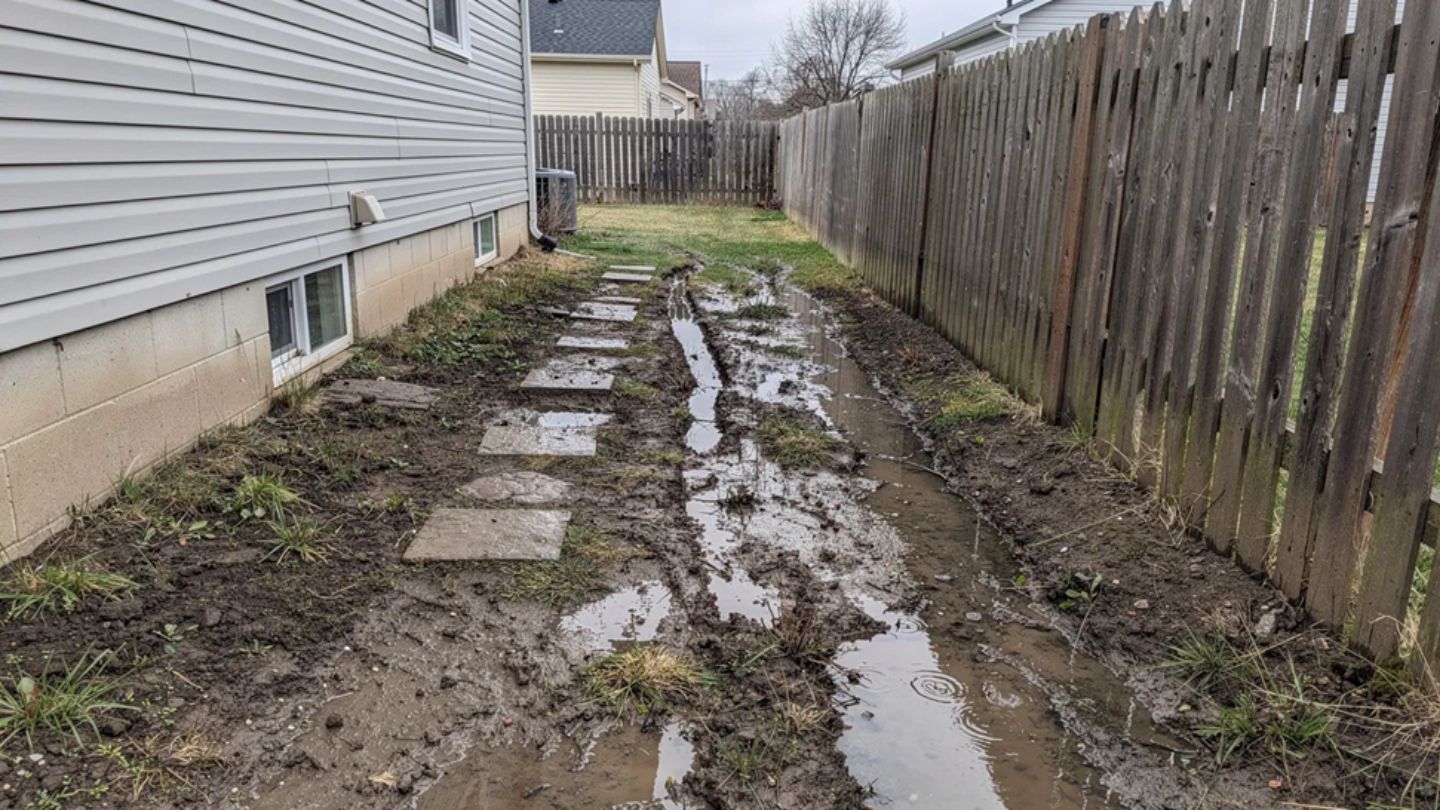
Side yards face unique challenges that make standard landscaping solutions fail:
- Downspout runoff concentrates water in a small area
- Narrow spaces preventing proper soil grading away from foundations
- Shade from structures and fences kills grass and prevents soil from drying
- High foot traffic compacts soil and prevents water absorption
- Sloped terrain directing water toward the side yard from multiple directions
Traditional turf simply cannot survive these conditions. Grass roots struggle in clay soil, and the constant wet conditions cause root rot. During heavy rains, what little grass exists gets waterlogged and dies, leaving bare mud that tracks into your home and creates erosion problems. Many Cumming homeowners have tried reseeding multiple times, only to watch their efforts wash away with the next storm.
How River Rock Transforms Muddy Side Yards
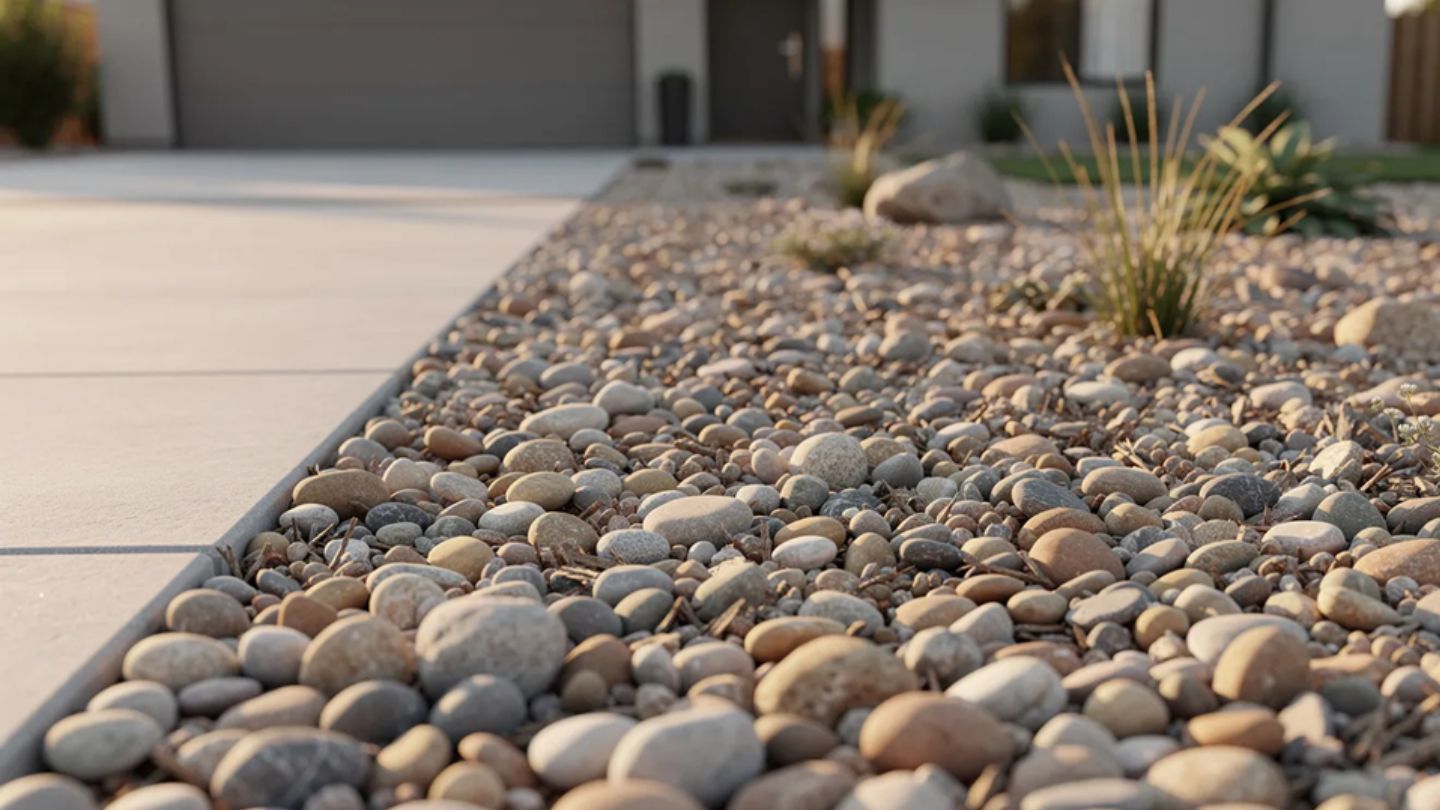
River rock works by creating immediate pathways for water to escape. These smooth, rounded stones collected from riverbeds come in sizes ranging from small pea-sized pieces to large 6-inch cobbles. Unlike compacted soil, river rock has substantial voids between each stone, allowing water to percolate through instantly rather than pooling on the surface.
For Cumming homeowners, river rock offers both function and aesthetics. The natural, rounded appearance adds visual interest to an otherwise neglected area of your property. Colors range from earth tones to smoky grays, letting you create a look that complements your house and landscaping. This kind of approach also shows how stone can add function and character through creative uses in your garden beyond standard ground cover.
Different sizes serve different purposes in side yard applications:
- 1-2 inch river rock: Ideal for general ground cover, lighter foot traffic, and edges along fences or foundations
- 2-4 inch river rock: Perfect for creating a dry creek bed to channel water, decorative drainage swales, and areas requiring greater depth
- 4-6 inch river rock: Best for downspout splash zones, high-velocity runoff areas, and locations where you need to divert large volumes of water
The installation process requires proper preparation to avoid future problems. You’ll need to:
- Remove existing grass, weeds, and debris down to bare soil
- Grade the ground to slope away from your house at a minimum 2% grade (roughly ¼ inch drop per foot)
- Install landscape fabric to separate soil from rock and prevent weed growth
- Add river rock to a depth of 2-3 inches for basic coverage, or 3-4 inches in areas with heavy water flow
- Install edge restraints to keep rocks contained and create clean lines
Common Installation Mistakes to Avoid
Skipping essential steps during river rock installation leads to problems that cost more to fix later:
- Inadequate grading: Leaving low spots or slopes toward your foundation defeats the entire purpose and can cause water damage to your house.
- Skipping base preparation: Soft, loose soil underneath settles unevenly, causing stones to sink and creating new mud problems.
- Using improper fabric: Non-permeable fabric traps water; gaps in fabric allow weeds to grow through your rocks.
- Wrong stone sizes: Too-small stones wash away during heavy rains; too-large stones create an unstable walking surface. The same sizing considerations often come into play when comparing the best types of stone for your driveway or other high-use outdoor surfaces.
- No edge restraints: Without proper edges, river rock spreads into your lawn, creating maintenance headaches and an unkempt appearance.
Many homeowners decide to build a dry creek bed through their side yard, which provides both excellent drainage and a natural aesthetic that mimics nature. This approach works particularly well for longer side yards where you need to move water a significant distance from your house to the street or backyard.
89 Stone: The Heavy-Duty Solution for High-Traffic Side Yards
If your side yard sees regular foot traffic, whether from you, your family, dogs, or equipment access, 89 stone offers superior performance compared to river rock. This small, angular crushed aggregate measures approximately 3/8 inch and has properties that make it ideal for creating stable, durable surfaces. Homeowners comparing aggregate options often try to understand the most common uses for 57 stone when deciding which material best fits drainage, support, and long-term stability needs.
The key difference lies in the angular shape. While river rock’s smooth, rounded edges allow stones to shift underfoot, 89 stone’s crushed surfaces interlock with each other when compacted. This creates a firm, stable layer that supports foot traffic, wheelbarrows, lawn equipment, and even occasional vehicle weight without significant movement.
Installation follows similar principles to river rock but emphasizes compaction:
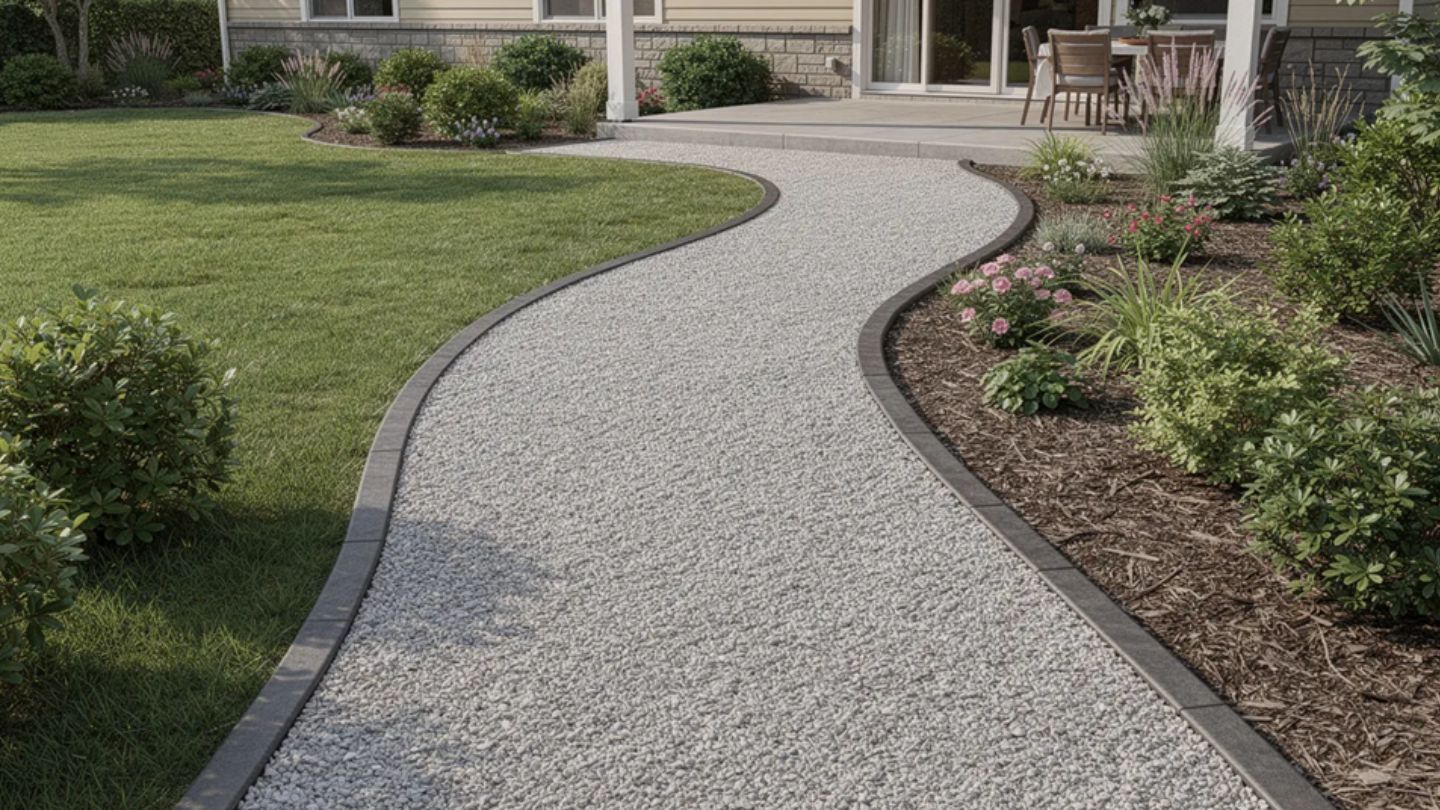
- Excavate to proper depth, removing vegetation and topsoil
- Grade away from structures and compact subgrade
- Consider adding a crushed stone base layer in areas with very poor drainage
- Install 89 stone to 2-3 inches for paths, up to 4 inches for heavy-use areas
- Compact thoroughly with a plate compactor for maximum stability
- Install durable edge restraints to maintain clean borders
The long-term benefits of 89 stone include significantly lower maintenance than river rock. Because the stones interlock rather than shift, you won’t need to periodically level or redistribute material. Weeds struggle to establish in the smaller voids. Debris can be easily swept or blown off the surface. For homeowners who want a functional, no-fuss solution, 89 stone delivers year after year.
For areas where you need both drainage and stability, consider combining approaches. Use larger river rock at downspout discharge points to create splash pads that dissipate water velocity, then transition to 89 stone for the walking path. This mix gives you the best of both materials, maximum drainage where water enters the system, and maximum stability where you walk.
Conclusion
Muddy side yards in Cumming don’t have to remain a constant frustration when you address the underlying drainage and soil challenges. By choosing the right materials, whether river rock for improved water flow or 89 stone for stability, you can transform these problem areas into clean, functional, and low-maintenance spaces that hold up through North Georgia’s heavy rains and clay soil conditions.
For homeowners looking to implement these solutions effectively, working with a reliable supplier makes all the difference. At Mulch Pros, we provide high-quality materials tailored to local conditions, including dependable options for landscaping supplies in Cumming, GA, along with products like 5 stone, 6 stone, deco stone 4″ egg rock, 57 stone, and 34 stone to suit a variety of drainage and surface needs. If you’re looking to upgrade your side yard with the right materials, contact us today!
Frequently Asked Questions
How much river rock do I need for my side yard in Cumming?
Calculate your square footage (length × width), then multiply by your desired depth in inches and divide by 324 to get the cubic yards needed. For a typical side yard measuring 50 feet by 4 feet (200 square feet) with a 3-inch depth, you’d need approximately half a cubic yard. River rock weighs around 2,400-3,000 pounds per cubic yard, so plan delivery accordingly. Most Cumming suppliers can help you calculate exact amounts based on the variety and size you choose.
What’s the difference between river rock and 89 stone for side yards?
River rock features smooth, rounded edges in sizes from 1 to 6 inches, providing excellent drainage through large voids but limited stability underfoot. 89 stone is small (3/8 inch), angular crushed aggregate that compacts firmly for stable walking surfaces. Choose river rock for decorative dry creek beds, drainage swales, and low-traffic areas. Pick 89 stone for paths, pet runs, and anywhere you need a stable footing. Some homeowners use both river rock for drainage features and 89 stone for walking paths.
Will river rock or 89 stone work with Cumming’s clay soil?
Both materials work effectively with North Georgia’s clay soil when properly installed. The key is creating adequate separation between the clay and your stone layer using landscape fabric and, in severe cases, a gravel base layer. Proper grading away from your house ensures water flows through the stone rather than pooling against your foundation. Clay may shift during wet and dry cycles, so adequate depth (3+ inches) and stable edges help prevent long-term movement issues.