
The #57 stone is one of the most versatile and widely used aggregates in residential and commercial projects. Its consistent size, angular shape, and excellent drainage properties make it suitable for a wide range of applications. Homeowners, contractors, and landscapers rely on it for both structural support and visual appeal. Understanding where and how it performs best helps ensure long-lasting results. In this blog, we explore the most common ways #57 stone is used and why it’s a go-to choice for so many projects.
Key Takeaways
- 57 stone is a ¾ to 1-inch crushed stone aggregate with angular edges, making it one of the most versatile materials in construction and landscaping projects across the United States.
- The most common uses include gravel driveways and parking pads, concrete and asphalt bases, French drains and drainage systems, foundation and retaining wall backfill, and functional landscaping beds.
- Its mid-size gradation and angular shape create a strong balance of load-bearing capacity and excellent drainage, which is why contractors rely on it for both structural support and water management.
- Widely available by the ton or cubic yard at $25-50 per ton, 57 stone offers a cost-effective alternative to poured concrete or pavers for many access surfaces and drainage applications.
- This guide walks through each common use with practical examples, including typical depths, placement on your property, and situations where a different material might work better.
What Is #57 Stone and Why Is It So Common?
If you’ve ever shopped for stone products at a landscape supply yard or talked to a contractor about your next project, you’ve probably heard the term “57 stone” tossed around. So what exactly is it?
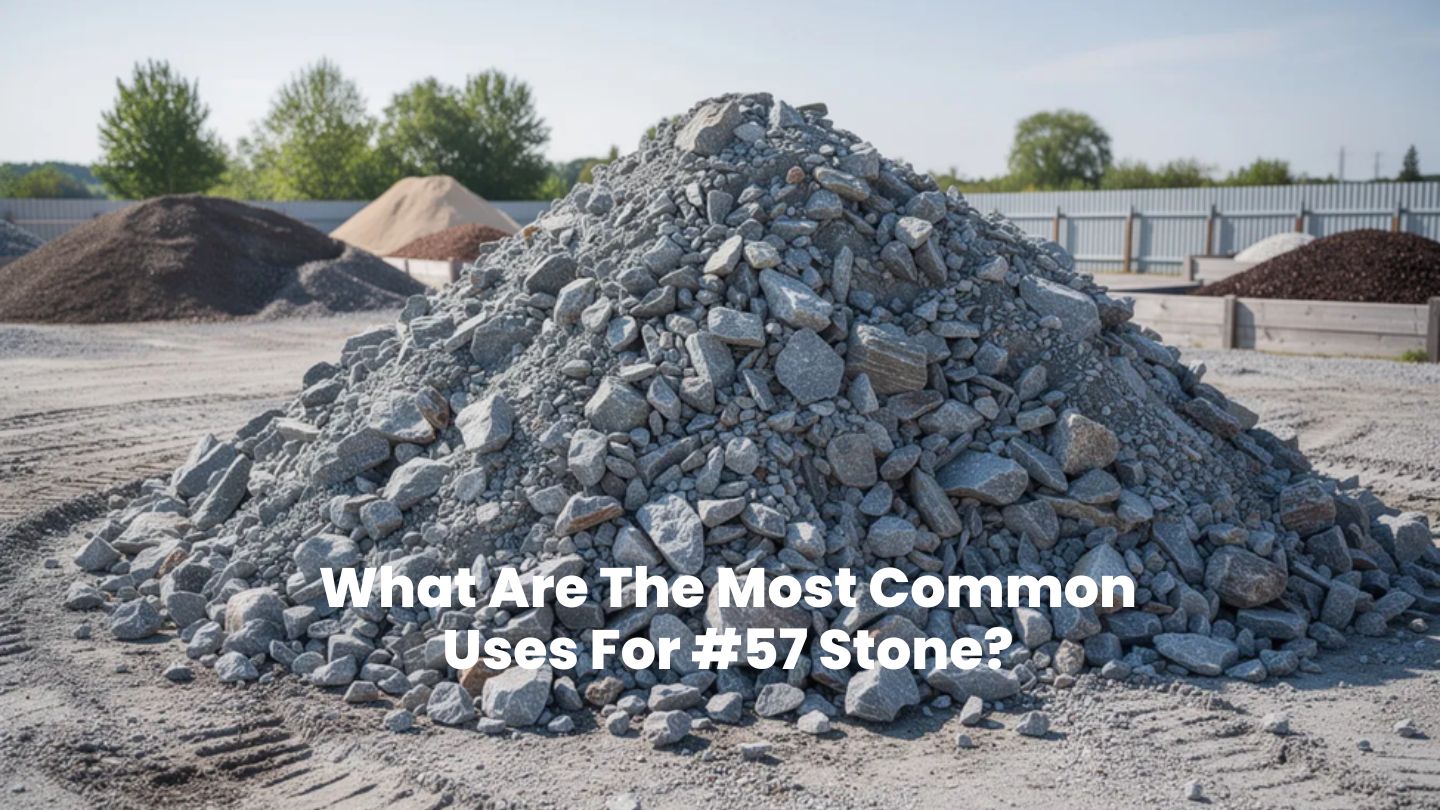
57 stone (often written as “#57 stone” or “#57 aggregate”) is a graded crushed stone that passes through a 1-inch sieve and is retained on a No. 4 sieve. In practical terms, that means particles typically range from about ½ inch to 1 inch in diameter. Unlike the smooth, rounded pebbles you might find in a riverbed, 57 stone features angular stones with jagged edges, a direct result of the mechanical crushing process used to produce it.
Understanding crushed stone grades helps explain why this particular size is so popular: it’s large enough to provide solid load support, small enough to be workable by hand or with light equipment, and open-graded enough for excellent drainage. That combination makes it the right material for an impressive range of residential and commercial projects.
Key properties of 57 stone:
| Property | Typical Value |
|---|---|
| Size range | ½ inch to 1 inch |
| Bulk density | 1.4–1.6 tons per cubic yard |
| Shape | Angular, jagged edges |
| Void ratio (loose) | 35–45% |
| Void ratio (compacted) | Under 20% |
| Colors | Gray (limestone), pink/gray (granite), mixed (recycled) |
The material is produced from natural rock deposits, including limestone, granite, or recycled concrete. Limestone is common across the Southeast, while granite is also widely used throughout Georgia and the greater Atlanta area.
Driveways, Parking Areas, and Access Roads
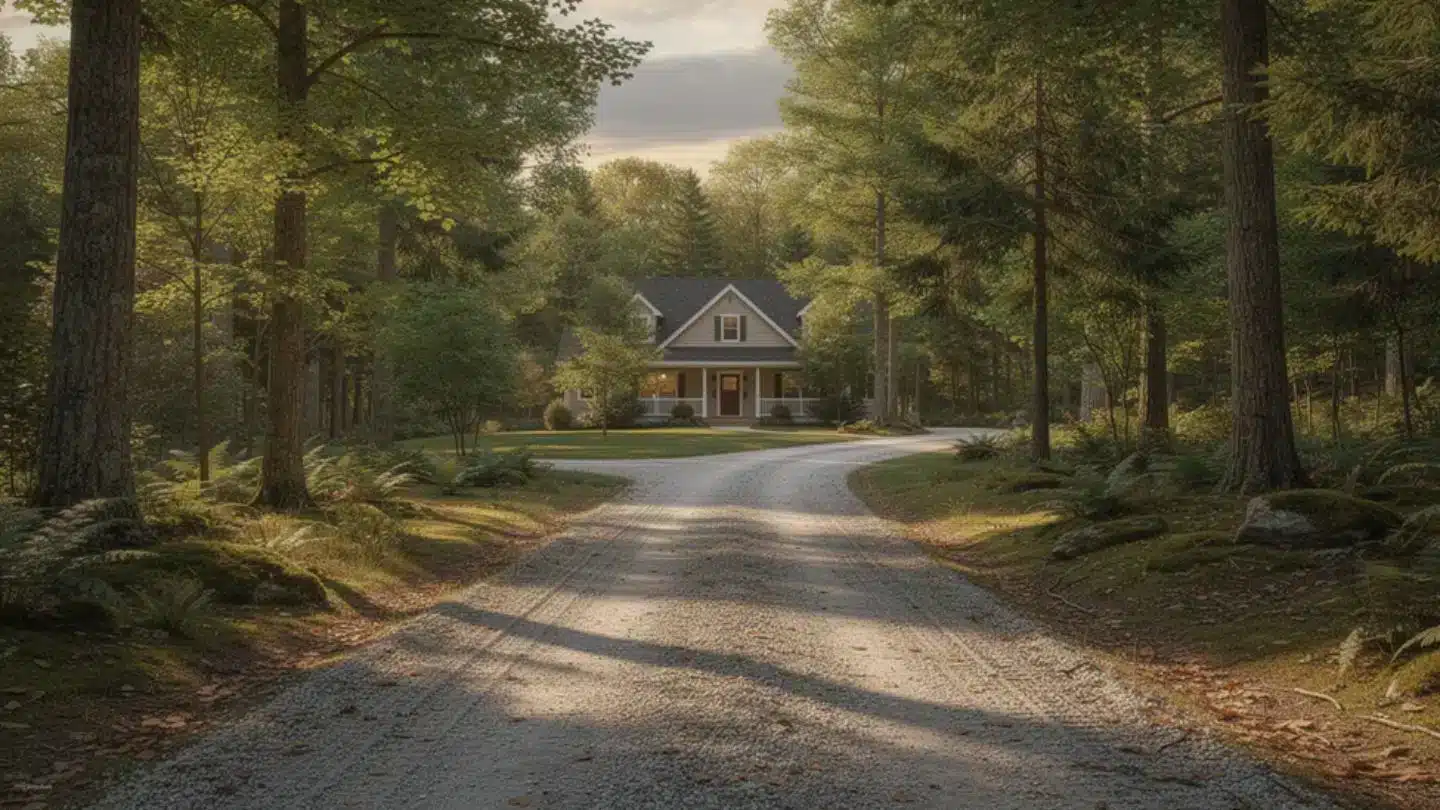
One of the most common uses for 57 stone is creating residential driveways, rural lane surfaces, and parking pads, making it a frequent choice when selecting the best types of stone for your driveway. If you’ve driven down a country road or visited a property with a gravel driveway, there’s a good chance you were riding on 57 stone.
How It’s Used
57 stone works in two primary ways for driveways:
- As the primary surface on gravel driveways, where a rustic, permeable look is desired
- As a base layer beneath finer “top” stone or screenings for a smoother finish
The choice often comes down to traffic volume and personal preference. Many homeowners prefer the slightly smaller top stone for walking comfort while relying on the 57 stone’s structural integrity underneath.
Installation Details
Getting a driveway right starts with proper site prep. Here’s what a typical installation looks like:
- Depth: 4–6 inches for passenger vehicles; 6–8 inches for heavier use (trucks, trailers, equipment)
- Subgrade preparation: Grade and compact native soil; remove organic material
- Geotextile fabric: Highly recommended on soft or clay soils to prevent stone from sinking
- Compaction: Use a plate compactor in 2-inch lifts for best results
Performance Benefits
Why do so many people choose 57 stone for driveways? The angular shape creates tight compaction and interlocking between particles, which reduces rutting under vehicle traffic. Water can drain naturally through the stone layer rather than pooling on top, and the material resists frost heave better than unstoned dirt tracks.
Base Material for Concrete Slabs and Asphalt Paving
Beyond driveways, 57 stone is routinely used beneath concrete patios, garage slabs, pole barns, and asphalt roads because it forms a strong, well-drained base layer. If you’re planning any concrete or asphalt paving work, there’s a good chance your contractor will spec this material.
Typical Layering Structure
A standard installation follows this sequence:
- Compacted subgrade soil (native material, graded and rolled)
- 4–6 inches of 57 stone (compacted in lifts)
- 4 inches of concrete or designed asphalt thickness
Why It Works
The porous nature of 57 stone allows water to move away from slab bases, reducing freeze-thaw damage and cracking compared to placing concrete directly on clay or topsoil. In many municipal and state specifications, 57 stone is listed as an approved sub-base aggregate for light-duty pavements, sidewalks, and parking lots.
The angular stones interlock under compaction, achieving compressive strengths over 10,000 psi in base applications, far exceeding the 5,000–7,000 psi typical of rounded gravel.
Combining With Other Materials
For applications requiring a very firm surface or smooth finish before paving, 57 stone may be combined with stone dust or screenings. This creates blends similar to “crusher run” or “road base” that improve compaction while maintaining drainage characteristics.
Construction Best Practices
- Compact 57 stone with a plate compactor or vibratory roller (4–6 passes)
- Install edge forms to contain material during compaction
- Check finished base elevations before pouring concrete or laying asphalt
- Maintain a 1–2% slope away from structures for drainage
When used as the coarse aggregate portion in concrete mixes, 57 stone can constitute 50–70% by volume, boosting tensile strength by 15–20% over mixes using only sand.
Drainage Applications: French Drains, Footing Drains, and Septic Systems
Drainage is one of the most important and widespread uses for 57 stone, especially around homes and commercial buildings built after the 1980s, when French drains and perimeter drains became standard practice for water management.
The uniform size and open structure create consistent voids that allow water to flow freely while filtering out larger soil particles. This prevents clogging of underground pipes and drainage systems, a common problem with finer aggregates.
French Drains
A typical French drain installation includes:
| Component | Specification |
|---|---|
| Trench width | 12–18 inches |
| Trench depth | 18–36 inches |
| Pipe | 4-inch perforated PVC or corrugated |
| Fabric | The geotextile is wrapped around the pipe. |
| Stone fill | 57 stone surrounding pipe on all sides |
This setup intercepts groundwater along wet yards or at the bottom of slopes, diverting 10–50 gallons per minute per linear foot. The high hydraulic conductivity (around 1–5 cm/second) moves water efficiently without the clogging issues you’d see with finer sands.
Footing and Foundation Drains
Builders often specify 57 stone around perforated drain tiles at the base of basement walls. This directs water to a sump pump or daylight outlet, preventing the hydrostatic pressure that can crack foundations and cause leaks. The stone creates a clear path for water while supporting the soil above.
Septic Drain Fields
Many septic system designs in the U.S. (especially those installed before widespread use of plastic chambers) call for 57 stone around perforated pipes in the drain field. The stone allows effluent to disperse evenly into the surrounding soil while preventing pipe bedding from collapsing.
Other Drainage Projects
- Downspout extensions: Small trenches with 57 stone carry roof runoff away from foundations
- Curtain drains: Intercept sheet flow across lawns before it reaches problem areas
- Dry wells: Collection points where roof or surface water can infiltrate slowly
For any application that requires drainage, 57 stone’s drainage characteristics make it a go-to choice for contractors who need reliable performance.
Backfilling Around Foundations, Walls, and Utility Lines
57 stone is often used as backfill material because it doesn’t retain water like clay and compacts well enough to support structures while relieving hydrostatic pressure. This makes it valuable for several critical applications around buildings and infrastructure.
Foundation Walls
Standard practice calls for placing 57 stone against exterior basement walls, from the footing up to near grade level. This promotes quick drainage down to footing drains and away from the building. The result is a drier basement and less pressure on waterproofing membranes.
In areas with heavy rainfall or high water tables, proper wall backfill becomes even more critical. Using clay or poorly draining soil can lead to wall cracks, leaks, and settlement over time.
Retaining Wall Backfill
Most modern segmental block retaining wall systems (common since the 1990s) specify 57 stone directly behind the wall face. This serves two purposes:
- Reduces lateral soil pressure by allowing water to drain rather than build up
- Directs water to weep holes at the base of the retaining wall
A well-designed retaining wall with proper backfill can stabilize slopes up to 2:1 ratios and last for decades with minimal maintenance.
Utility Trenches
57 stone is widely used around buried water lines, electrical conduits, and storm drains. The stone protects underground pipes, supports them evenly, and prevents soil movement that could cause sagging or breaks.
Example installation for a utility trench:
- 4-inch bed of 57 stone under the pipe
- Pipe placed and aligned
- 6–8 inches of 57 stone covering the pipe
- Native soil backfill above the stone layer
For a 100-foot utility trench, this approach typically requires 3–5 tons of stone depending on trench width.
Why Stone Backfill Matters
The key benefit is creating a stable foundation that also handles water. Unlike compacted clay (which holds moisture and expands), 57 stone maintains its structural integrity year-round while letting water move through freely. This is especially valuable in freeze-thaw climates where trapped water can cause significant damage.
Landscaping, Garden Paths, and Erosion Control
Beyond structural and drainage work, 57 stone appears in many landscaping projects for both practical and decorative reasons, similar to other landscaping rocks used for durability and low maintenance. While it may not have the visual appeal of polished river rock, it offers durability and low maintenance that organic mulches can’t match.
Paths and Walkways
For informal garden paths, side yards, and utility access strips, 57 stone provides a permeable surface that holds up to foot traffic and wheelbarrows. A 3–4 inch depth works well for most residential applications.
The angular shape helps the stones lock together, reducing the “rolling” sensation you get with rounded pea gravel. That said, it’s not as comfortable barefoot, so save it for functional areas rather than play spaces.
Mulch Replacement
Some homeowners use 57 stone around shrubs, air-conditioning pads, and along foundations instead of organic mulch, weighing it against options like mulch stone or river rock based on drainage and longevity. The benefits include:
- No annual replacement needed
- Won’t harbor insects or retain moisture against siding
- Provides a 12–18 inch clearance zone that many pest control professionals recommend
- Suppresses weeds by about 80% (better than bark mulch)
For garden beds where you want a beautiful aesthetic, consider pairing 57 stone as a base layer with a decorative top layer of smoother stone.
Erosion Control
57 stone excels at stabilizing areas where water moves at higher velocity:
- Swales: Line drainage channels to prevent soil washout
- Downspout splash pads: Protect the ground where water exits
- Culvert inlets and outlets: Prevent scouring around pipe openings
- Shoreline areas: Reduce erosion by 70–90% over bare soil
The material’s mass (specific gravity of 2.6–2.7) helps it resist hydraulic shear while its angularity prevents migration.
Landscape Borders and Edging
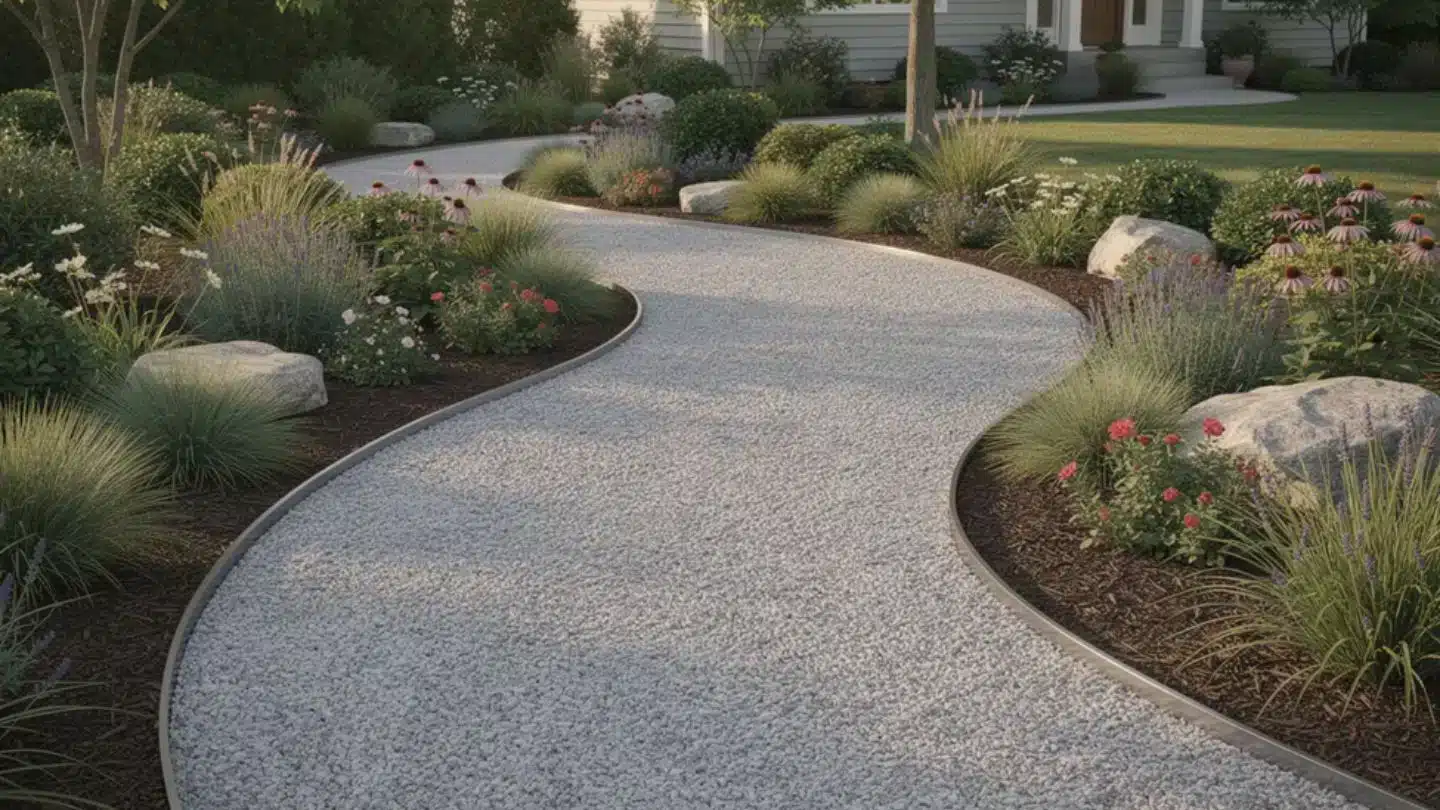
A 2–3 foot strip of 57 stone between a lawn and fence (or building) improves drainage and reduces weed growth. Just remember to install edging; without containment, the stones will migrate into grass areas over time.
Building Strong Projects with the Right Aggregate
#57 stone remains one of the most reliable aggregates for drainage, structural bases, and load-bearing applications. Its angular shape, consistent size, and excellent water flow make it suitable for driveways, foundations, patios, and utility projects. Choosing the right installation method ensures long-term stability and performance.
At Mulch Pros, we help homeowners and contractors select dependable materials for lasting results, including high-quality #57 Stone in Alpharetta for residential and commercial projects. A complete landscape or hardscape project often comes together by combining firewood, pine straw, soil, and mulch with durable stone materials for both function and appearance. If you’re planning an outdoor build or upgrade, we’re ready to help you source the right materials with confidence.
Frequently Asked Questions
How does #57 stone compare to pea gravel for driveways and drainage?
57 stone is larger and angular, allowing it to lock together and support vehicle weight without shifting. This makes it ideal for driveways and drainage. Pea gravel is rounded and decorative but tends to roll, rut, and require frequent maintenance under traffic.
Can I compact #57 stone enough to use it as a finished surface?
57 stone can be vibrated or rolled to improve stability, but it remains an open-graded aggregate. It won’t compact into a smooth, firm surface on its own. Most projects add a finer topping layer to improve comfort, appearance, and long-term usability.
Can #57 stone be used under pavers or patio blocks?
57 stone works well as a drainage layer beneath pavers, but it should not be the final bedding layer. Installers typically add a compacted layer of finer base material or stone dust on top to create a smooth, level surface for proper paver support.
Does #57 stone need landscape fabric underneath?
Landscape fabric is strongly recommended, especially over clay or soft soils. It prevents stones from sinking into the subgrade and stops soil fines from clogging the aggregate. For driveways and high-traffic areas, fabric significantly improves longevity and performance.