
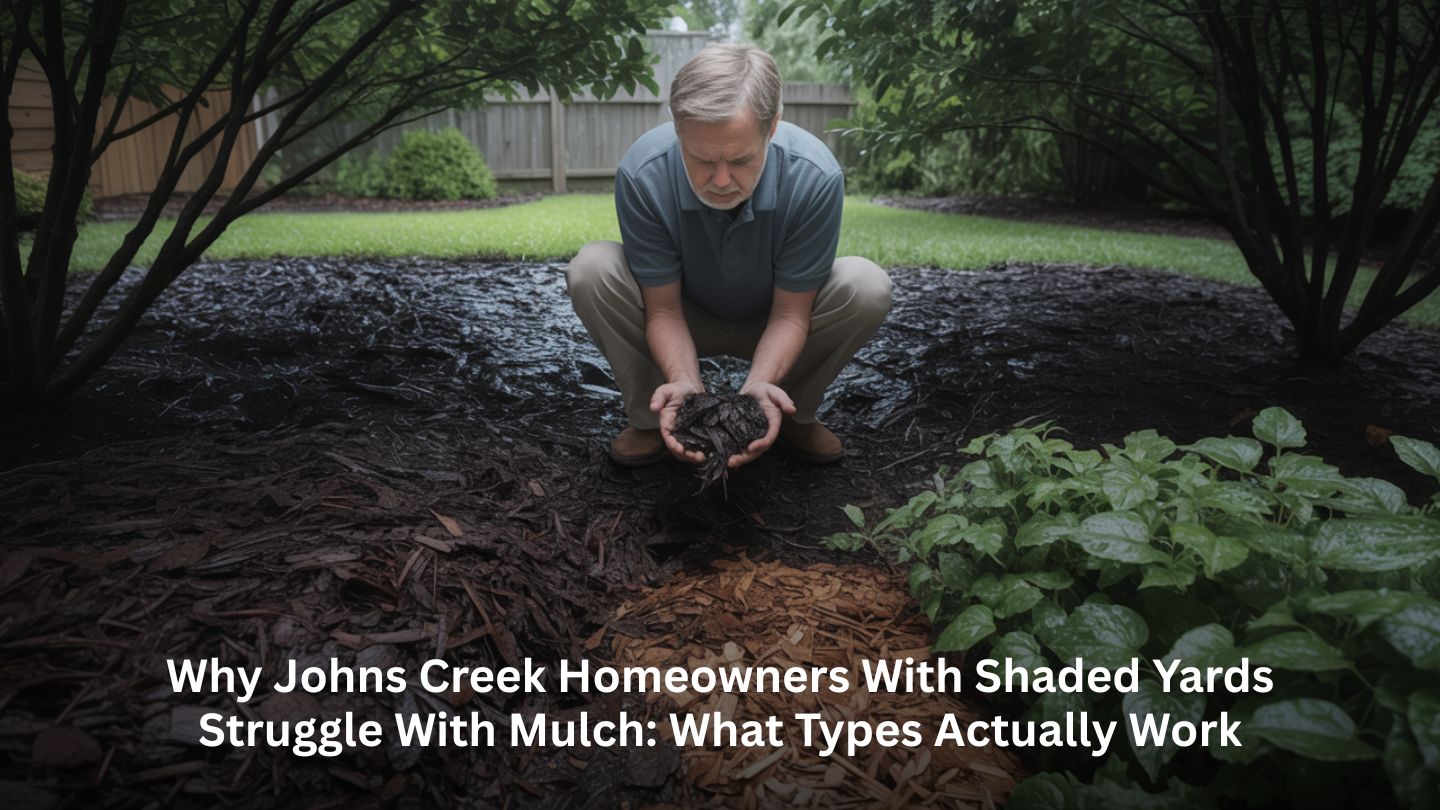

That beautiful mulch you spread under your mature trees last spring has already turned into a soggy, gray mess, and you’re wondering why your neighbor’s sunny beds still look pristine. Johns Creek homeowners with shaded yards face a constant battle with mulch that decomposes too quickly, develops fungal growth, and fails to suppress weeds the way it should. The problem isn’t your effort; it’s the unique environmental conditions created by North Georgia’s dense tree canopies. This blog explains exactly why shaded areas create mulch nightmares and which types actually perform well in Johns Creek’s humid, low-light conditions. You’ll learn how to stop wasting money on mulch that disappears within months and start choosing mulch that works with your landscape’s own personality.
Key Takeaways
- Shaded areas in Johns Creek create unique challenges for mulch performance due to excessive moisture retention and reduced air circulation
- Deep shade under mature trees accelerates decomposition, causing organic mulches to break down two to three times faster than in full sun
- Pine bark nuggets, hardwood chips, and cypress mulch outperform fine-textured alternatives in shaded, humid conditions
- Proper soil preparation and improved drainage prevent the recurring cycle of mulch failure in shady areas
- Fine, lightweight mulches like leaf mulch and grass clippings should be avoided in Johns Creek’s shaded garden beds
Why Shaded Yards Create Mulch Nightmares for Johns Creek Homeowners
Johns Creek sits in northern Fulton County, where mature trees—oaks, maples, and pines—dominate residential landscapes. These established canopies create problematic microclimates that turn standard mulch applications into frustrating failures. Under these trees, sunlight drops dramatically, wind movement slows to almost nothing, and the soil surface rarely dries completely between North Georgia’s frequent thunderstorms.
The result is a shady spot where mulch traps moisture instead of managing it. While mulch in sunny areas experiences regular drying cycles that slow decomposition, shaded mulch stays persistently damp. This creates perfect conditions for the fungi and bacteria that break down organic matter at accelerated rates.
Common problem areas include beds under large oak canopies, north-facing foundation plantings, and areas where multiple trees create overlapping shade. These zones receive less than two hours of direct sun exposure daily, and their soil moisture levels remain elevated throughout the growing season.
Read More: The Life Expectancy of Mulch
The Moisture Trap Problem
After a typical summer thunderstorm, mulch in full sun begins drying within hours. Shaded mulch? It may stay wet for days. This persistent dampness creates a cycle that destroys mulch performance: constant moisture breeds fungal growth, fungal growth accelerates decomposition, and rapid decomposition leaves you with a thin layer of degraded material that no longer serves its purpose.
The humidity retention problem intensifies during Johns Creek’s summer months when frequent afternoon storms dump moisture that has nowhere to go. Without sun exposure to drive evaporation or adequate air circulation to carry moisture away, shaded garden beds become traps where too much moisture accumulates and stays.
This explains why the same mulch that lasts three years in your front yard’s sunny areas might need replacement every twelve months under your backyard oaks. That kind of uneven breakdown is exactly why many homeowners start asking how often they should replace mulch in different areas of the landscape.
What Makes Shade So Challenging for Mulch Performance
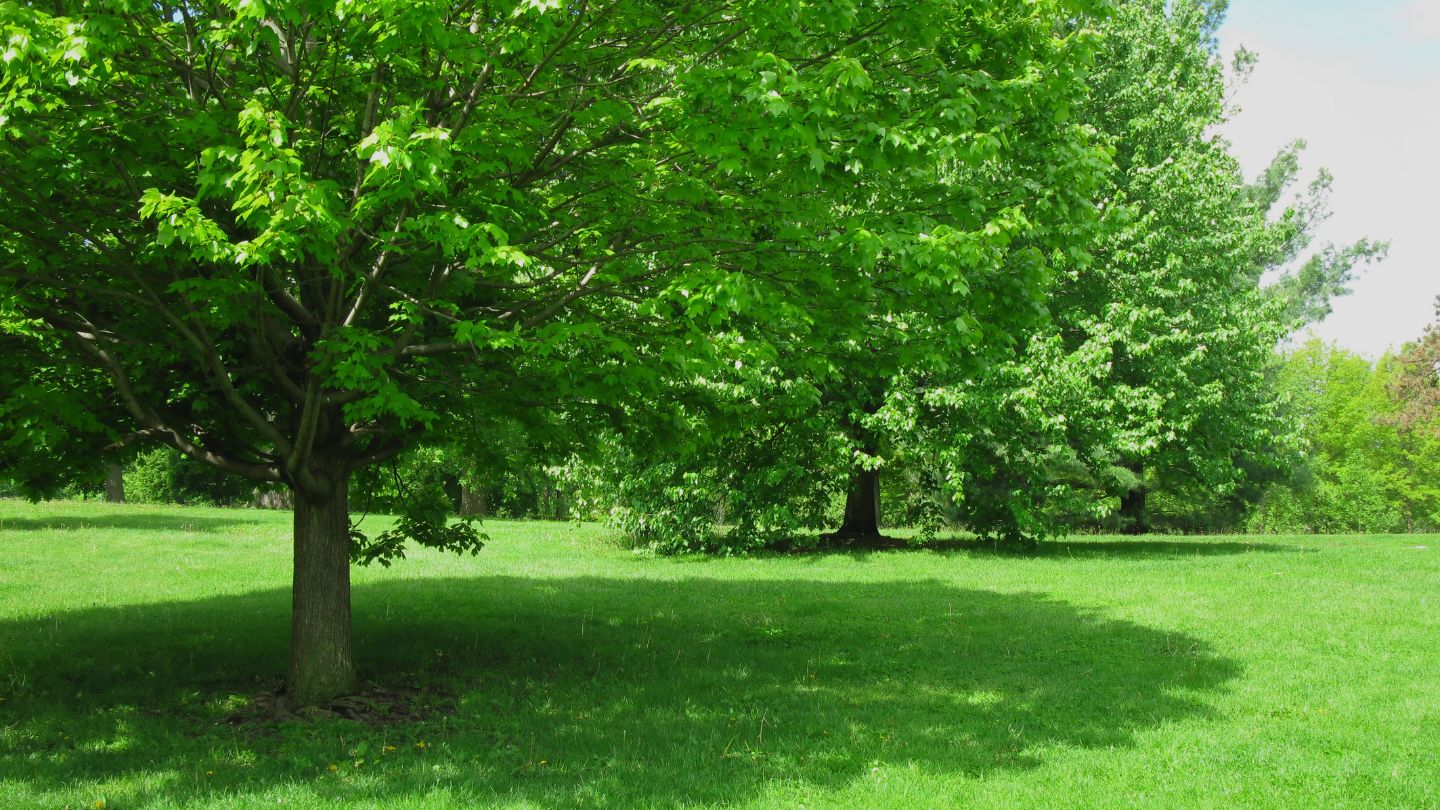
Understanding the biological factors at work helps explain why not all mulch performs equally in shaded conditions. In deep shade, the temperature stays cooler, and moisture remains constant—exactly the environmental conditions that wood-decomposing organisms prefer. These fungi and bacteria break down organic mulches at rates that would surprise most homeowners.
Tree roots add another complication. Large trees extend their root systems well beyond the drip line, competing with mulch beds for resources and creating uneven moisture distribution. Root competition means some areas experience rapid breakdown while others stay relatively intact, giving your mulch an uneven, patchy appearance within months of installation.
The soil conditions under tree canopies compound these issues. Johns Creek’s clay-heavy soils already struggle with poor drainage, and shaded areas rarely dry enough for soil compaction to break up naturally. Fallen leaves accumulate beneath mulch layers, creating additional organic matter that holds moisture and restricts water infiltration to plant roots below.
Common Mulch Mistakes in Shaded Areas
Johns Creek homeowners frequently make these mistakes when choosing mulch for shaded conditions:
- Selecting fine-textured mulches: Finely shredded hardwood, leaf mulch, and grass clippings quickly form mats in humid shade. These mats repel water initially, then become saturated and stay wet, creating conditions that suffocate roots and promote disease.
- Applying standard depths without adjustment: The typical recommendation of three to four inches works well in sunny areas but creates problems in shade. Fine mulches at this depth restrict air movement and trap too much moisture against the soil surface.
- Ignoring drainage issues: Applying mulch over compacted clay without addressing the underlying soil structure guarantees failure. Water pools beneath the mulch, creating anaerobic conditions that smell sour and damage plant roots.
- Creating mulch volcanoes: Piling mulch against tree trunks—a surprisingly common practice—invites collar rot, fungal infections, and pest problems. In humid shade, this mistake causes damage much faster than in drier conditions.
- Assuming all mulch behaves the same: Using identical products across your entire property ignores the dramatic differences in how shaded areas process organic matter compared to beds receiving full sun.
Taking time to choose the right mulch for your landscape can help avoid many of these common problems before they start.
Read More: Best Practices: How Thick Should Mulch Be for Your Garden?
Mulch Types That Actually Work in Johns Creek’s Shaded Areas
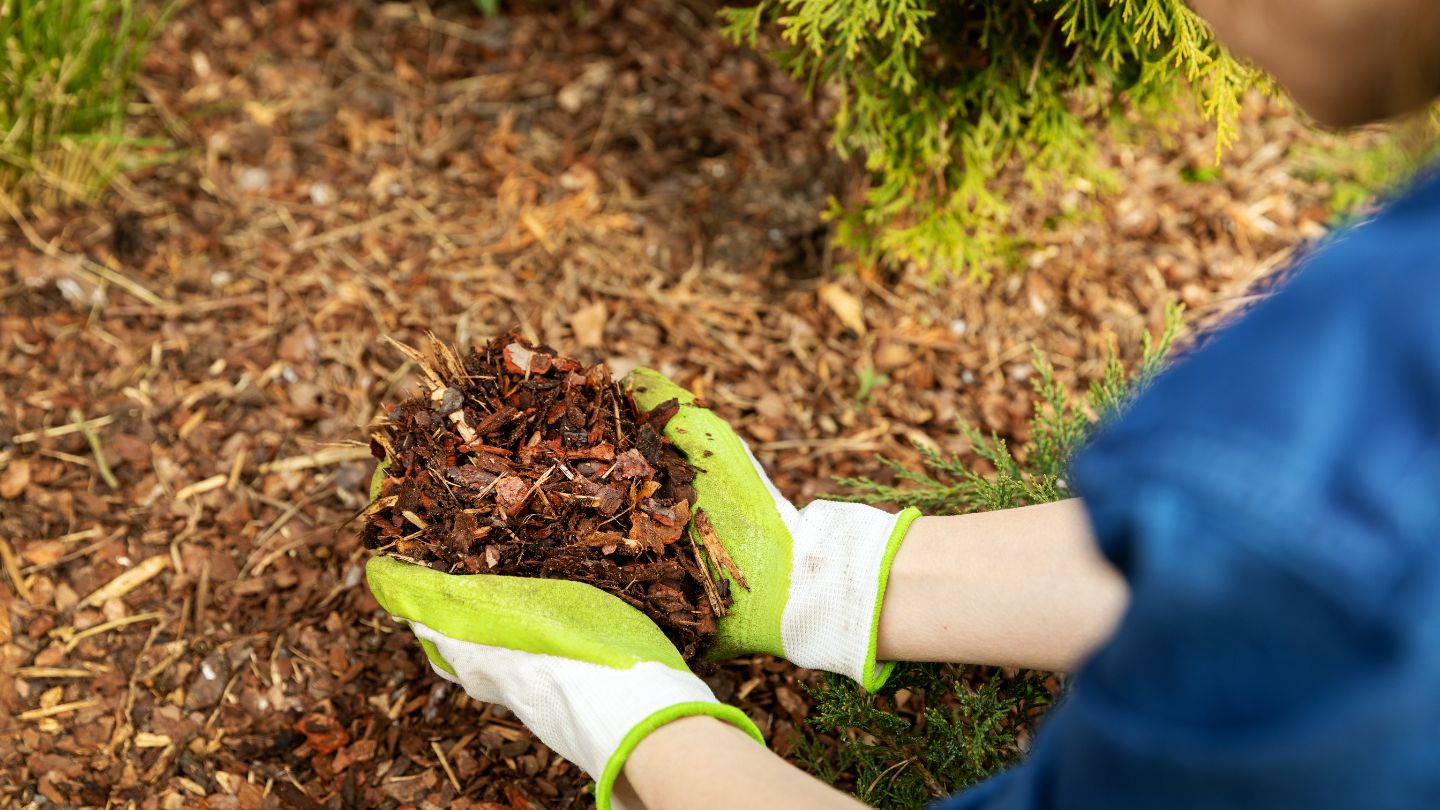
When choosing mulch for Johns Creek’s shaded garden beds, prioritize materials that resist matting, allow air circulation, and decompose slowly despite constant moisture. It also helps to understand the benefits of buying mulch from local suppliers when selecting materials suited to conditions common across North Georgia landscapes. Here’s how the most common options perform:
- Pine Bark Nuggets: The top performer for deep shade in North Georgia. Large pine bark pieces maintain their structure for two to four years, even in humid conditions. Their size allows excellent airflow between pieces, preventing the moisture trapping that destroys fine mulches. Pine bark also improves drainage by maintaining open channels for water flow through the mulch layer.
- Coarse Hardwood Chips: Screened hardwood mulch with minimal fines performs well in shaded conditions when applied at appropriate depths. Expect twelve to eighteen-month lifespans in heavy shade—shorter than pine bark but still reasonable. The key is avoiding finely shredded products that mat quickly.
- Cypress Mulch: Natural oils in cypress wood resist decay and repel insects, making it excellent for humid North Georgia yards. Cypress mulch typically lasts two to three years in shaded conditions with minimal fungal growth issues. The main drawback is the higher cost and some environmental concerns about cypress harvesting.
- Cedar Bark Mulch: Similar to cypress, cedar contains natural fungicidal properties that slow decomposition in wet conditions. Cedar also deters many common landscape pests—a bonus in shaded areas where pest control becomes more challenging.
- Pine Straw: A popular choice throughout North Georgia, pine straw works in partially shaded transition zones but struggles in deep shade. It decomposes faster than bark mulches and compresses into flat mats when constantly wet. Plan on annual replacement if using pine straw under a dense canopy.
- What to Avoid: Fine shredded mulches, leaf mulch, grass clippings, and straw break down too rapidly in shaded, humid conditions. Dyed mulches mask decomposition initially, but don’t solve the underlying problems—and they may look worse as fading reveals the degraded material beneath.
Why Size and Texture Matter in Shade
Larger mulch pieces create spaces between them where air circulates, and moisture evaporates. This simple principle explains why pine bark nuggets outperform finely shredded products in shaded areas. The spaces between nuggets allow the mulch layer to breathe, preventing the stagnant, saturated conditions that accelerate decomposition. Regular mulch maintenance also helps preserve airflow and appearance in shaded beds where moisture tends to linger longer than expected.
Fine mulches pack together tightly, especially after rain compacts the acceleration. This creates a surface that may initially shed water but eventually becomes waterlogged. Once saturated, fine mulches stay wet indefinitely in shade, developing the gray, moldy appearance that frustrates Johns Creek homeowners. For shaded conditions, choose mulch pieces at least one to two inches in diameter. Reserve fine-textured products for sunny areas where regular drying prevents matting problems.
Conclusion
Shaded yards in Johns Creek present unique challenges for mulch performance, but understanding how moisture, airflow, and decomposition interact makes it easier to choose the right solution. With the proper mulch type, correct installation depth, and attention to drainage, even heavily shaded garden beds can maintain their appearance and function without constant replacement or maintenance issues.
For homeowners looking to overcome these challenges, working with a reliable supplier ensures better long-term results. At Mulch Pros, we provide high-quality materials suited to different landscape conditions, including dependable options for Mulch in Johns Creek, such as cypress mulch bulk, hardwood mulch bulk, red mulch bags, and brown mulch bagged, to suit different landscape needs and conditions. In order to upgrade your shaded landscape with the right mulch, contact Mulch Pros today!
Frequently Asked Questions
Why does my mulch turn gray and moldy in shaded areas?
The gray, moldy appearance results from fungal growth thriving in constantly moist conditions. Shaded mulch rarely dries completely between rain events, and without UV exposure to help sterilize surfaces, fungal organisms colonize the mulch layer. This discoloration indicates your mulch is decomposing rapidly and likely needs replacement with a coarser-textured product.
Can I use the same mulch in sun and shade areas of my Johns Creek yard?
You can, but performance will differ dramatically. Fine shredded mulches that last two to three years in full sun may need replacement annually in deep shade. For practical lawn care purposes, many homeowners use coarser materials like pine bark nuggets in shaded garden beds while using finer mulches in sunny areas where moisture retention is actually beneficial.
How often should I replace mulch in shaded beds?
Replacement frequency depends on the mulch type. Fine hardwood shredded mulch typically needs refreshing every twelve to eighteen months in heavy shade. Pine bark nuggets and cypress mulch last two to three years. Signs your mulch needs attention include depth falling below two inches, visible soil surface exposure, sour odors, or significant fungal growth across the mulch layer. ling around plant roots.