

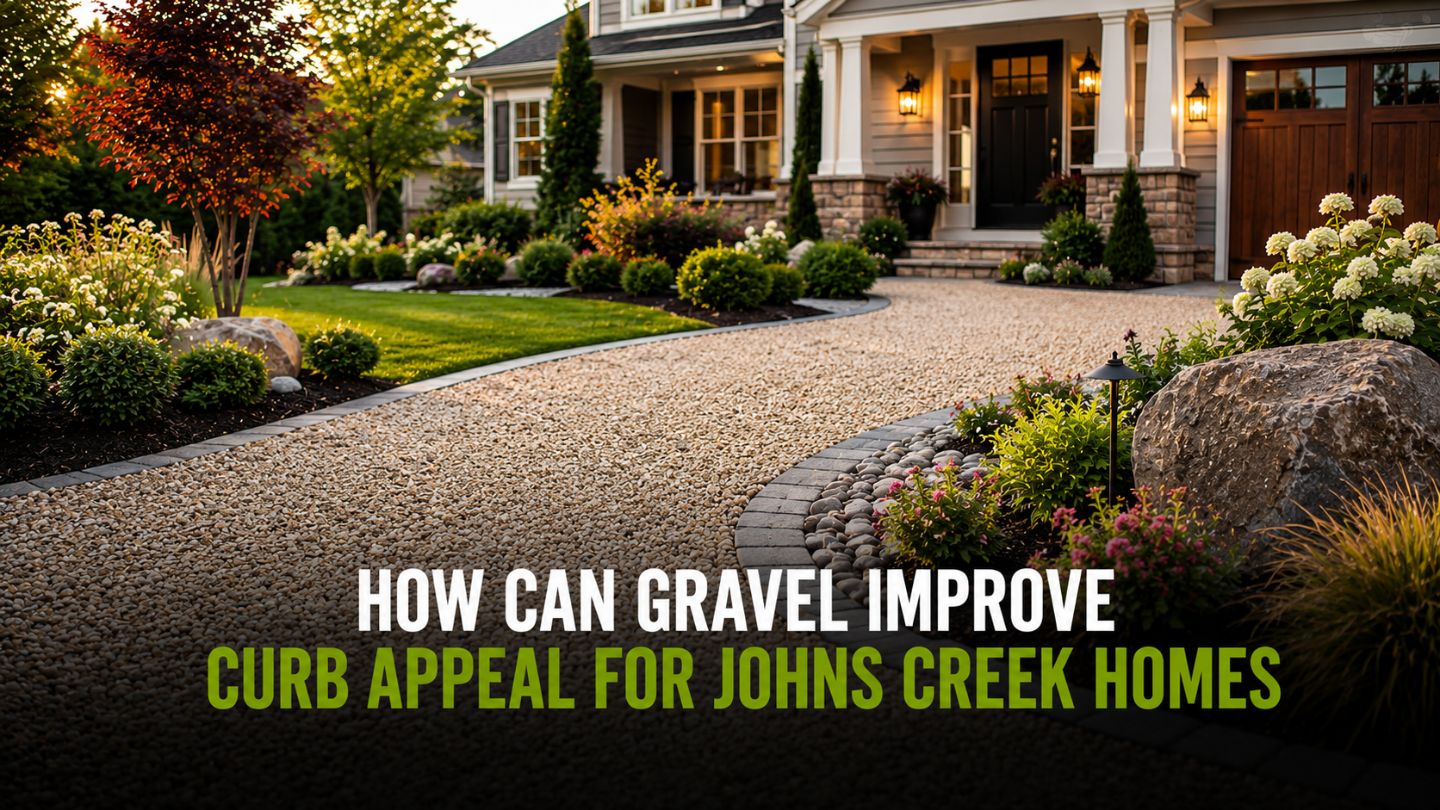
Gravel is one of the most cost-effective and visually impactful ways to transform a Johns Creek home’s curb appeal. Whether you’re looking to define your driveway, frame garden beds, or create inviting walkways, the right gravel project can make a big difference in how your property looks from the street – and how potential buyers perceive its value. In this blog, we’ll walk through the best gravel types for Johns Creek homes. These practical applications enhance your home’s exterior, installation best practices, and how to avoid common mistakes that undermine your results.
Key Takeaways
- Gravel driveways and pathways instantly enhance Johns Creek home exteriors with clean lines and texture.
- Decorative gravel borders define landscaped areas, suppress weeds, and create visual interest year-round.
- Proper gravel selection – in size, color, and type – complements Johns Creek’s architectural styles and Georgia’s climate.
- Professional installation ensures long-lasting curb appeal results, especially on the region’s challenging red clay soils.
- Gravel projects offer excellent return on investment, with well-executed landscaping boosting asking prices by approximately 7%.
Types of Gravel That Enhance Johns Creek Home Curb Appeal
Choosing the right gravel starts with understanding which types perform best in Johns Creek’s humid subtropical climate, where roughly 54 inches of annual rainfall and heavy red clay soils demand materials that handle moisture and compaction. Gravel is available in various colors, textures, and sizes, so matching the right stone to the right application is essential. Knowing which type of gravel works best for a driveway can help homeowners choose a durable surface that withstands vehicle traffic and heavy rain.
- Pea Gravel features small, rounded stones (about ¼ to ⅜ inch) with a smooth, attractive finish. It’s ideal for garden paths, patios, and accent areas where you want a natural, inviting look. Because the stones don’t interlock, pea gravel works best in contained spaces with proper edging rather than high-traffic driveways.
- Crushed Granite and Crusher Run are angular, multi-sized gravels that compact tightly and resist displacement – even under vehicle traffic. For Johns Creek homeowners who need a durable gravel driveway surface, these options provide structural integrity that withstands heavy summer rains and seasonal temperature shifts.
- Decomposed Granite (DG) compacts into a firm, walkable surface with a warm, earthy appearance. It’s a practical choice for low-traffic walkways and seating areas where you want the ground to feel natural underfoot. In areas with steep slopes, stabilizing agents or edge controls help prevent washout.
- River Rock consists of smooth, rounded stones in larger sizes (1 inch and up), making it perfect for decorative accents, dry creek beds, and erosion control features. Gravel can be used to create dramatic accents, such as rock gardens, and river rock is especially effective for this purpose. Its variety of colors and shapes adds visual depth to any yard.
Grey crushed stone is a popular choice for driveways, offering a clean, modern look that pairs well with both traditional and contemporary homes in Johns Creek.
Choosing the Right Gravel Size and Color for Your Home
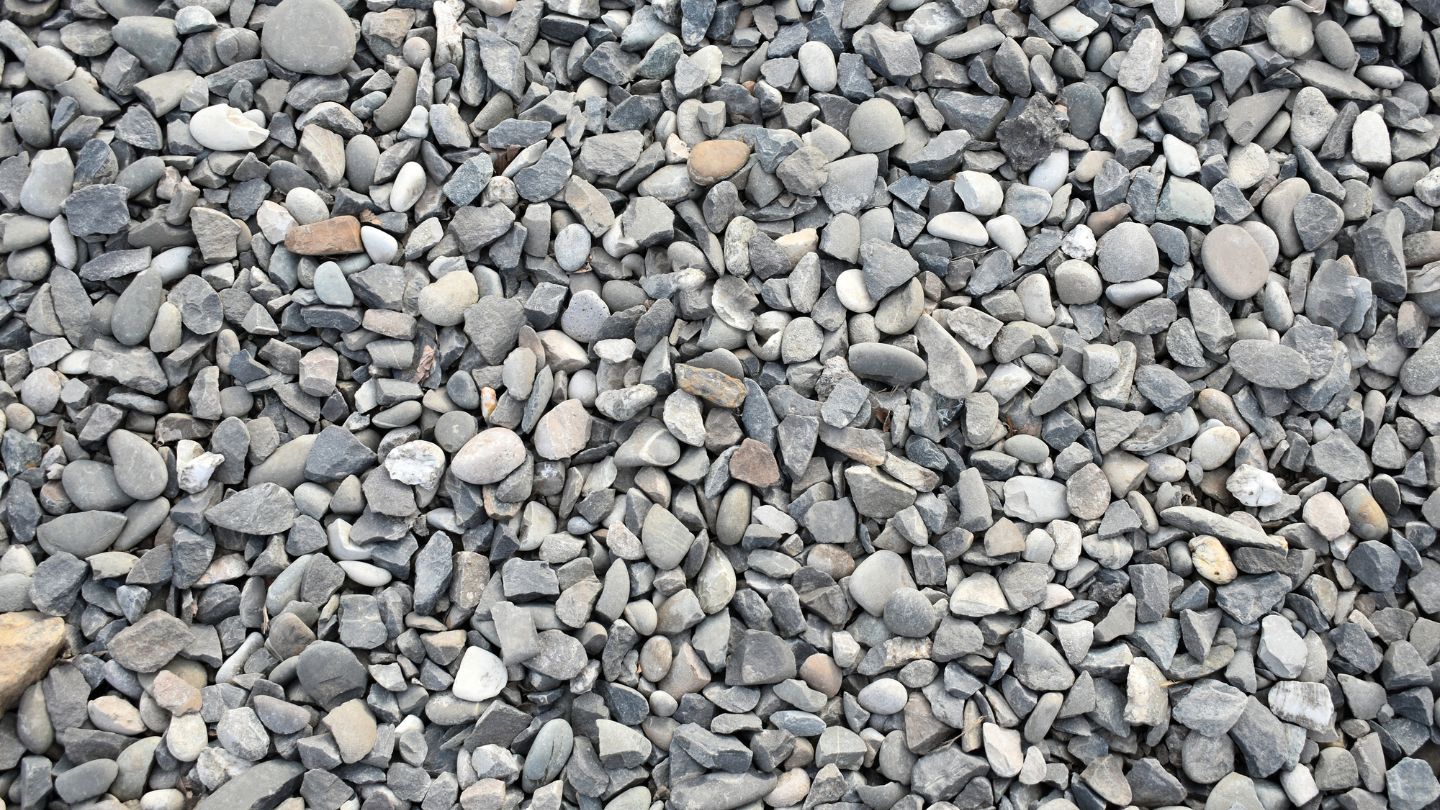
Selecting gravel that complements your home’s style and color scheme is just as important as choosing the right type. Gravel offers diverse design options, including a range of colors and textures, so that you can tailor every detail to your property. Understanding the right gravel size for your landscaping project helps ensure the material looks balanced, drains properly, and performs well for its intended use.
Color matching makes all the difference. For traditional brick or stone homes with warm tones – reds, tans, browns – gravels in buff, golden, or salmon shades harmonize naturally. For contemporary homes featuring grays, whites, or cool tones, charcoal or bluish-gray gravel creates a sleek, modern appearance. The goal is to frame your home’s exterior rather than compete with it.
Size recommendations depend on the application:
- Driveways: A surface layer of #57 crushed stone (approximately ½ to ¾ inch) over a compacted base of larger angular stone provides the best combination of appearance and function.
- Walkways and paths: Finer gravels like decomposed granite or pea gravel (¼ to ½ inch) offer comfortable footing and a polished look.
- Decorative borders and accents: River rock or decorative stone in 1- to 2-inch sizes adds texture and contrast between lawn areas and garden beds.
Depth matters, especially in Johns Creek’s clay soil conditions. A gravel driveway should have a final layer of 3 to 6 inches, with a total depth (including base layers) of 4 to 6 inches for standard driveways, and up to 8 inches for soft soil or sloped areas. Walkways generally need 2 to 4 inches of coverage, while decorative beds require shallower coverage.
Gravel Applications That Boost Johns Creek Property Appeal
The most effective gravel projects go beyond a single application. By combining functional spaces with aesthetic appeal, you can spruce up your entire yard and create a cohesive look that impresses from the street. The benefits of gravel in your garden go beyond appearance, helping define beds, improve drainage, and reduce ongoing maintenance.
- Driveways are often the first thing homebuyers decide about when forming their impression of a house. A well-defined gravel driveway with contrasting borders – whether darker stone edging or larger accent rocks – provides immediate curb impact. Proper grading should slope 2 to 3 inches for every 10 feet to direct water away from the home’s foundation, which is critical in Johns Creek’s rainfall-heavy climate. Gravel reduces surface runoff and standing water in rainy areas, keeping your driveway clean and functional even during summer storms.
- Walkways and paths guide visitors to your front door while adding character. Gravel pathways are a durable alternative to grass or pavers, and they blend naturally with the wooded surroundings common in Johns Creek neighborhoods. Interspersing stepping stones within a gravel path adds structure and visual interest. Using gravel enhances curb appeal with clean lines and texture that feel both polished and organic.
- Garden borders and foundation plantings benefit enormously from gravel. Gravel provides defined borders between lawn areas and garden beds, creating straight lines and organized edges that make landscaping look intentional and well-maintained. Gravel can protect foundations from soil erosion when used around homes, preventing the red clay splashback that stains siding during heavy rains. Gravel does not need annual replacement like organic mulch, saving time and cost over multiple seasons.
- Dry creek beds and drainage features solve functional problems beautifully. French drains use gravel-filled pipes to manage surface water, and French drains redirect excess water away from foundations – both essential in a region where clay soils resist infiltration. Gravel beds manage water runoff and control erosion in landscaping, and when lined with river rock, these features become attractive focal points rather than eyesores. Proper yard drainage significantly enhances a home’s curb appeal.
- Decorative accents like gravel-surrounded mailboxes, fire pit areas, or rock gardens add personality. Pair these with outdoor lighting to enhance nighttime curb appeal and safety. Adding seasonal flowers nearby can significantly boost curb appeal, creating layers of color and texture. Even potted plants placed along a gravel walkway can significantly improve a home’s curb appeal. Gravel offers a sustainable and natural look in landscaping designs, tying the entire yard together.
Common Mistakes to Avoid When Installing Gravel
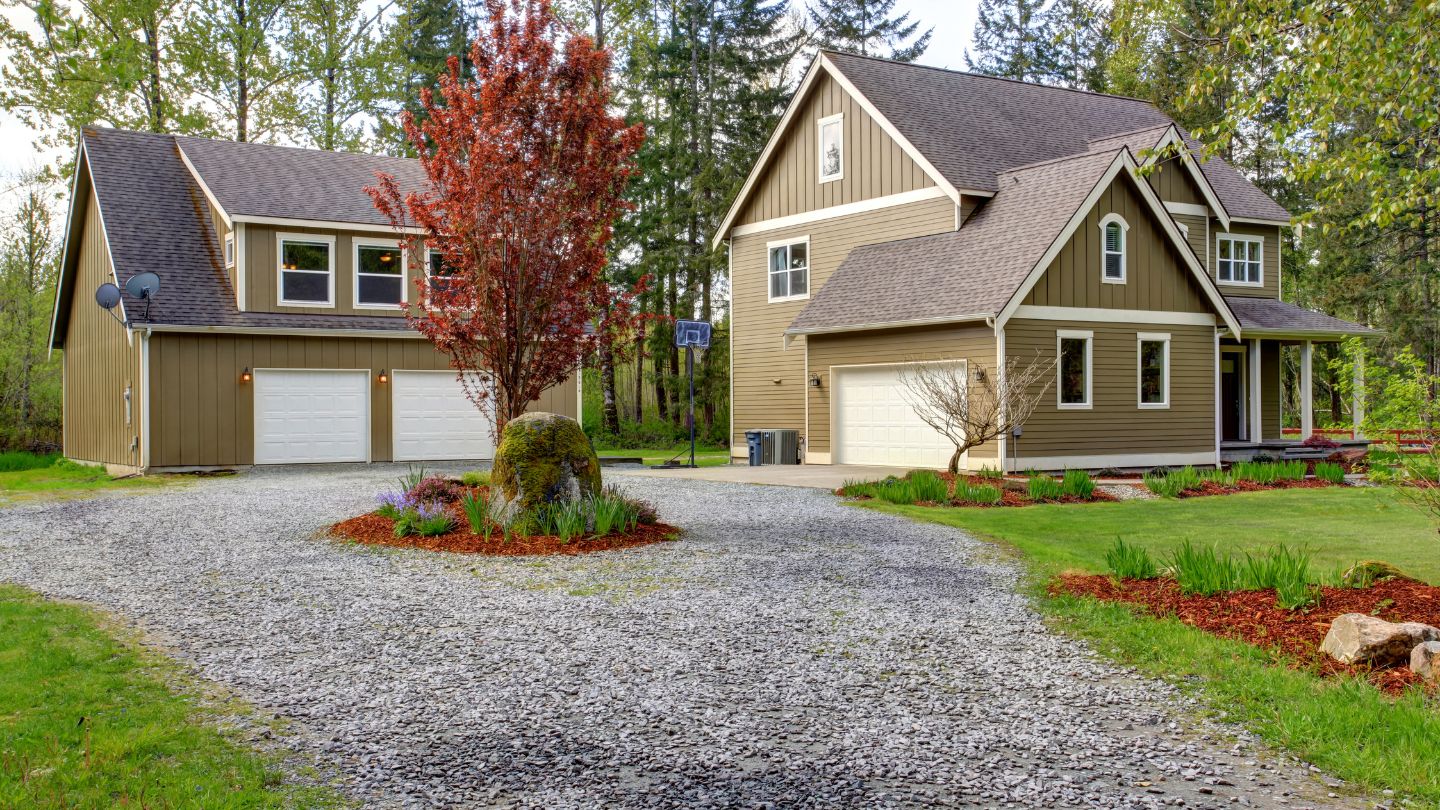
Even with the best materials, poor execution can undermine your results. Here are the mistakes Johns Creek homeowners most often make:
- Using rounded gravel for driveways: Pea gravel and river rock shift under vehicle traffic. Angular crushed stone is essential for any surface bearing weight.
- Skipping geotextile fabric: On Johns Creek’s red clay soils (which can contain 40–60% clay content), gravel sinks into the ground without a separation layer. Always install landscape fabric beneath your base layer.
- Neglecting drainage planning: Flat or poorly graded surfaces trap water, creating mud and damage. Ensure all gravel surfaces slope away from structures and that downspouts don’t dump directly onto gravel areas.
- Insufficient depth: Too-thin gravel layers wash away in the first heavy rain. Follow depth guidelines for each application – don’t cut corners.
- Mismatched aesthetics: Oversized river rocks in front of a small cottage-style home, or bright white gravel against warm brick, can look out of place. Always consider your home’s style, scale, and existing color scheme before selecting materials.
- Ignoring HOA guidelines: Some Johns Creek neighborhoods have architectural standards for driveway and front yard materials. Check local ordinances before starting your project.
Professional Gravel Installation vs. DIY for Johns Creek Homes
For small accent projects – a decorative border, a short garden path, or gravel around a mailbox – a DIY approach can work well. You’ll save on labor costs and maintain full creative control over the details. Homeowners comparing gravel vs. concrete driveways often choose gravel for its lower cost, better drainage, and flexible curb appeal options.
However, larger projects like driveways, extensive walkways, or drainage-integrated installations benefit greatly from professional expertise. Here’s why:
- Local soil knowledge matters: Johns Creek’s Piedmont red clay is notoriously difficult. Professional installers understand that hydrologic soil groups B and C dominate the area (with group B offering only moderate infiltration and group C providing slow infiltration across thousands of acres). They know how to build proper layered systems – a large stone base (#3 angular gravel), a compactable middle layer (crusher run), and a finished surface (#57 crushed stone) – that prevent sinking, rutting, and washout.
- Proper equipment makes the difference: Mechanical plate compactors, grading tools, and bulk material delivery ensure each layer is built correctly. DIY projects without compaction often settle unevenly after the first few rains, requiring costly rework.
- Professional results last longer: A properly built gravel surface with good base preparation and drainage in this region can last decades with regular maintenance. That longevity translates directly into your home’s market value.
Working with a local landscape supply company gives you access to the right gravel types at bulk pricing, expert guidance on quantities and specifications, and optional installation services that bundle delivery with labor. For Johns Creek homeowners investing in curb-appeal improvements, the combination of quality materials and experienced installation delivers the strongest return.
Gravel driveway projects installed in 2026 typically cost between $2 and $5 per square foot (materials plus labor), while materials-only costs often run $1 to $3 per square foot, depending on gravel type and depth. A 1,200-square-foot driveway, for example, might cost $2,400 to $6,000 installed – a fraction of what concrete or asphalt would run. Permeable pavers allow water to pass through, reducing runoff, but they come at a significantly higher price point. Gravel improves drainage and soil health in landscaping while keeping your budget reasonable.
Final Thoughts
Gravel is a practical, attractive, and budget-friendly way to enhance curb appeal for homes in Johns Creek. From defined driveways and welcoming walkways to clean garden borders and functional drainage features, the right gravel project can improve both the appearance and performance of your outdoor space. With proper selection and installation, gravel can handle Georgia’s heavy rainfall, reduce weed growth, and provide lasting visual appeal with minimal upkeep.
For homeowners planning curb-appeal upgrades, Mulch Pros Landscape Supply offers dependable gravel in Johns Creek, along with expert material recommendations and reliable bulk delivery. In addition to gravel and sand products, the company supplies quality mulch, pine straw, soil, and firewood to help homeowners complete a wide range of landscaping and outdoor improvement projects. Whether you need materials for driveways, garden beds, drainage solutions, or seasonal property maintenance, we help you create a polished and durable landscape. Contact us today to enhance your Johns Creek property’s curb appeal.
Frequently Asked Questions
What type of gravel works best for Johns Creek driveways?
Crushed granite and crusher run are the best choices for driveways in Johns Creek. Their angular edges interlock under compaction, resisting displacement from vehicle traffic and heavy rain. A three-layer system – large base stone, compactable middle layer, and a #57 crushed stone surface – provides excellent durability on the region’s red clay soils. Grey crushed stone is especially popular for its clean, versatile appearance.
How much gravel do I need for my curb-appeal project at my Johns Creek home?
Start by measuring the area’s square footage, then multiply by the desired depth. For driveways, plan for a total depth of 4 to 6 inches; for walkways, 2 to 4 inches; for decorative borders, 2 to 3 inches. Gravel is typically sold by the ton or cubic yard – one cubic yard covers roughly 100 square feet at 3 inches deep. A local landscape supply company can help you calculate exact quantities based on your project’s dimensions.
Does gravel increase property value in Johns Creek?
Yes. Well-executed landscaping – including gravel driveways, walkways, and defined garden borders – can boost a home’s asking price by approximately 7%. Front yard improvements are among the first things potential buyers notice, and a clean, well-maintained gravel installation signals that a property has been cared for. The cost-to-value ratio for gravel projects is among the best in residential landscaping.
How long does gravel installation take for Johns Creek homes?
Small projects, such as a garden border or an accent area, can be completed in a single day. A full driveway installation – including excavation, grading, fabric placement, base layering, compaction, and surface finishing – typically takes two to four days, depending on size and site conditions. Professional crews with the right equipment can often complete projects faster than DIY efforts.