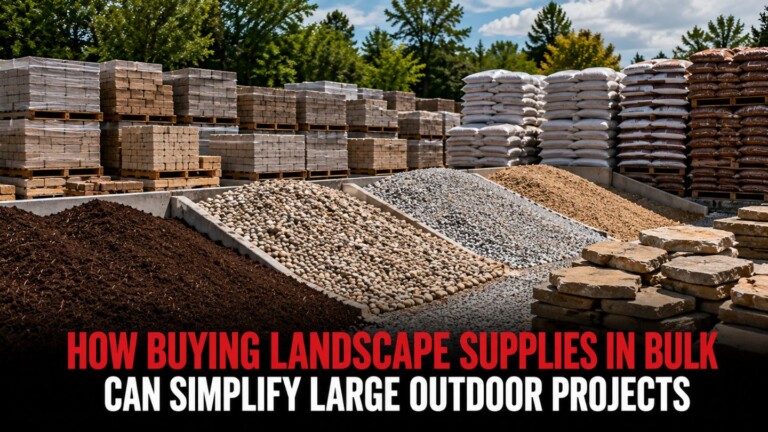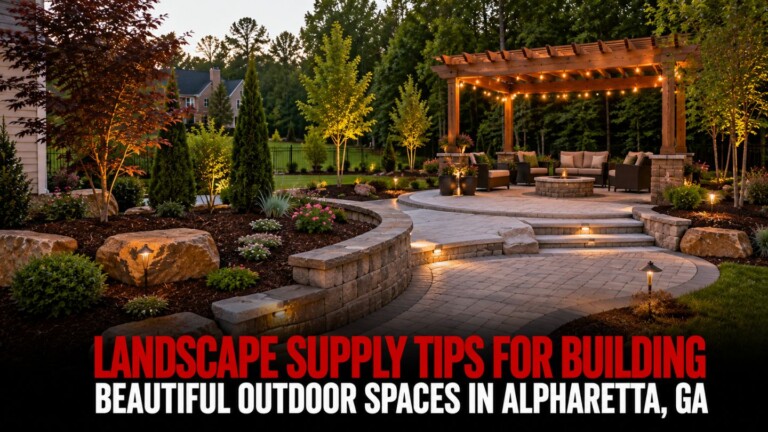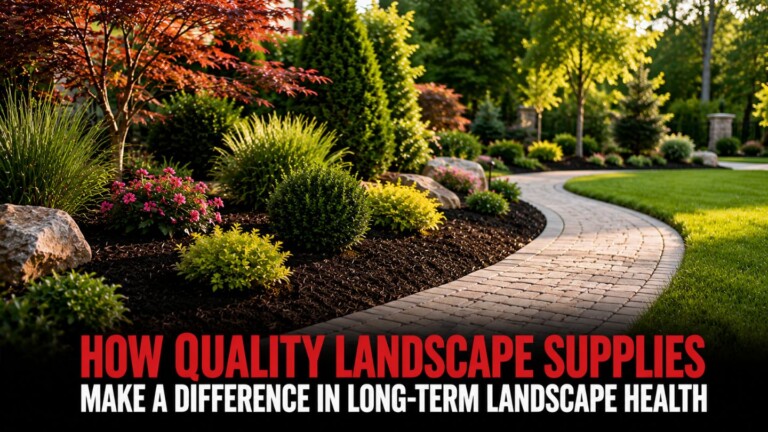
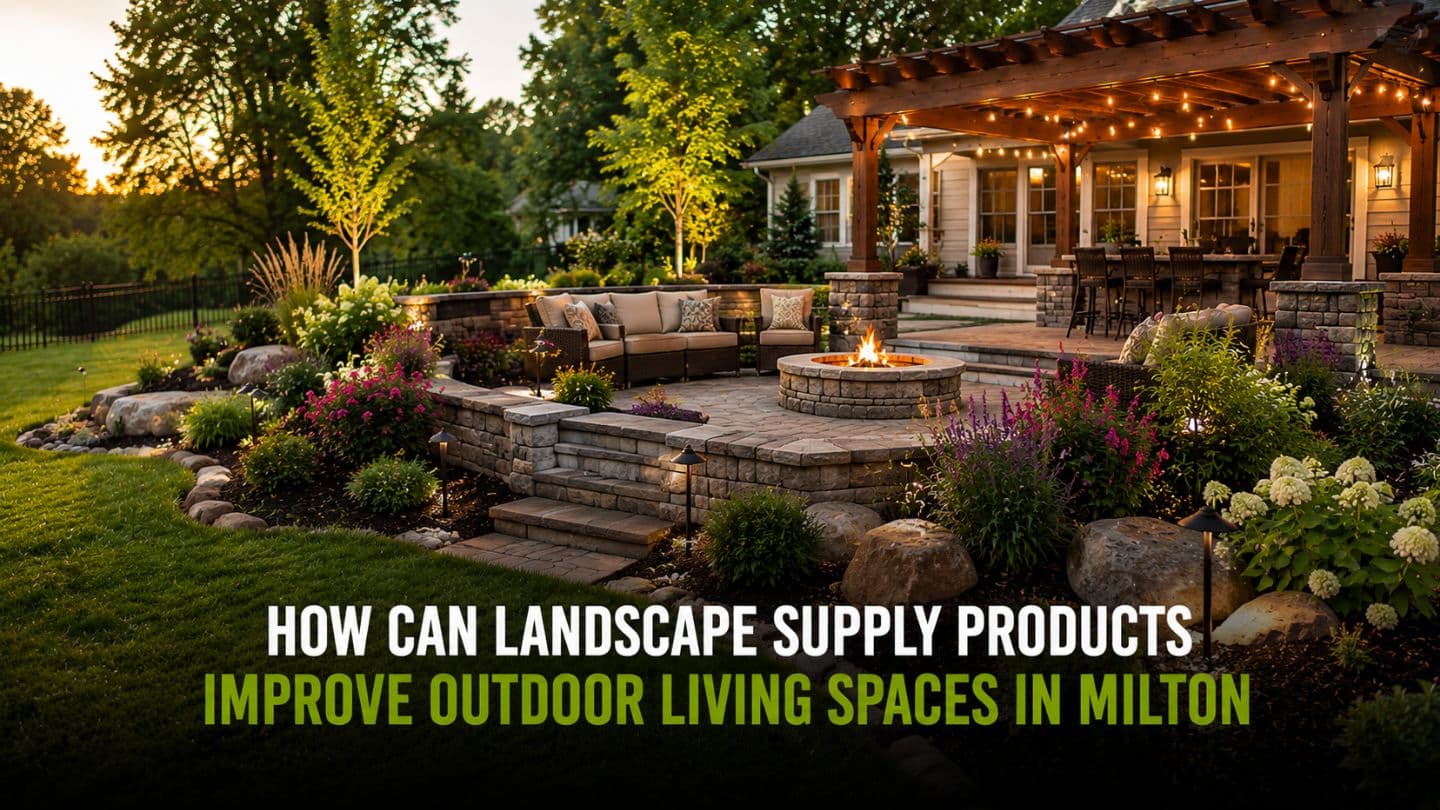

The right landscape supply products can turn a basic Milton yard into a more durable, visually appealing, and useful outdoor living space. In Milton’s hot, humid North Georgia climate, where red clay soil can compact, hold water, and dry hard in summer, the materials beneath and around your patios, garden beds, walkways, and seating arrangements make a significant difference.
Quality mulch, topsoil, sand, gravel, natural stone, pine straw, edging materials, and firewood help create outdoor spaces that look polished and perform well through changing weather conditions. These products improve drainage, protect plants, define outdoor living zones, reduce maintenance requirements, and enhance curb appeal. This blog covers how the right landscape supplies can improve foundation stability, plant health, visual appeal, year-round functionality, and long-term value for Milton homeowners.
Key Takeaways
- Quality mulch and pine straw enhance plant health, support water conservation, reduce weed growth, and lower maintenance needs.
- Proper topsoil, soil amendments, gravel, and sand create stable foundations for lawns, paver patios, walkways, retaining walls, and outdoor kitchens.
- Decorative stone, natural stone, and decorative gravel add visual interest, organization, and elegance to gardens and outdoor living spaces.
- Strategic material selection can increase curb appeal, property value, usability, and long-term benefits.
- Local landscape supply delivery helps Milton homeowners access high-quality materials suited to clay soil, humid summers, and seasonal weather changes.
Essential Foundation Products for Milton Outdoor Spaces
A strong outdoor area starts with the soil and base materials you do not always see. Milton sits in Georgia’s Piedmont region, where many properties have thin topsoil over dense red clay. That makes quality soil, compost blends, gravel, and sand essential for creating long-lasting living spaces.
Soil quality is crucial for plant growth. High-quality landscape supplies improve soil microbial activity, and soil amendments improve structure and nutrient availability. This is especially important for lawns, flower beds, trees, shrubs, and native plants growing in compacted clay. An essential guide to landscaping supplies can help homeowners understand which base, soil, and ground-cover materials work best for each part of an outdoor living project.
Different projects require specific soil blends for success. Flower beds benefit from nutrient-rich compost blends, while trees often require well-draining soil to prevent root rot. Regular soil monitoring maintains optimal conditions for plants, especially in Milton’s acidic Piedmont soils.
Gravel and sand are just as important for hardscape work. Durable landscaping materials withstand weather changes and heavy use, and quality landscape supply products can enhance curb appeal and durability. Using durable materials ensures long-lasting outdoor spaces, while high-quality landscape supplies minimize the need for frequent replacements.
For patios, pavers, walkways, outdoor kitchens, and retaining walls, a proper gravel base helps water drain away from the surface rather than pooling beneath it. High-quality stone and concrete are preferred for durability, and using durable materials reduces long-term repair costs. Using durable materials reduces long-term repair costs by helping prevent settling, cracking, and repeated repairs.
Irrigation also supports the foundation of a healthy landscape. Drip irrigation reduces water waste by delivering water directly to the roots. Smart irrigation systems can automate watering based on soil moisture data. Proper irrigation prevents disease caused by excess moisture in plants. Collecting rainwater for irrigation supports sustainable landscaping practices, and irrigation systems help maintain lush greenery during water restrictions.
Read More: Garden Soil vs. Topsoil—Unveiling the Differences
Building Stable Patios and Walkways
Stable patios and walkways depend on careful planning and the right materials. In Milton, clay soil expands when wet and contracts when dry, so hardscape surfaces need a well-built base that handles water movement.
A typical approach includes:
- Excavating weak or compacted clay
- Adding a layer of coarse gravel or crusher run
- Compacting the gravel in lifts
- Installing a thinner bedding layer of sand
- Setting pavers, flagstone, or natural stone at a consistent grade
- Using edging materials to lock the surface in place
Hardscape surfaces should slope away from the home to reduce pooling. A common minimum slope is about 1 inch of drop per 8 feet. This small grade protects patios, paver patios, walls, and walkways from water damage while preserving functionality.
Natural stone is a practical choice for Milton’s outdoor living because natural stone withstands freeze-thaw cycles and intense sun. Natural stone withstands freeze-thaw cycles and intense sun, making it suitable for high-traffic areas, fire pits, garden paths, and patios. It also works well with the home’s architecture when colors and textures are chosen thoughtfully.
For a long-lasting outdoor space, avoid relying on a thin sand layer over clay. Sand alone does not solve drainage problems. Gravel, compaction, slope, and quality installation all work together to create a surface that feels like a natural extension of the home.
Read more: How to Choose the Right Gravel Size for Your Landscaping Project
Aesthetic Enhancement Through Quality Mulch and Decorative Materials
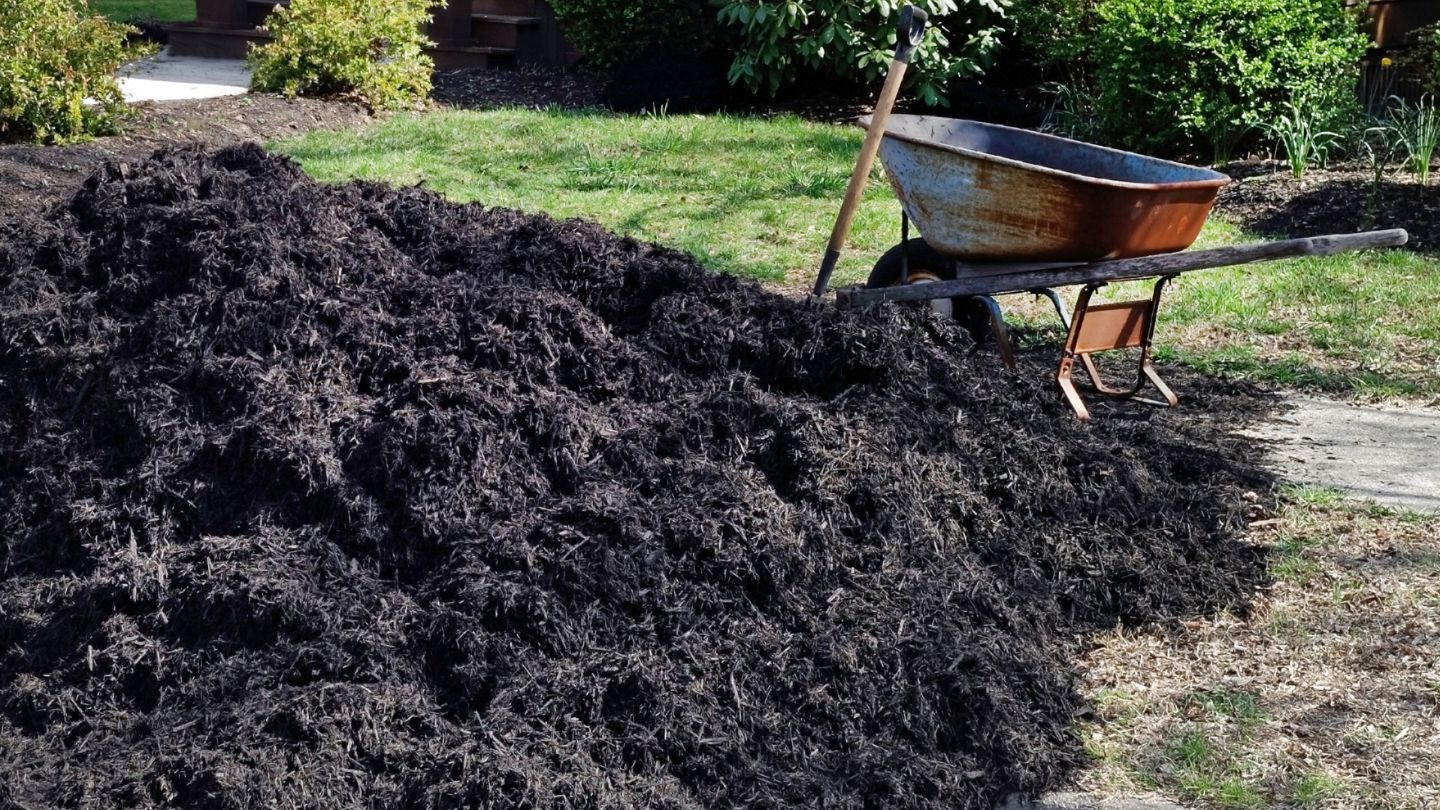
Mulch, pine straw, decorative gravel, natural stone, and boulders provide the finishing touches that make an outdoor living space feel complete. They add beauty, structure, and aesthetic appeal while also improving plant health.
Organic mulch retains moisture and regulates soil temperature. Mulch suppresses weeds, reducing the need for chemical herbicides. Mulch decomposes over time, enriching the soil with nutrients. Using mulch can protect soil from extreme temperatures and prevent compaction, which is especially helpful in Milton’s clay-heavy landscapes.
Rich decorative mulches enhance color vibrancy and create a polished look around garden beds, flower beds, trees, and seating areas. Mulch demand is projected to increase by 7.8% annually through 2030. Demand for mulching materials is projected to grow 7.8% annually through 2030, reflecting the growing number of homeowners choosing low-maintenance, visually appealing ground cover.
Pine straw is another strong option for landscaping in Milton. It has a natural look, settles neatly around plants, and works well with azaleas, hollies, camellias, and other plants that prefer slightly acidic soil. It is also a practical choice for slopes and shaded areas where turf struggles.
Decorative stone adds structure and contrast. Using natural stone or decorative gravel adds organization and elegance to gardens. Rocks can cut maintenance workload by up to 80%. Rocks can cut maintenance workload by up to 80% when used in the right areas instead of high-maintenance lawns or frequently refreshed plantings. Natural stone can reduce maintenance by up to 80%, especially in paths, borders, dry creek beds, and water features.
Decorative ground covers can replace high-maintenance lawns and prevent erosion. Xeriscaping offers an environmentally conscious alternative to lawns, and native plants require less maintenance and water than non-native plants. Together, stone, mulch, pine straw, and native plants help transform your outdoor space into a low-maintenance and environmentally responsible landscape.
Color coordination matters. Warm tan stone may pair well with brick or traditional homes, while slate, charcoal, and gray tones can complement modern backyard design. Decorative gravel can outline pathways, highlight water features, frame focal points, and bring visual interest to outdoor lighting zones.
Read more: Why Mulching Is Important: Top Benefits for Your Lawn
Common Mistakes to Avoid When Selecting Materials
The best results come from thoughtful selection, not simply buying the most visible materials. Homeowners often choose mulch, stone, or gravel based only on color, but performance matters as much. Many common landscaping supply mistakes occur when homeowners focus only on appearance rather than drainage, durability, soil conditions, and long-term maintenance.
Common mistakes include:
- Using mulch too shallow to block weed growth
- Piling mulch against tree trunks, which can encourage rot
- Choosing decorative gravel too small for high traffic areas
- Installing stone without edging materials
- Mixing too many colors or textures in one outdoor space
- Choosing materials that clash with the home’s architecture
- Using lightweight base materials under outdoor kitchens, fire pits, or heavy seating arrangements
Scale is important. Large boulders, small gravel, mulch, artificial turf, pavers, and natural stone can all work together, but they need transition zones. Without balance, an outdoor area can feel busy rather than serene.
Maintenance requirements should also guide material choices. High-quality materials cost more upfront in some cases, but they often deliver better long-term value. Quality landscaping products can deliver a 217% return on investment, especially when they enhance curb appeal, outdoor living, and usable space.
Creating Functional Year-Round Outdoor Living Areas
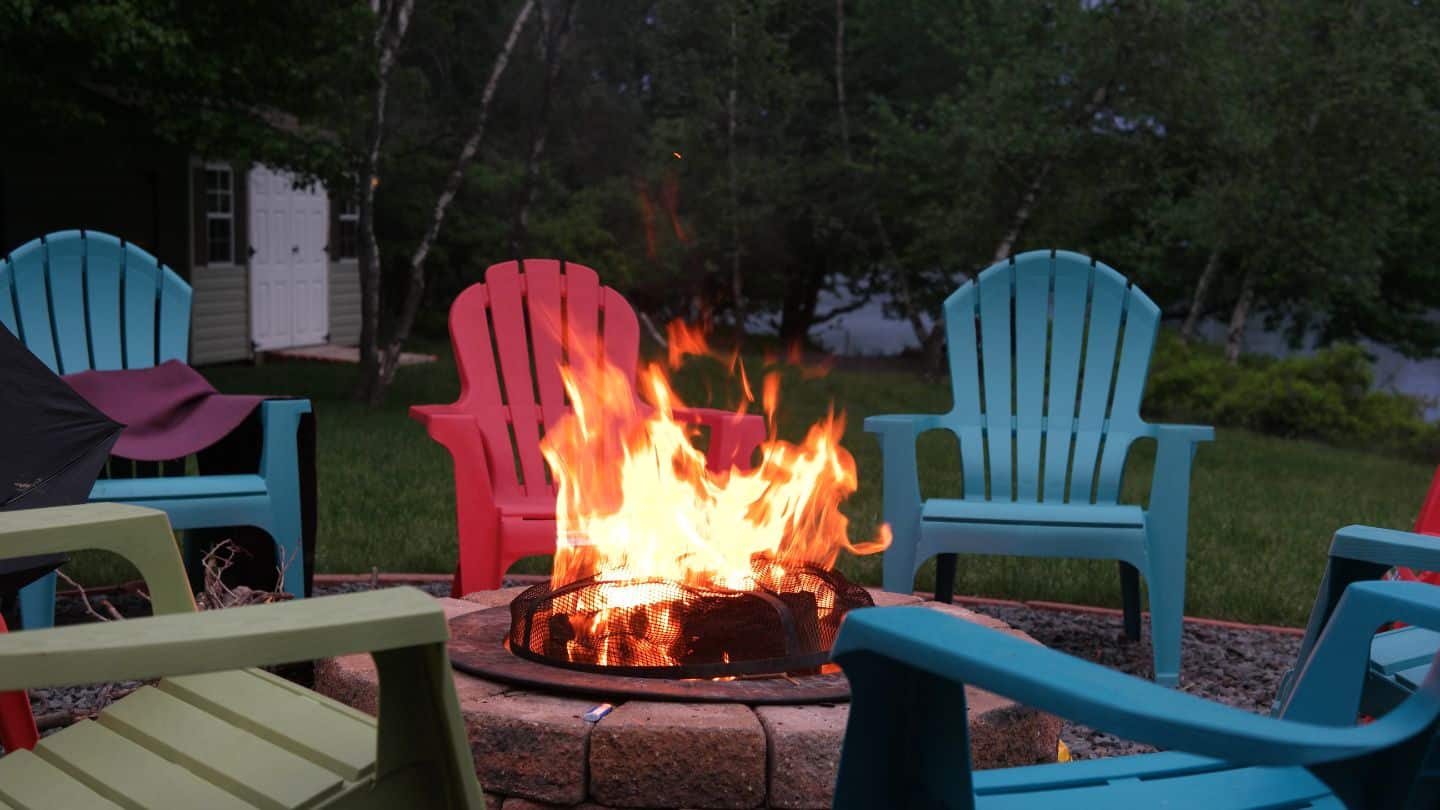
Landscape supplies do more than make a yard look better. They help create outdoor spaces that support real life: dining, relaxing, gardening, entertaining, and spending time in nature.
A functional oasis often uses different materials for different zones. For example, paver patios or flagstone can support dining furniture. Decorative gravel can define a grill area. Mulch and pine straw can soften garden beds. Natural stone can frame fire pits or water features. Outdoor lighting can improve access and safety after dark. Knowing what to expect from a professional landscape supply delivery can help homeowners prepare access points, protect outdoor surfaces, and keep larger projects moving smoothly.
Fire features are especially useful for extending outdoor living into cooler months. A 36-44-inch-diameter fire pit allows for ample seating, making it a good size for conversation areas and casual gatherings. In Milton, wood-burning fire pits should be used in accordance with local burning rules, with safe placement and proper firewood storage.
Material combinations can shape the mood of a space. Natural stone around a fire pit creates a grounded, durable gathering area. Pine straw under trees can create a tranquil retreat. Mulch around shrubs and perennials adds softness and beauty. Decorative gravel near water features can create a serene retreat with minimal regular maintenance.
For year-round outdoor living, think in zones:
- Dining zone: Stable pavers, patios, or compacted stone surfaces
- Cooking zone: Durable gravel base, paver patios, or stone around outdoor kitchens
- Relaxation zone: Mulch, pine straw, outdoor lighting, and comfortable seating arrangements
- Garden zone: Compost-rich soil, native plants, and drip irrigation
- Fire zone: Natural stone, gravel, safe clearances, and seasoned firewood
- Pathway zone: Decorative gravel, stepping stones, or flagstone for easy access
Water conservation also plays a role in long-term functionality. Native plants, mulch, drip irrigation, rainwater collection, and smart irrigation systems all reduce waste while helping plants stay healthy through hot summers.
With meticulous attention to materials, expert advice, and expert craftsmanship, a Milton backyard can become a natural extension of the home. The right landscape supplies support, beauty, functionality, relaxation, and long-term benefits.
Final thoughts
Landscape supply products can transform ordinary Milton yards into more attractive, functional, and durable outdoor living spaces. From topsoil and soil amendments that support healthy plants to gravel and sand that stabilize patios and walkways, the right materials improve drainage, reduce maintenance needs, enhance visual appeal, and help create outdoor areas that can be enjoyed year-round.
For homeowners planning to upgrade their outdoor spaces, Mulch Pros Landscape Supply offers dependable landscape supply in Milton with quality materials, helpful guidance, and convenient delivery directly to your property. Whether you need soil, gravel and sand, mulch, firewood, pine straw, stone, or other outdoor living materials, we help you choose the right products and quantities for a polished, long-lasting landscape. Contact us today to bring your Milton outdoor living project to life.
Frequently Asked Questions
What landscape supply products work best for Milton’s clay soil conditions?
Topsoil, compost blends, gravel, sand, mulch, and pine straw work especially well for Milton’s clay soil. Soil amendments improve structure and nutrient availability, while gravel and sand help drainage under patios, pavers, and walkways. Mulch protects the soil surface from heat, compaction, and moisture loss.
How much do I need for my outdoor living space project?
One cubic yard of mulch covers about 108 square feet at a 3-inch depth or about 162 square feet at a 2-inch depth. A 2–3-inch layer is usually enough for maintenance around garden and flower beds. New beds may benefit from a slightly deeper layer of mulch, but mulch should not be piled against tree trunks.
Which decorative stone options complement North Georgia home styles?
Natural stone, decorative gravel, flagstone, fieldstone, bluestone, and decomposed granite all work well in North Georgia landscapes. Warm tan, rust, gray, and charcoal tones can be selected to match the home’s architecture and personal style. Using natural stone or decorative gravel adds organization and elegance to gardens, paths, patios, and focal points.
How often should I refresh mulch and pine straw in my outdoor areas?
Mulch is commonly refreshed once or twice per year, depending on exposure, color preference, and decomposition rate. Pine straw is usually refreshed annually for a clean, finished appearance. Regular maintenance keeps garden beds visually appealing and helps control weed growth.
Can Mulch Pros Landscape Supply deliver materials directly to my property in Milton?
Yes, Mulch Pros Landscape Supply can deliver landscape supply materials directly to properties in Milton. Local delivery makes it easier to get the right amount of mulch, soil, decorative gravel, pine straw, and other materials without multiple trips. Delivery is especially helpful for larger backyard design projects and outdoor living upgrades.
What’s the difference between topsoil and garden soil for outdoor projects?
Topsoil is often used for grading, lawn areas, and general soil improvement. Garden soil or compost-rich blends are designed for planting areas where plants need more nutrients and better structure. Different projects require specific soil blends for success, so flower beds, trees, lawns, and raised beds should not always use the same soil mix.