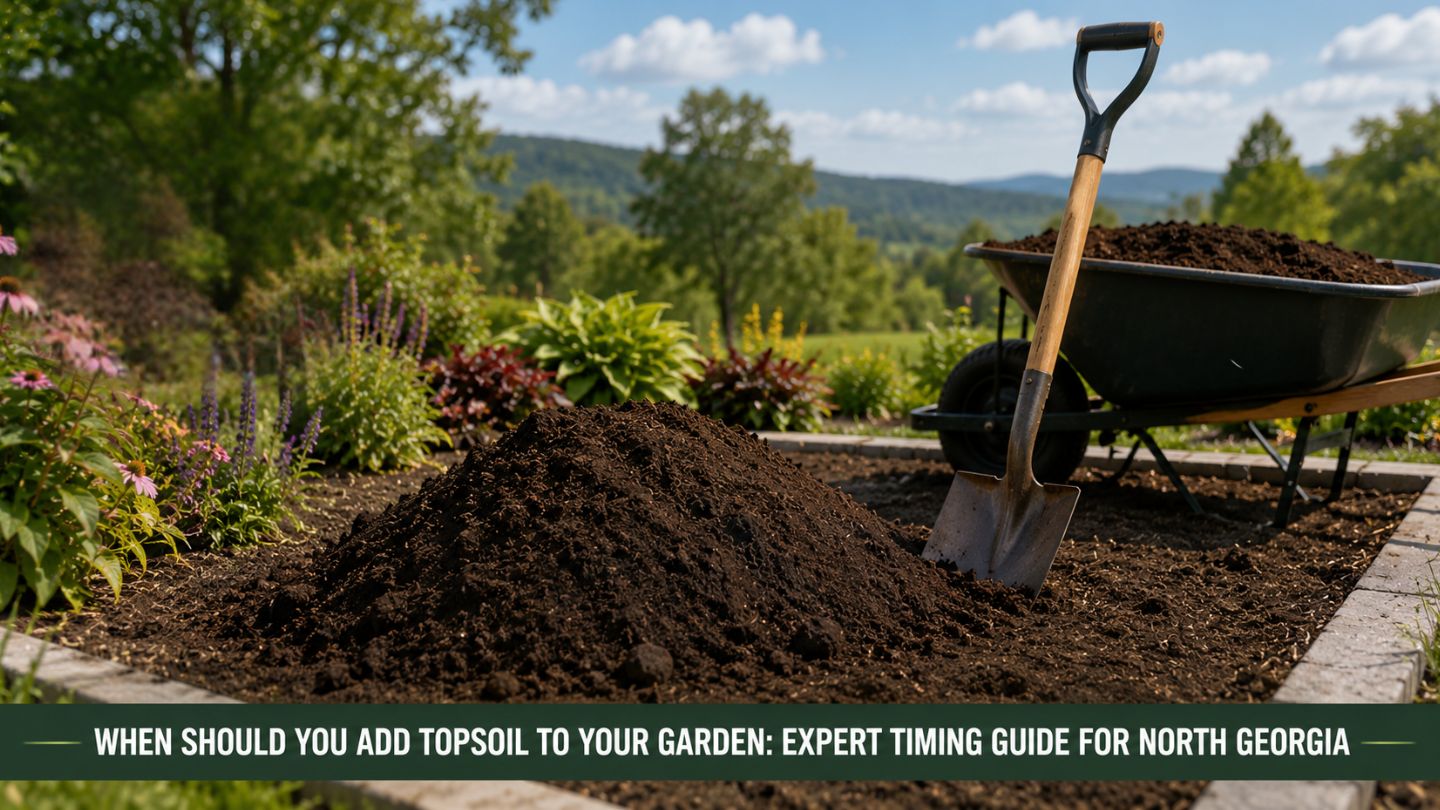

Your tomatoes are stunted, your lawn has bare spots, and your flower beds look more tired every season. The culprit is often right beneath your feet, depleted, compacted soil that has lost the nutrients and structure plants need to thrive. Understanding when to add topsoil to your garden makes the difference between struggling plants and a flourishing landscape. Topsoil is the uppermost layer of soil, typically the top 5 to 12 inches, and it contains most of the nutrients and organic matter that plants need to grow. This blog covers optimal timing windows, soil condition indicators, and application methods to help your North Georgia garden reach its full potential.
Key Takeaways
- Early spring (March-April) and fall (September-November) are optimal times for topsoil application in North Georgia
- Add topsoil when soil shows poor drainage, compaction, or nutrient depletion
- Apply 2-4 inches for new gardens and garden beds, 1-2 inches for existing lawn repair
- Avoid summer heat and winter months when the ground is frozen for best results
- Conduct a soil test before adding fresh topsoil to determine your specific nutrient needs
Optimal Seasons for Adding Topsoil
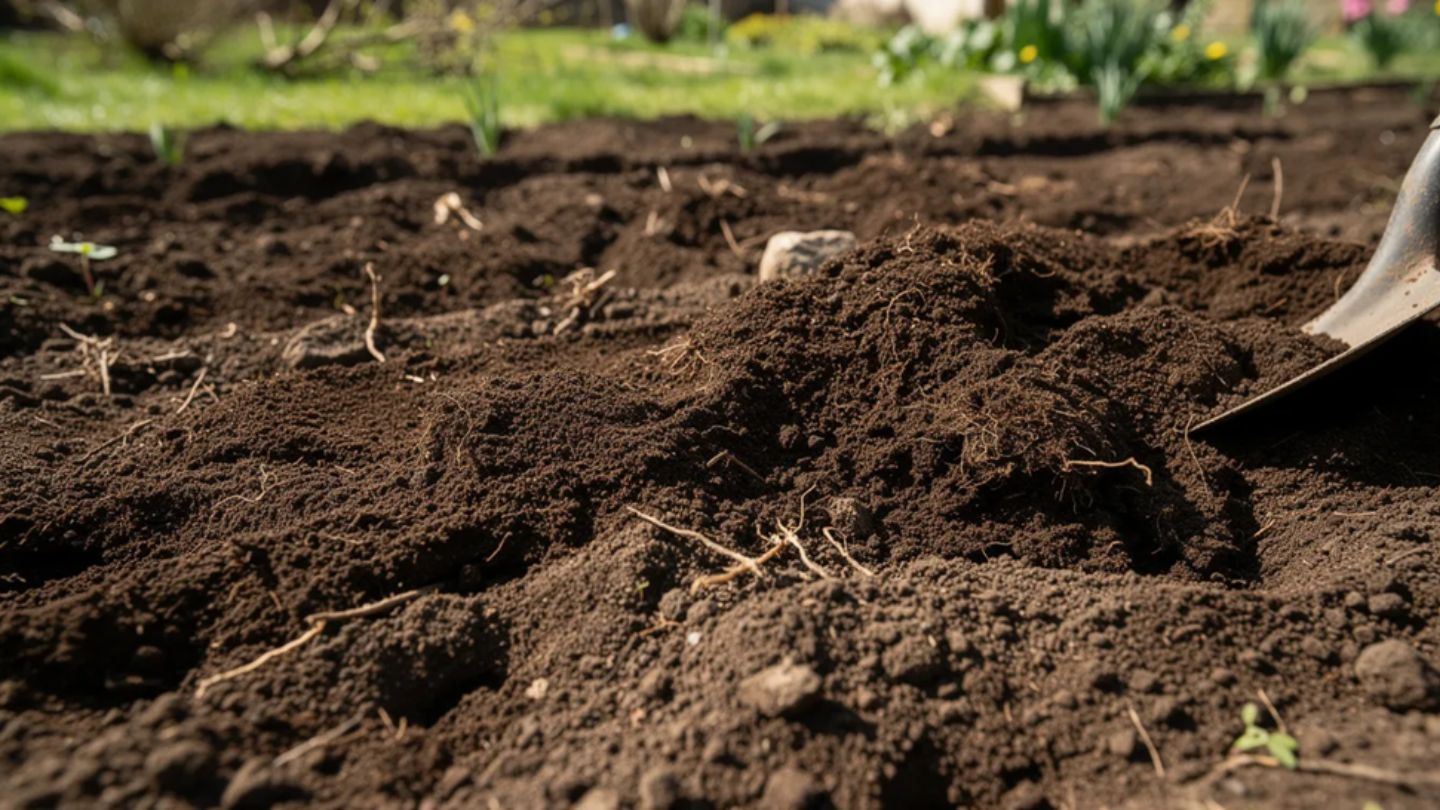
The best times to add topsoil to your garden are early spring and autumn. These seasons align with moderate soil temperatures, manageable moisture levels, and natural plant growth cycles that help new soil integrate effectively with your existing soil.
Spring is often considered the best time to add topsoil, as the ground begins to thaw and moderate temperatures create ideal growing conditions for plants. Soil temperature for adding topsoil should be between 50°F and 75°F, conditions that support microbial activity and encourage the rapid establishment of plant roots.
Fall is another excellent time to apply topsoil, particularly for preparing gardens for winter, as cooler temperatures and consistent rainfall help newly planted seeds or shrubs establish roots. Adding topsoil in the fall allows it to settle and integrate into the existing soil over the winter months, enhancing soil quality and nutrient availability for spring growth. Comparing compost vs topsoil can help you decide whether your garden needs better nutrient support, improved soil structure, or both.
For North Georgia’s humid subtropical climate, these timing windows work particularly well because our clay soils need time to integrate with amendments, and both seasons provide the moderate moisture that prevents soil erosion during application.
Spring Application (March-May)
Early spring is ideal for starting new lawns or preparing garden beds as the soil thaws and is workable. In North Georgia, this window typically opens in mid-March for raised and full-sun flower beds, with April through early May safer for larger lawn projects.
Applying topsoil before planting in spring or fall can provide a nutrient-rich foundation for plants, ensuring they have the necessary resources for healthy growth. For spring planting coordination, add your topsoil 1-2 weeks before transplanting vegetables or installing sod to allow it to settle.
The soil should be moist but not waterlogged when adding topsoil. Test your current soil by squeezing a handful; if it crumbles easily rather than forming a sticky ball, conditions are right for application. Working clay soils when they are too wet can result in compacted soil that restricts root development.
For warm-season grasses like Bermuda and Zoysia, common in our area, wait until soil temperatures at a 4-inch depth consistently reach 65°F, typically mid-April through June in metro Atlanta.
Signs Your Garden Needs New Topsoil
Healthy topsoil is crucial for plant health as it provides essential nutrients, water, air, and microorganisms that help break down organic matter and add nitrogen. When your garden shows certain warning signs, it’s time to consider adding nutrients through a fresh layer of topsoil. Knowing the difference between topsoil and fill dirt is helpful when repairing low areas, improving plant growth, or rebuilding soil structure in garden beds.
Visual and physical indicators include:
- Water pooling on the surface indicates poor drainage
- Bare spots in lawns that won’t fill in despite seeding
- Exposed subsoil (often lighter in color) from soil erosion
- Surface crusting after heavy rain
- Plant roots growing shallow rather than deep
- Yellowing plants even with regular fertilization
Topsoil replenishes nutrients depleted by erosion, foot traffic, or exposure to foreign substances, thereby supporting healthier plant growth. In North Georgia, where native clay soils often contain less than 1% organic matter, these signs are common.
A soil test through UGA Extension (typically $10-15) reveals pH levels, nutrient deficiencies, and organic matter content. Incorporating topsoil into your garden can help balance soil pH, which is essential for optimal nutrient absorption by plants. Test results tell you whether you need basic topsoil, a topsoil blend with compost, or specific soil amendments like bone meal or peat moss.
Compaction issues are common in high-traffic areas. If you probe the soil and hit a hardpan layer within a few inches, or if water runs off rather than soaking in, your soil structure needs rebuilding with a nutrient-rich, high-quality topsoil layer.
Read more: Benefits of Using Compost in Your Garden
Common Mistakes to Avoid
Timing errors that reduce effectiveness:
- Adding topsoil during rainy seasons when clay soils become waterlogged
- Applying in extreme summer heat (July-August) when soil crusts and dries rapidly
- Working soil during the winter months when biological activity stops
- Avoid adding topsoil during heavy rain, extreme heat, or when the ground is frozen
Application depth mistakes:
- Applying too thin a layer (less than 1 inch) provides minimal benefit
- Aiming for 2–3 inches of new topsoil is recommended for general amendment
- Applying more than 1-2 inches of over existing lawn grass can smother it
- Avoid simply dumping topsoil on top of existing soil to prevent drainage issues
Quality issues to watch:
- Using unscreened material containing weed seeds and other debris
- Selecting sandy soil over top clay soils creates drainage barriers
- Choosing topsoil that lacks organic matter won’t improve soil texture
- Not testing whether the right topsoil matches your existing soil composition
Topsoil Application Methods and Best Practices
Proper application technique determines whether your investment in topsoil pays off. Adding topsoil can improve soil texture, enhance drainage, and enrich the soil with nutrients, making it easier for plants to grow and thrive, but only when applied correctly. Understanding how much topsoil you need for a healthy landscape project can help you apply the right depth without wasting material or overwhelming existing plants.
Preparation before adding topsoil includes:
- Removing weeds, debris, and large rocks from the area
- Breaking up compacted soil with a tiller or garden fork
- Grading land to slope away from structures (1-2% grade recommended)
- Conducting a soil test if you haven’t recently
To apply topsoil effectively, it is recommended to till the existing soil before adding a 3-inch layer of blended topsoil, then till it all together to create a 6-inch deep surface layer, which helps prevent drainage problems. Mixing new topsoil with existing soil is recommended for better results rather than layering it on top. Learning how to prepare your yard for topsoil delivery can make spreading, grading, and settling the material much smoother once it arrives.
Spreading techniques for even coverage:
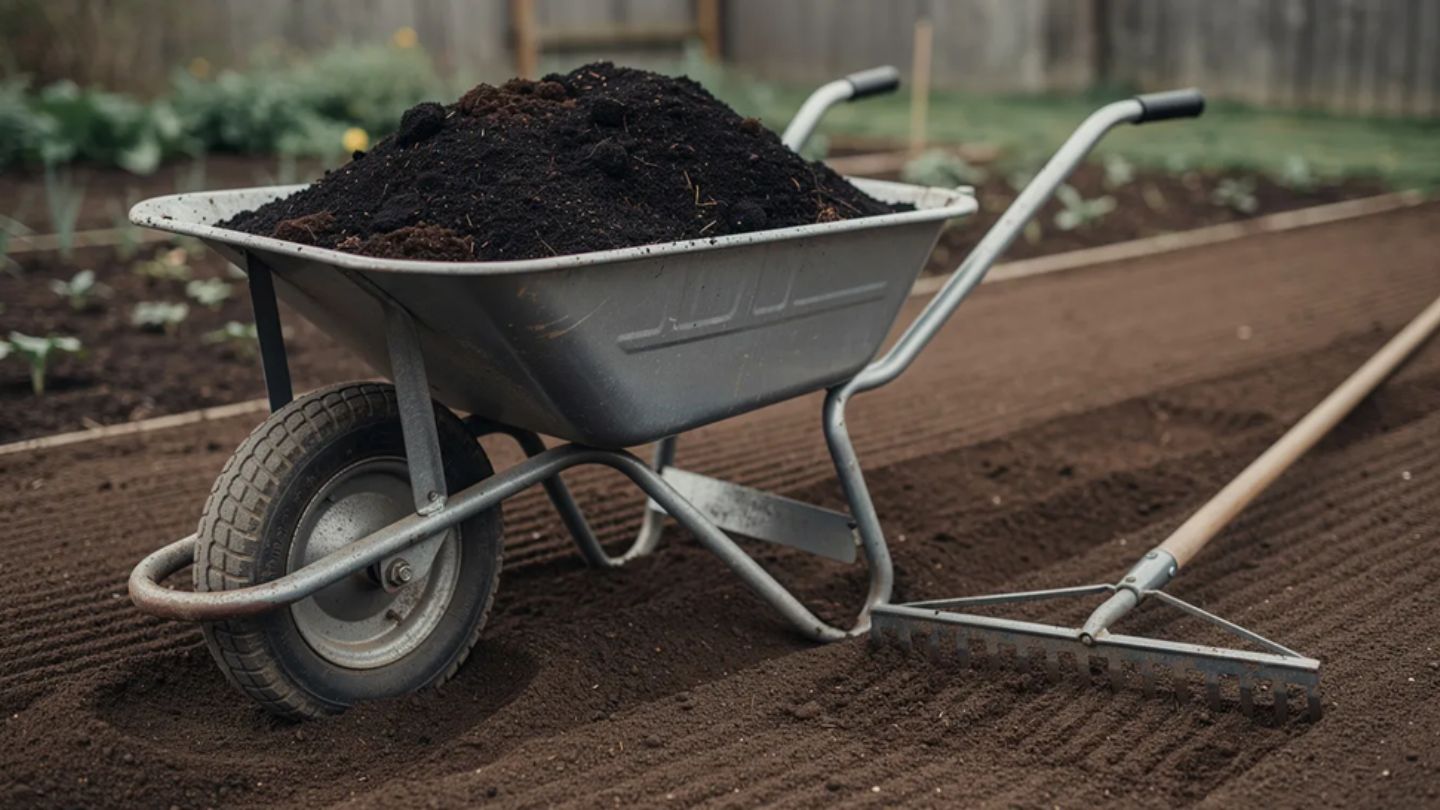
For new garden beds or a new garden, spread topsoil in even 2-inch lifts if applying more than 4 inches total. When applying topsoil, mix it in a wheelbarrow or on a tarp if the soil is lumpy before spreading it in the garden, and level it with a rake or broom after application.
For new lawns, 4-6 inches of quality topsoil over native subsoil provides the foundation most plants need. For top dressing existing lawns to fill bare spots, apply only 1/4 to 1/2 inch at a time.
Post-application care:
After spreading topsoil, lightly spraying it with water can help it settle into place and improve its integration with the existing soil. Fresh topsoil settles 10-15% after watering, so account for this when grading. Wait 3-7 days before planting to allow initial settling, then check levels and add more if needed.
High-quality topsoil can replenish essential macronutrients, such as nitrogen, phosphorus, and potassium. Topsoil acts as a natural fertilizer, enhancing soil fertility through organic matter. For raised beds, you can plant immediately after filling, but still water to settle before adding mulch.
Final Thoughts
Properly timed topsoil application can make a significant difference in the health, structure, and productivity of your garden. By adding topsoil during the ideal spring or fall seasons, improving compacted or nutrient-depleted soil, and following correct application methods, homeowners can create stronger root systems, better drainage, and long-lasting growing conditions for healthier landscapes year-round.
At Mulch Pros, we provide premium soil solutions designed to support thriving lawns, gardens, and landscaping projects throughout North Georgia. Whether you need expert guidance or reliable topsoil delivery in Milton, our team can help you choose quality materials, including pine straw, nutrient-rich soil, durable gravel and sand, and dependable firewood, for a wide range of outdoor needs. Contact Mulch Pros today to give your garden the strong foundation it needs to grow its best.
Frequently Asked Questions
How much topsoil do I need for my garden size?
Use this formula: length × width × depth (in inches) ÷ 324 = cubic yards needed. Add 10-15% extra to account for settling. For example, a 10×20-foot garden bed that needs 4 inches of topsoil requires about 2.5 cubic yards. For new lawns, plan for 4-6 inches; for garden beds with vegetables, 6-8 inches provides adequate depth for plant roots.
Can I add topsoil in summer if my plants are struggling?
Summer topsoil application is not ideal in North Georgia’s heat. Soil temperatures above 75°F cause rapid drying, crusting, and stress to any plantings. If you must address urgent problems, apply only a thin layer in shaded areas with consistent irrigation. Wait until early fall when cooler temperatures return for major topsoil projects to prevent soil erosion from summer storms.
What’s the difference between topsoil and garden soil for timing?
Topsoil is the nutrient-rich uppermost layer of native soil, screened to remove debris. Garden soil is topsoil pre-blended with compost, peat moss, or other organic materials for immediate planting. Timing remains the same for both spring and fall, but garden soil works better for immediate planting, while straight topsoil benefits from settling time before you add plants.