
Homeowners’ associations in Cumming, Georgia, face ongoing pressure to maintain clean, attractive landscapes that reflect positively on the community. From monument entrances and clubhouse grounds to medians and common green spaces, mulch choice plays a major role in both appearance and long-term maintenance costs. With North Georgia’s red clay soils, rolling terrain, and humid climate, not every ground cover performs equally well. Pine straw has become a preferred solution for many HOAs because it offers durability, erosion control, and a cohesive Southern aesthetic. In this blog, we explore why pine straw is especially well-suited for HOA communities.
Key Takeaways
- Pine straw fits Cumming, GA’s climate, red clay soils, and HOA aesthetic standards better than many other mulch options, creating a cohesive neighborhood look that enhances property values.
- HOAs can lower annual landscape costs significantly because pine straw covers more square footage per bale and installs faster than traditional hardwood mulch.
- The interlocking needles provide excellent erosion control on hilly Forsyth County lots while reducing weed growth between service visits.
- Pine straw is a sustainable, regionally sourced material harvested from Georgia’s abundant pine forests without harming trees.
- This article covers how Cumming-area HOAs can budget for, install, and maintain pine straw effectively across entrances, medians, and common areas.
Why Pine Straw Fits Cumming’s Climate and Terrain
Cumming’s humid subtropical climate presents unique challenges for landscape materials. Summers bring temperatures in the 80s and 90s °F, frequent afternoon thunderstorms, and humidity that can stress plants and wash away loose ground covers. Winters occasionally dip below freezing, and spring storms can dump inches of heavy rain in a single afternoon. Sloped lots, drainage swales, and retention pond banks are common features that make erosion control a constant concern for HOA landscapes. When comparing pine straw vs wheat straw for landscape use, pine straw’s longer needles and interlocking structure provide better stability and erosion control in sloped, high-rainfall environments like North Georgia.
Longleaf pine straw excels in these conditions because of its unique physical structure. The long, flexible pine needles (typically 8-12 inches) interlock to form a dense mat that resists wind displacement and holds firm during heavy rainfall. Unlike loose bark or rock that can wash downhill, pine straw creates a protective layer that stays put on slopes common throughout Cumming neighborhoods.
The soil insulation properties matter too. Pine straw helps regulate soil temperature, protecting plant roots from heat stress during July and August while providing a buffer against cold snaps in January and February. Research indicates this insulating effect can moderate root-zone temperatures by 10-20°F, a significant benefit for the shrubs, trees, and perennials in your community’s beds.
Perhaps most practical for large-scale HOA applications: pine straw is lightweight enough for crews to spread quickly across expansive entrances and median islands, yet it forms that dense, settled mat within days of installation. That combination of easy transportation and lasting performance makes it ideal for uneven terrain.
Aesthetic Benefits for HOA Entrances, Medians, and Amenities
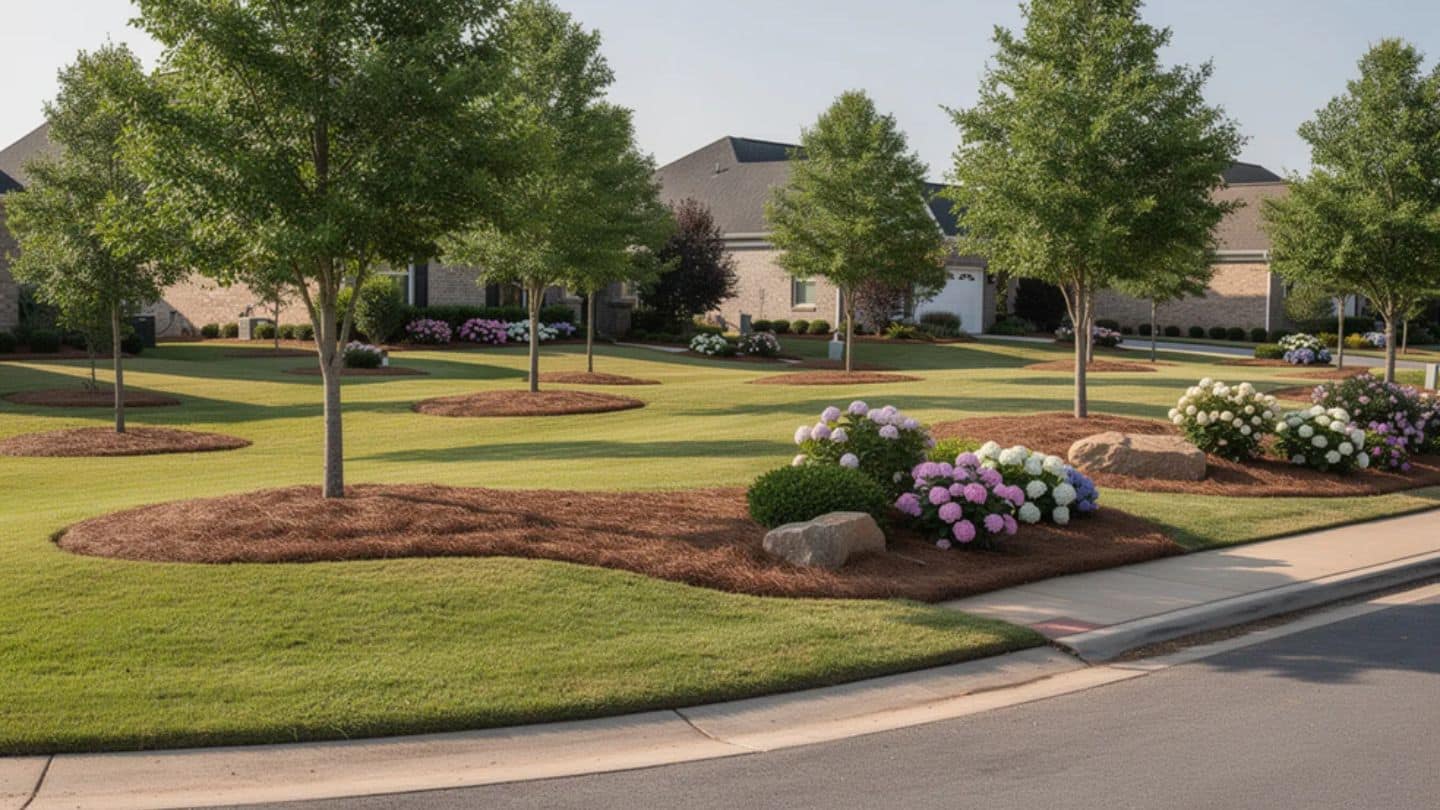
First impressions matter in real estate. When prospective buyers drive through a Cumming subdivision, the monument sign entrance and clubhouse landscaping set the tone for the entire community. Well-maintained beds with fresh ground cover signal that homeowners here take pride in their neighborhood, and that translates directly to property values. Real estate studies consistently tie curb appeal to pricing, with attractive landscapes boosting resale values by 5-10%.
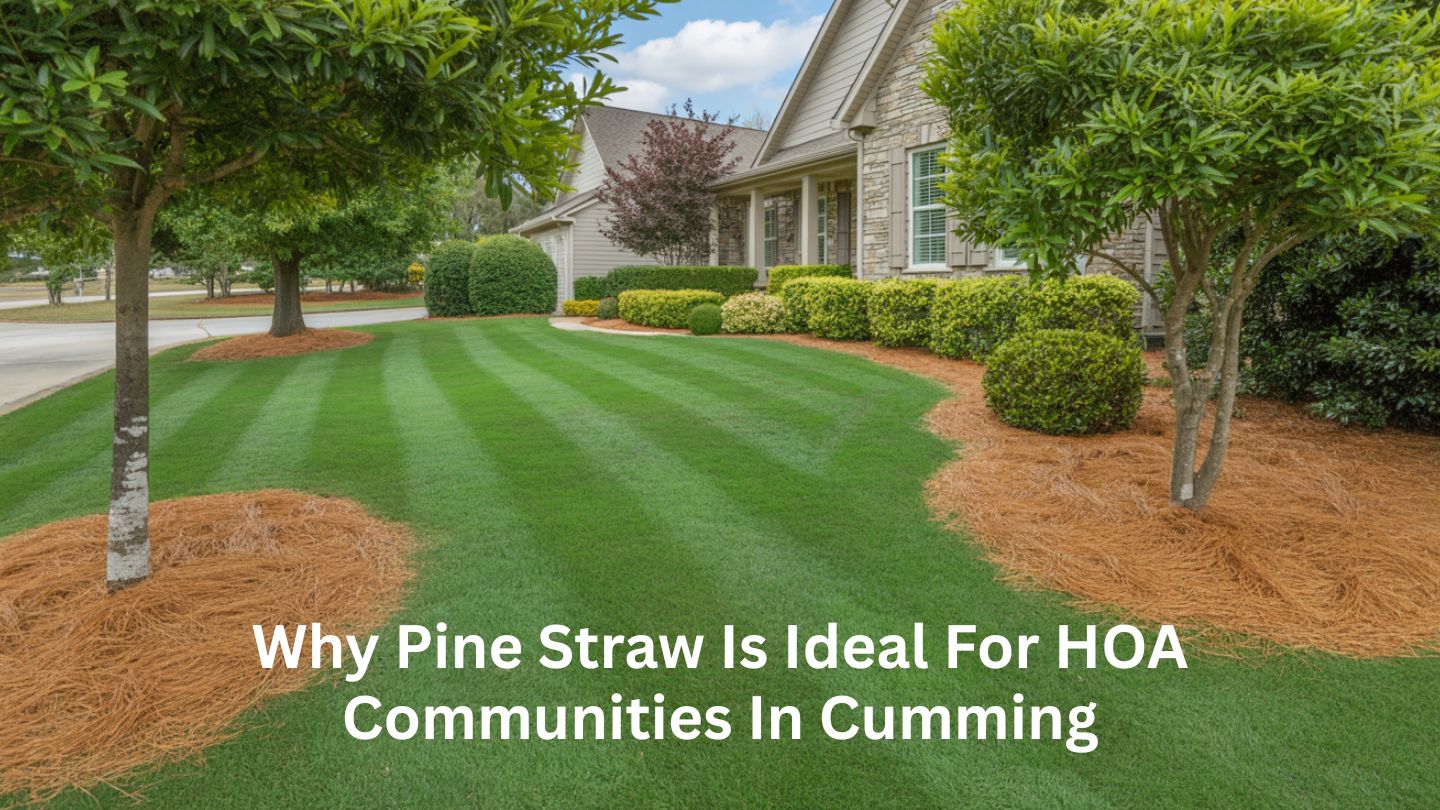
Fresh Georgia pine straw delivers a rich, warm reddish-brown color that contrasts beautifully with the evergreen shrubs common in Forsyth County landscapes. Think boxwoods, hollies, and ligustrum creating that classic Southern foundation planting, with the pine straw providing a clean backdrop that makes green foliage pop. Add in seasonal color beds and the ubiquitous crepe myrtles, and you’ve got a visual appeal that feels polished and intentional.
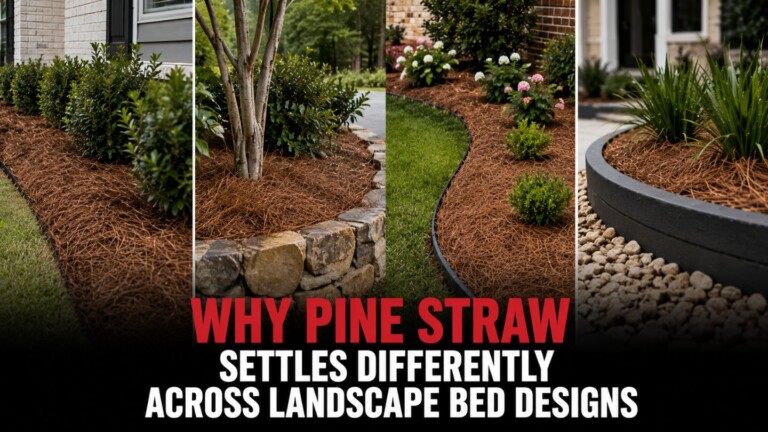
Pine straw also spreads smoothly around curved beds and tree rings, a practical advantage when your landscape includes sweeping entrance plantings, circular traffic islands, and poolside amenity areas. Crews can achieve clean, defined edges along walkways, parking lots, and fencing without the heavy labor required for bagged products.
One often-overlooked benefit: consistency across the entire property. A uniform pine straw layer visually ties together long streetscapes, cul-de-sacs, and traffic medians, making the neighborhood look cohesive rather than patchwork. Since most North Georgia communities already use pine straw, sticking with it helps your HOA landscape blend with the broader Cumming area aesthetic while maintaining individual character.
Cost and Maintenance Advantages for HOA Budgets
For HOAs managing dozens of acres of garden beds and common areas, material and labor costs add up fast. Pine straw offers a cost-effective option that stretches landscape budgets further without sacrificing quality.
Here’s the math that matters: one bale of premium longleaf pine straw covers approximately 35-40 square feet at proper depth. Compare that to bagged hardwood mulch, which covers roughly 8 square feet per bag. That coverage efficiency translates to 30-50% lower material costs for many HOA applications in pine-abundant Georgia.
| Material | Coverage per Unit | Relative Cost | Installation Speed |
| Pine Straw (1 bale) | 35-40 sq ft | Lower | Faster |
| Bagged Mulch (1 bag) | ~8 sq ft | Higher | Slower |
| Bulk Wood Chips (1 cu yd) | ~100 sq ft | Moderate | Moderate |
Labor savings compound the advantage. Pine straw bales weigh 40-50 pounds compared to wet wood chips at 40 pounds per cubic foot, but the spread rate is dramatically faster. Experienced crews using rakes or blowers can cut installation time by up to 50% compared to hauling and spreading heavy mulch. For a community-wide refresh, that efficiency means fewer labor hours and lower contractor invoices.
Most Cumming HOAs can plan on one major pine straw application per year, typically in late winter or early spring before peak growing season. High-visibility entrances or model home areas might benefit from an optional fall touch-up, but the annual maintenance cycle is simpler than many alternatives. This predictable schedule makes it easy to build pine straw services into HOA budgets and multi-year landscape contracts.
Functional Benefits: Erosion, Weed Control, and Soil Health
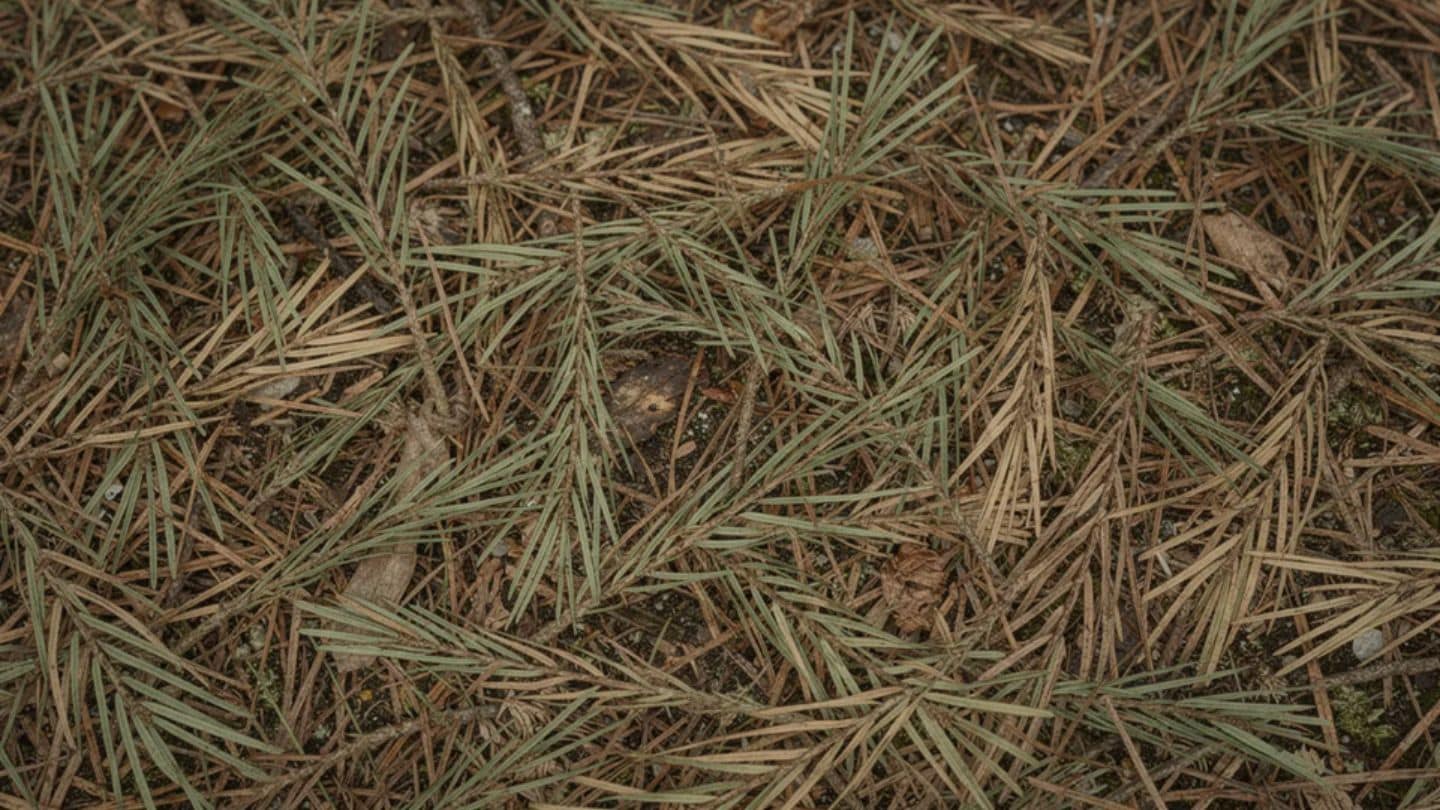
Beyond the visual appeal and budget advantages, pine straw solves several practical problems that Cumming neighborhoods face regularly. Beyond common-area applications, pine straw serves multiple landscape purposes, supporting everything from tree rings and shrub beds to larger-scale erosion control projects across managed properties.
Erosion Control on Slopes
Forsyth County’s red clay soil is notoriously prone to washing away during storms. The sloped areas bordering sidewalks, retention ponds, and driveway culverts can turn into muddy messes after heavy rain, creating maintenance headaches and unsightly runoff. Pine straw prevents erosion by forming an interlocking mat that holds soil in place. The EPA has endorsed pine straw as an effective erosion control measure, and it’s particularly valuable in communities built on Cumming’s rolling terrain.
Natural Weed Suppression
A properly applied 2-3 inch layer of pine straw blocks sunlight from reaching weed seeds, significantly reducing germination in shrub beds and around trees. While it may not provide quite as dense an initial barrier as thick mulch layers, the natural weed barrier effect reduces how “messy” common areas look between monthly service visits. HOAs report cutting manual weeding and herbicide needs by 50-70% in well-maintained beds, which means cleaner-looking landscapes and lower ongoing costs.
Read More: Pine Straw for Weed Control: How Effective Is It?
Soil Structure and Plant Health
As pine straw breaks down over time (decomposing at roughly 10-20% annually), it adds organic matter to compacted clay soils. This gradual process improves soil structure, enhancing drainage and root health for the azaleas, hydrangeas, camellias, and other acid loving plants common in North Georgia landscapes.
| Benefit | How Pine Straw Helps |
| Moisture retention | Reduces evaporation, keeps soil moist longer |
| Soil pH | Slightly acidic, ideal for common HOA plants |
| Organic material | Decomposes to improve soil health |
| Root protection | Insulates against temperature extremes |
One common concern: Does pine straw make soil too acidic? The reality is that pine straw’s slight acidity (pH 5.0-6.5 when decomposed) actually suits popular North Georgia plants perfectly. It doesn’t drastically change soil ph when used correctly and applied at recommended depths. Your hollies, azaleas, and gardenias will thrive.
Local Availability and Sustainability in North Georgia
Cumming and the broader North Georgia region sit in the heart of Southern pine country. Longleaf pines have covered this landscape for centuries, and today Georgia’s pine straw industry harvests millions of bales annually from managed longleaf pine stands throughout the state. Community concerns sometimes include whether pine straw attracts insects, yet properly harvested and maintained pine straw does not inherently increase pest activity when installed according to landscape best practices.
What makes this particularly appealing for environmentally conscious HOA boards: pine straw is harvested from naturally fallen straw beneath pine trees, not from cutting down forests. The collection process mimics natural litter fall and actually supports longleaf pine restoration efforts, an ecosystem that once covered over 30 million acres across the Southeast.
Choosing a regionally sourced, renewable byproduct offers real advantages:
- Supply reliability: Local abundance means consistent availability, even during peak spring demand
- Price stability: Regional sourcing reduces transportation costs and price swings that affect specialty or imported mulches
- Environmental alignment: Using a sustainable product instead of heavily processed bagged materials resonates with communities prioritizing eco-friendly practices
- Supporting local economy: Your landscape dollars support Georgia forestry operations and rural communities
The “North Georgia look” that many Cumming subdivisions share comes largely from pine straw’s prevalence. By sticking with this material, your HOA maintains visual continuity with neighboring communities while making an environmentally responsible choice.
Best Practices for HOA Pine Straw Installation in Cumming
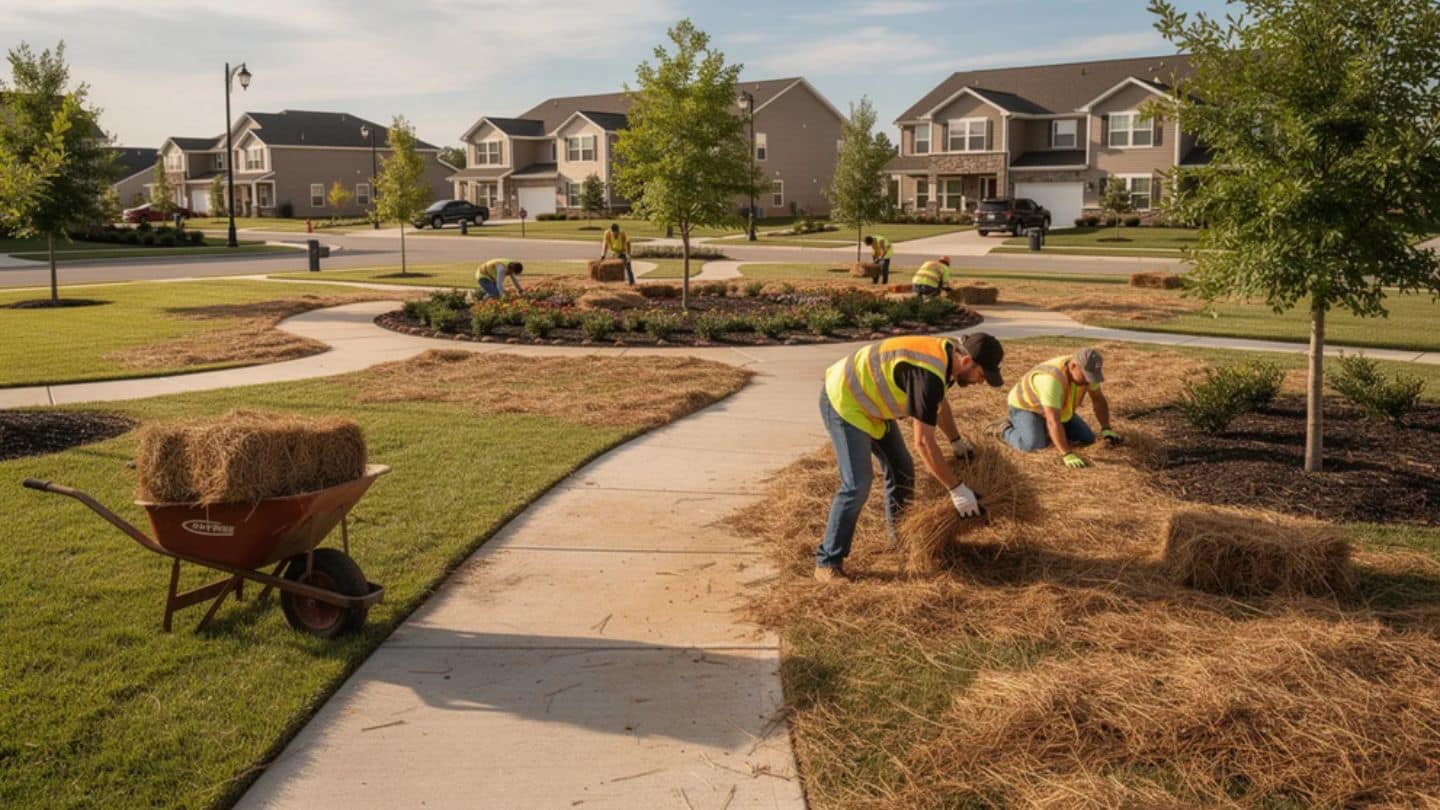
Proper application makes all the difference between pine straw that looks polished for months and coverage that disappoints within weeks. Here’s what HOA boards and landscape committees should know. In some cases, pine straw and mulch can be used strategically in separate zones of a community, with pine straw covering slopes and high-visibility beds while mulch serves playground or specialty areas.
Timing Your Applications
Schedule community-wide pine straw applications for late winter or early spring (February through April), before peak growing season kicks in. This timing allows the straw mulch to settle and establish before summer storms arrive. An optional fall touch-up (September-October) can refresh high-visibility entrances and amenity areas before the holiday season.
Depth and Installation Technique
Apply pine straw at 2-3 inches in shrub beds, around trees, and in garden beds throughout common areas. Going too thin leaves gaps that weeds will exploit; going too thick can smother shallow roots and retain too much moisture.
Critical installation practices:
- Keep pine straw pulled back 3-4 inches from tree trunks and shrub stems to prevent moisture buildup and rot
- “Tuck” needles under shrub branches and along bed edges to help material stay in place during thunderstorms
- Feather edges along walkways and curbs for a clean, finished appearance
- Avoid piling against foundation walls or building siding
Consistency Across the Property
Nothing undermines a neighborhood’s polished appearance faster than mismatched materials. HOA boards should source pine straw from the same supplier for entrances, amenities, and interior common areas to ensure consistent color and quality. Specify longleaf pine straw in landscape contracts, it lasts longer, knits together better on slopes, and maintains that uniform appearance that pine straw maintains throughout the season.
Final Thoughts
Pine straw offers HOA communities in Cumming a practical and visually consistent solution for maintaining entrances, medians, and common areas. It performs well in North Georgia’s humid climate, helps control erosion on sloped lots, suppresses weeds, and supports soil health in red clay conditions. Its natural color enhances curb appeal while providing cost and labor efficiencies compared to many other mulch options. For HOA boards focused on long-term budgeting and appearance standards, pine straw delivers both functional and aesthetic advantages across large-scale properties.
At Mulch Pros, we provide high-quality pine straw in Cumming for HOA communities, property managers, and landscape contractors. In addition to pine straw, we supply mulch, soil, gravel and sand, and firewood to support complete landscape maintenance across residential and community properties.
Frequently Asked Questions
How often should our Cumming HOA refresh pine straw in common areas?
Plan for one full community-wide application each year, typically scheduled for late winter or early spring before the growing season begins. High-visibility areas like monument entrances and clubhouse beds may benefit from an optional touch-up in early fall. Sun exposure, foot traffic near amenities, and storm intensity around Cumming can cause faster breakdown in select beds along busy roads, so budget for spot refreshes at those locations.
Is pine straw a fire risk for HOA landscapes in North Georgia?
While any dry organic mulch can burn under extreme conditions, pine straw used in irrigated, maintained beds in humid North Georgia presents a manageable risk. The key is thoughtful placement: keep pine straw a safe distance (typically 18-24 inches minimum) from grill areas, fire pits, outdoor fireplaces, and building foundations. Follow local fire codes and check with your HOA’s insurance provider for specific guidance on landscape materials near structures.
Will pine straw attract pests or termites to homes in the neighborhood?
Pine straw itself does not specifically attract termites more than other organic mulches like pine bark or wood chips. The important factor is installation practice: never pile any mulch directly against siding, foundation vents, or wood trim. HOAs should maintain a visible gap (6-12 inches minimum) between pine straw beds and building foundations. Coordinate with your community’s pest control provider if there are ongoing termite concerns, but the material choice alone isn’t the determining factor.
Can we mix pine straw with other mulch types in our community?
Mixing materials is possible, but consistency typically serves HOA aesthetics better. Use pine straw in high-visibility entrances, sloped areas, and erosion-prone beds where its performance advantages shine. Reserve other types of mulch, like rubber mulch for playgrounds or decorative rock for specific themed areas, for designated locations. Too many mulch varieties create a patchwork appearance that undermines neighborhood cohesion. Adopt clear standards in your landscape guidelines specifying where each material belongs.